

School Newsletter: Supporting Our Immigrant and Newcomer Families
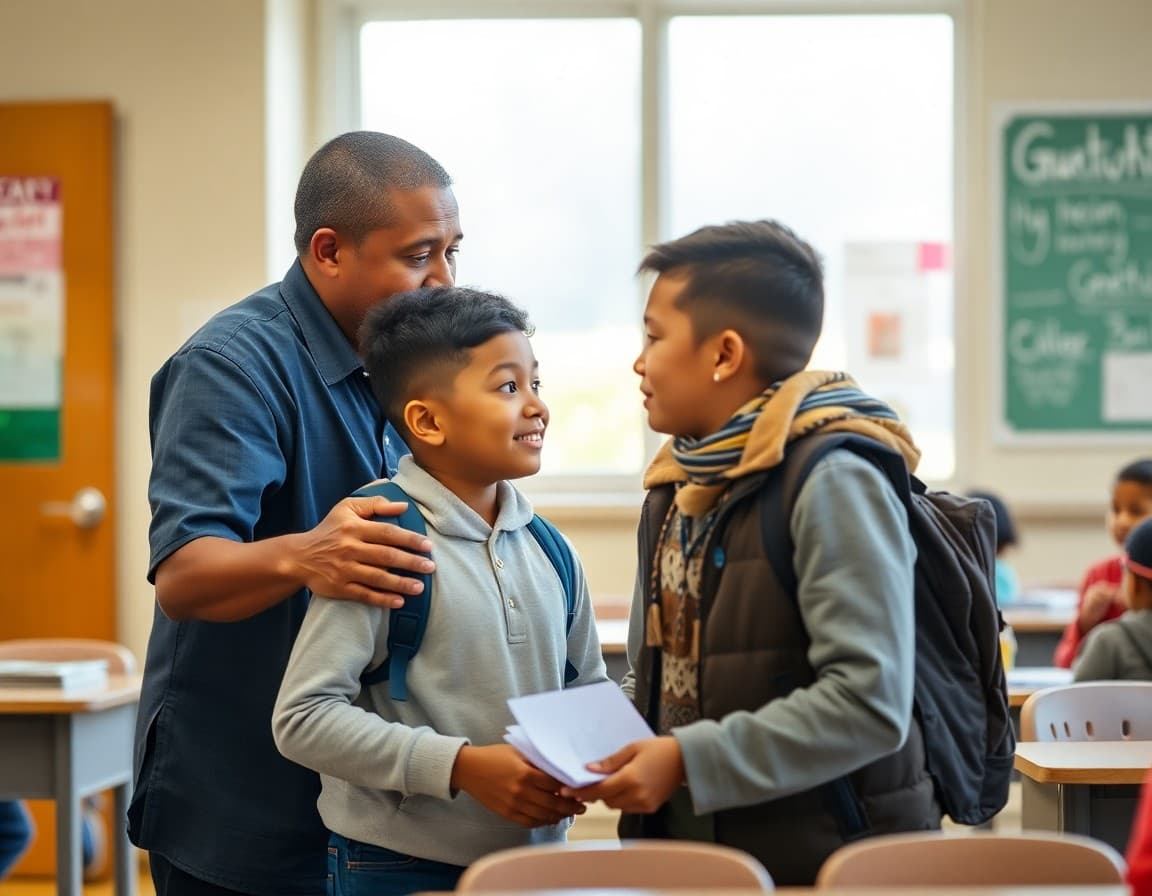
Immigrant and newcomer families often experience American schools as foreign in multiple ways: the language, the communication norms, the expectations placed on families, and the bureaucratic processes that are routine for experienced parents and bewildering for those encountering them for the first time. This newsletter covers how school communications can reduce that barrier.
Explain what is obvious to you
School communications in the US assume a certain level of shared knowledge about how schools work: parent-teacher conferences, grade reports, standardized testing schedules, the role of the school counselor. These concepts are not universal. Newcomer families from educational systems that operate very differently need context that experienced families do not.
A newcomer family orientation newsletter, or a section in the back- to-school newsletter explicitly labeled for new families, that explains how parent communication works at this school, what a grade report means, and how to reach the right person with a question is enormously useful.
State enrollment rights clearly
The Supreme Court ruled in Plyler v. Doe that all children have the right to a public education regardless of immigration status. Schools cannot require Social Security numbers, birth certificates, or immigration documentation for enrollment.
Many immigrant families do not know this and avoid contact with schools out of fear of documentation requirements. Communicating this right clearly in the newsletter, in accessible language and in families' home languages, removes a barrier that should not exist.
Describe the supports that exist
ESL services, newcomer programs, school counseling, community liaisons, and connections to community organizations that serve immigrant families are all resources that may be available and that many newcomer families do not know about. The newsletter is an appropriate place to describe each of these and how to access them.

Welcome newcomers visibly
When a new family joins the school community, a brief, warm mention in the newsletter, "we are glad to welcome several new families to our school this week," is a simple but meaningful gesture. A school culture that visibly welcomes newcomers communicates to both the newcomers and the established community that arrival is cause for welcome.
Feature immigrant family perspectives in the newsletter
A newsletter that only features immigrant families as recipients of support rather than as contributors to the school community misses the richness they bring. Featuring stories of immigrant families' cultural contributions, their community involvement, and their children's achievements communicates belonging rather than charity.
Partner with community organizations
Local immigrant support organizations, religious institutions, and community associations often have relationships with families the school is trying to reach. Including information about these organizations in the newsletter and building relationships with them extends the school's communication reach into communities where trust in institutions is still being built.
Get one newsletter idea every week.
Free. For teachers. No spam.
Frequently asked questions
What unique communication needs do immigrant and newcomer families have?
Immigrant families often come from educational systems that operate very differently from US schools. They may not know what to expect from parent-teacher communication, how grades are reported, what services their child is entitled to, or who to contact when a problem arises. School communications that explain the basics of how American schools work, rather than assuming shared knowledge, are especially valuable for newcomer families.
How should schools communicate about enrollment rights for immigrant families?
Clearly and explicitly. Under the Plyler v. Doe Supreme Court decision, all children have the right to a public education regardless of immigration status. Schools cannot require Social Security numbers or immigration documentation for enrollment. Communicating this right clearly in accessible language, in families' home languages, removes a barrier that prevents some immigrant families from enrolling their children.
What supports should newcomer students have access to that schools should communicate about?
ESL and ELD services, newcomer programs or orientation programs if available, school counseling with cultural competence in the specific communities served, community liaisons, and connections to community organizations that serve immigrant families. Many families do not know these supports exist unless they are explicitly described in accessible communications.
How do schools welcome newcomer students in ways that are visible to the whole community?
By acknowledging new arrivals in the newsletter with warmth rather than only in administrative language, by describing the school's newcomer support programs, and by featuring stories of students from immigrant backgrounds as full community members rather than as recipients of charity.
How does Daystage help schools reach immigrant and newcomer families effectively?
Daystage makes it straightforward to create newsletters with content in multiple languages and to send targeted communications to specific family groups. A school that can reach its most recently arrived families in their home language with a warm, specific newsletter within the first week of enrollment is doing meaningful welcome work.

Adi Ackerman
Author
Adi Ackerman is a former classroom teacher and curriculum writer with 8 years in K-8 schools. She writes about school communication, parent engagement, and what actually works in real classrooms.
More for Diversity & Equity
Ready to send your first newsletter?
3 newsletters free. No credit card. First one ready in under 5 minutes.
Get started free