
Family Engagement Equity Newsletter: Reaching and Including Families Who Are Most Often Left Out
Family engagement research is clear: schools where all families feel genuinely welcomed and included have better student outcomes across demographic groups. The families who most benefit from strong engagement, families from underserved communities, immigrant families, families of students of color, families with limited English, are often the families who are least engaged with school communication. That gap is not a family problem. It is a communication design problem, and a newsletter is one of the most direct tools for closing it.
This guide covers how to design and write a family engagement equity newsletter that genuinely reaches underserved families, what barriers to address, and how to build family engagement as an equity practice rather than a PR exercise.
Designing for the families who are hardest to reach
Equitable newsletter design starts by asking who is not on the list, who cannot read the list, and who receives the list but does not trust what it says. Build your subscriber list proactively: go to where underserved families already gather, offer list sign-up in multiple languages, use community liaisons and trusted community organizations to spread the word. The list itself is an equity problem before the content ever is.
Once you have a broad subscriber list, design the newsletter for the family with the least institutional access. Plain language. Translated content. Mobile-optimized format. Short sections. Clear action items. A newsletter that is accessible to the most underserved family on your list is accessible to everyone.
Removing barriers to participation in events
A newsletter that invites families to events without addressing common barriers to attendance misses a significant portion of its community. Include childcare availability, transportation options, interpretation services, and a range of event times (including evenings and weekends) in every event announcement. "This event will have Spanish interpretation. Childcare is available. Please arrive 15 minutes early to arrange childcare registration." That paragraph doubles your attendance from underserved communities.
Communicating the school's welcome explicitly
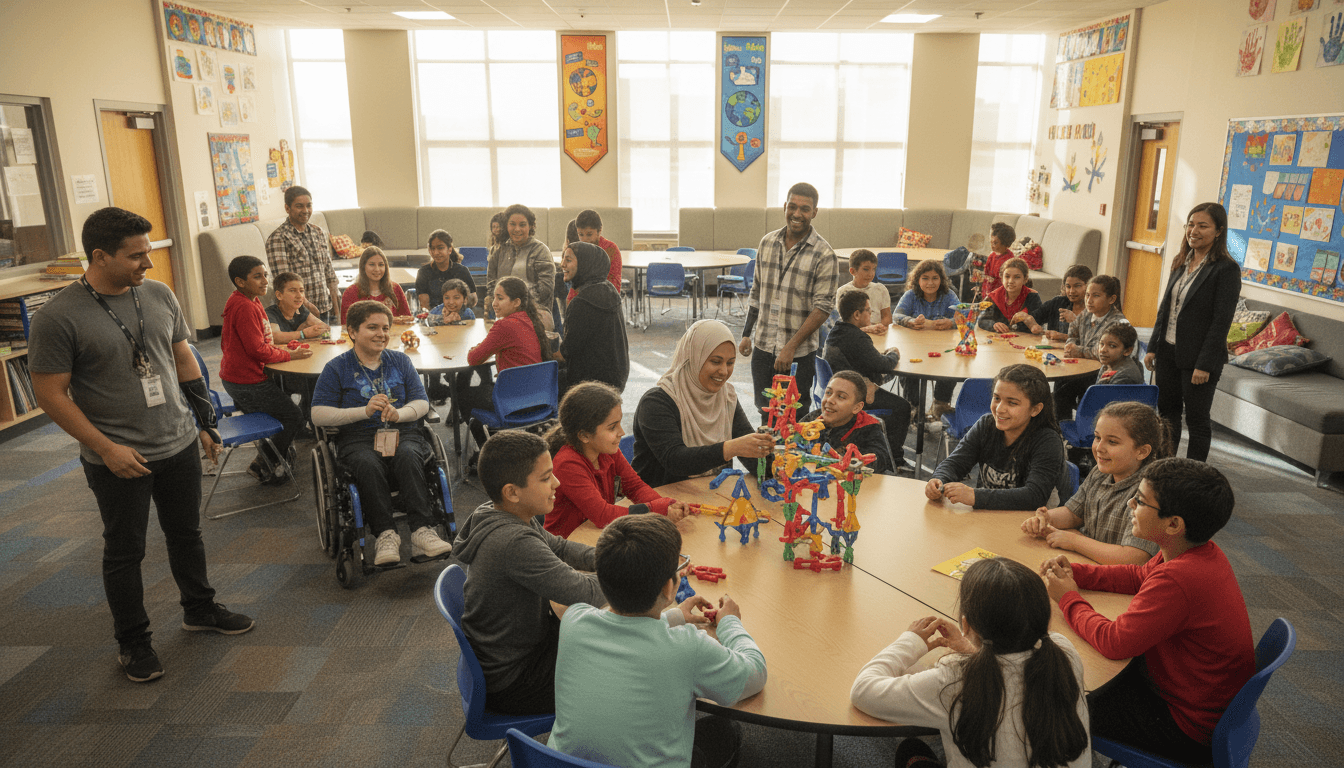
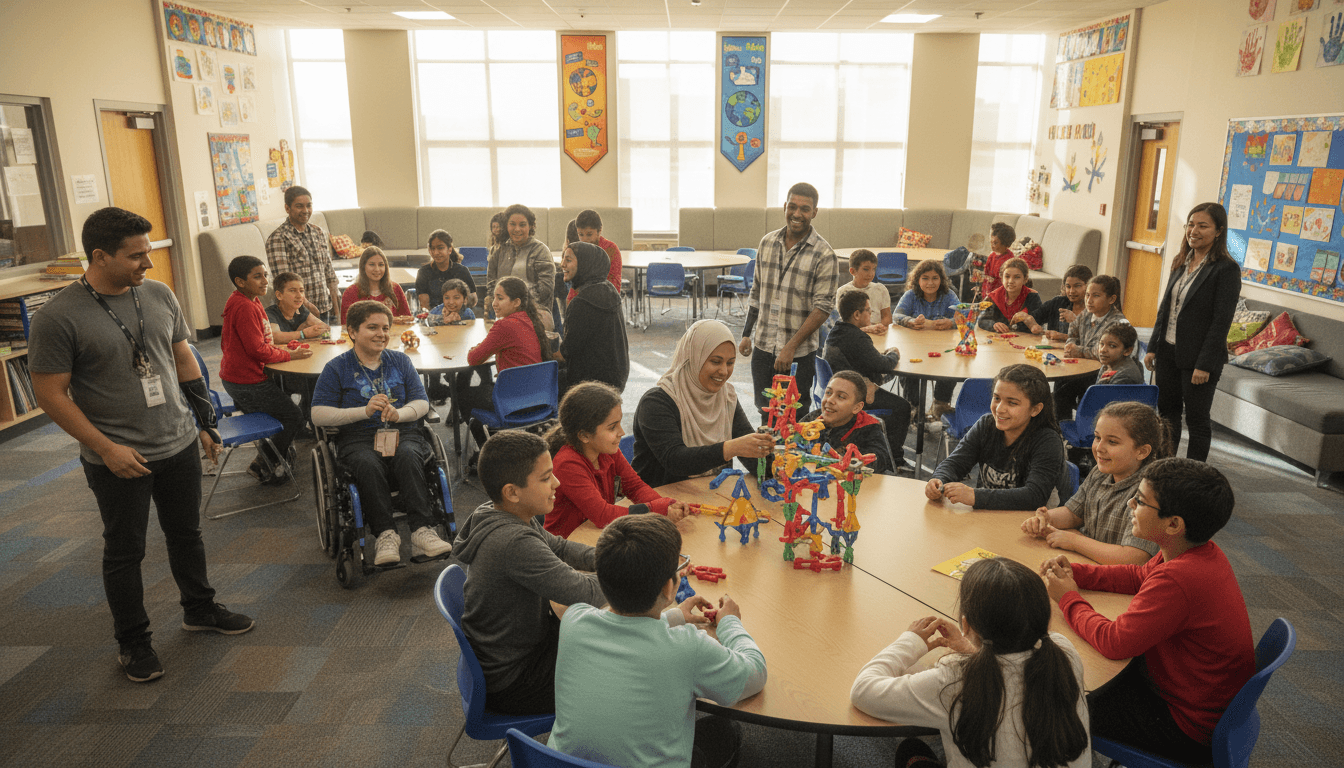
Many families from communities that have historically been underserved by schools assume that school is a space for other kinds of families. A newsletter that explicitly states its welcome, in multiple languages, with examples of diverse families participating in school life, begins to dismantle that assumption. Representation in your newsletter images and stories matters. Families who see people who look like them, speak like them, or share their background in school communication understand that the school considers them part of the community.
Two-way communication rather than one-way broadcasting
Equitable family engagement is not just about sending information out. It is about creating channels for families to send information in. Include a feedback link or an email address in every newsletter. Conduct community input surveys translated into home languages. Create a family advisory group with active recruitment from underrepresented communities. A school that listens to underserved families builds trust faster than a school that communicates well but in only one direction.
Acknowledging the history honestly
Many underserved families have generational and personal experience with schools that treated them as problems to be managed rather than communities to be partnered with. A newsletter from a school genuinely committed to equity can acknowledge this history without dwelling in guilt. "We know that not all of our families have historically felt welcomed here. We are working to change that, and your presence and participation in our community makes that change real." That kind of directness is more effective than newsletters that perform inclusion without acknowledging the gap.
Using Daystage for equitable family engagement
Daystage supports the consistent, mobile-optimized, translatable communication that equitable family engagement requires. Build your subscriber list to include families from every background, send translated versions to appropriate groups, and maintain a professional tone that signals the school takes every family's time and attention seriously. Equitable engagement is built over months and years of consistent, respectful communication. Daystage makes that consistency achievable.
Get one newsletter idea every week.
Free. For teachers. No spam.
Frequently asked questions
What does equitable family engagement actually mean in a school newsletter context?
It means designing communication so that it actually reaches families who have historically been excluded: families whose home language is not English, families with limited digital access, families who have had negative experiences with school, and families from communities that schools have historically underserved. Equitable engagement is measured by who receives and can act on the information, not by who was technically on the mailing list.
What barriers to family engagement should a newsletter address?
Language barriers, technology access barriers, childcare and transportation barriers to in-person events, and the cultural barrier of feeling unwelcome or like an outsider in school spaces. A newsletter can directly address language and technology barriers. It can acknowledge childcare and transportation needs for events. It can model a welcoming tone that reduces the cultural barrier over time.
How do I write a newsletter that feels genuinely welcoming rather than performatively inclusive?
Avoid language that treats underrepresented families as guests who are being accommodated. Write as if every family is a full member of the community because they are. Reference the contributions and perspectives of diverse families as normal features of community life, not as special acknowledgments. Warm, direct, jargon-free language is the foundation.
How do I communicate with families who have had negative experiences with school?
Consistency matters more than content for this audience. Families who have experienced schools as adversarial need time and repeated positive interactions to trust new communication. A newsletter that arrives reliably every month with useful, respectful information is more effective at rebuilding trust than any single communication, no matter how well-written.
How does Daystage support equitable family engagement communication?
Daystage delivers newsletters by email, which is accessible on mobile devices and therefore reaches families who may not have home computers. Subscriber lists can be organized by language for translated versions. The tool removes the technical overhead that would otherwise prevent a school from sending professional, consistent communication to every family.

Adi Ackerman
Author
Adi Ackerman is a former classroom teacher and curriculum writer with 8 years in K-8 schools. She writes about school communication, parent engagement, and what actually works in real classrooms.
More for Diversity & Equity
Latino and Hispanic Heritage Curriculum Newsletter: Communicating Inclusive History and Literature to Families
Diversity & Equity · 6 min read
School Name Change Equity Newsletter: Communicating Renaming Decisions to Families
Diversity & Equity · 6 min read
Culturally Sustaining Practices Newsletter: Communicating Teaching That Honors Student Identities
Diversity & Equity · 6 min read
Ready to send your first newsletter?
3 newsletters free. No credit card. First one ready in under 5 minutes.
Get started free