
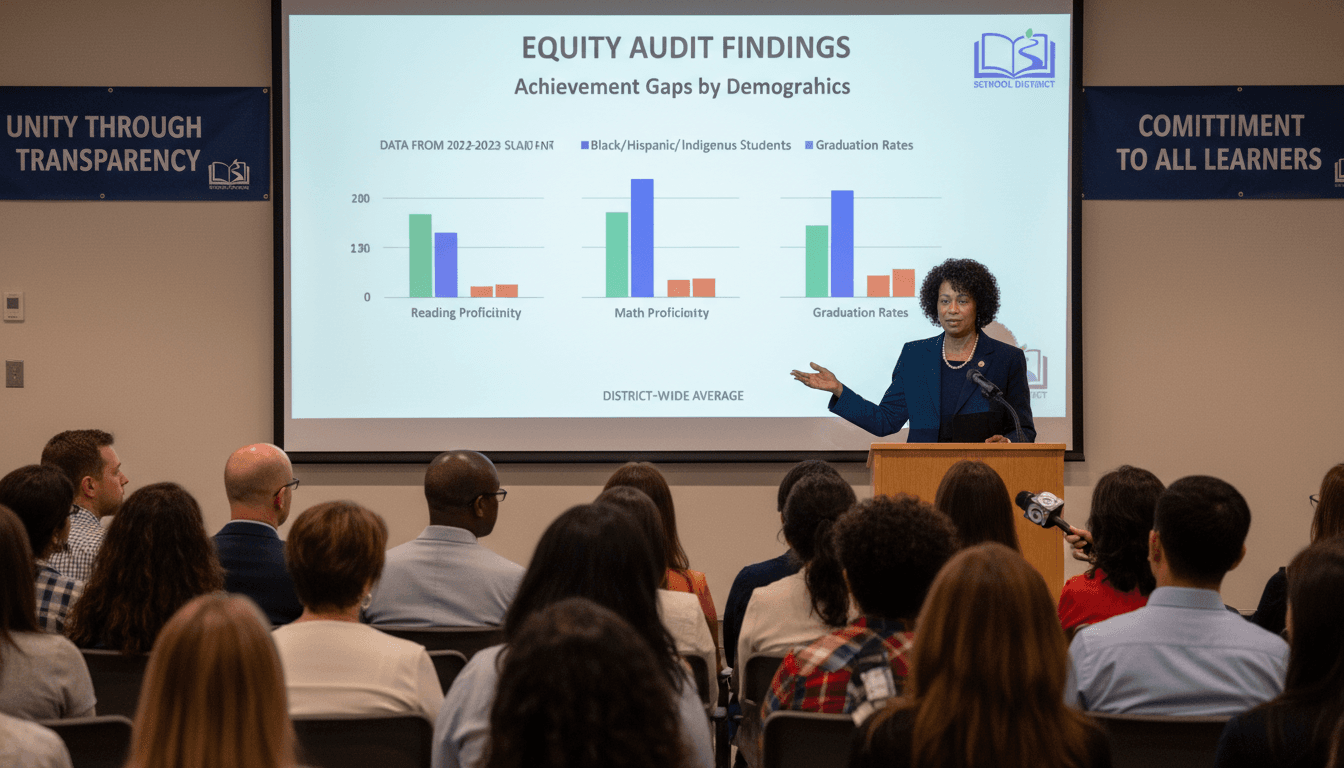
School Equity Audit Results Newsletter: What the Data Shows

Schools that conduct equity audits and then publish vague summary communications about "areas for growth" are not doing accountability. They are producing the appearance of accountability while protecting themselves from scrutiny. Families, especially families from communities where the data shows the most significant gaps, deserve more than managed messaging. They deserve the actual findings, a clear acknowledgment of what those findings mean, and specific commitments about what the school will do differently.
This guide covers how to write an equity audit results newsletter that is honest about what the data shows, respectful of the communities the data describes, and specific about what comes next.
Why full transparency builds more trust than managed messaging
The argument for softening equity audit findings is usually that releasing difficult data will alarm families or damage community trust. The opposite is consistently true. Families who receive transparent, specific information about where the school falls short and what it is doing about it develop more trust in school leadership than families who sense that they are receiving a carefully managed version of the truth. The community members who are most affected by equity gaps, families of Black students, Latino students, students with disabilities, and English learners, have direct experience with the patterns the data describes. They do not need to be shielded from it.
Presenting disaggregated data clearly
Aggregate data conceals disparities. A school where 85 percent of students are reading at grade level can simultaneously be a school where 95 percent of white students read at grade level and 60 percent of Black students do. The aggregate number looks strong. The disaggregated data reveals a significant equity problem. An equity audit newsletter that only presents aggregate numbers is not an equity audit newsletter. It is a performance review.
Present data disaggregated by race and ethnicity, disability status, English learner status, and income level for every major metric in the audit: academic proficiency, graduation rates, advanced course enrollment, disciplinary rates, gifted program representation, and extracurricular participation. Show current data alongside prior year data so families can see direction of change, not just a snapshot.
Framing gaps as system issues, not student deficits
The way a newsletter frames equity gaps determines whether it builds trust or erodes it. Data that is presented without context implies that the gaps are explained by the characteristics of the students themselves. Data presented in context, with an explicit acknowledgment that gaps are produced by school structures, resource allocation, curriculum choices, and discipline practices, is more accurate and more respectful to the families whose children appear in the lower ends of the data.
"Our data shows that Black students are suspended at three times the rate of white students for comparable behavior" is more accurate than "our discipline referral rates show some variation across demographic groups." The first version names the disparity. The second obscures it. Name the disparity clearly, acknowledge that it reflects school practices that need to change, and describe what those changes are.
The action plan must be specific
Every equity gap identified in the newsletter requires a specific, named response. Not "we are committed to improving outcomes for all students" but "beginning in September, all grade 6-8 teachers will receive training in culturally responsive mathematics instruction, with implementation monitored through quarterly classroom observations." Commitments without specifics are aspirations. Commitments with timelines, named owners, and measurable targets are plans.
Where the school does not yet have a specific plan for addressing a gap, say so. "We have identified this disparity in our advanced course enrollment data. We are currently reviewing our course recommendation process and will publish our response plan by October 1." That is more credible than a vague commitment that families cannot track.
Acknowledging prior commitments and what happened to them
If this is not the school's first equity audit newsletter, the community is entitled to know what happened to last year's commitments. Did the tutoring program launch? What were the outcomes? Did the discipline review produce policy changes? What were they? An equity audit newsletter that ignores prior commitments signals that this year's commitments are equally disposable. A newsletter that honestly reviews last year's progress, acknowledges where commitments were not kept and explains why, and recalibrates for the coming year is the kind of accountability that builds genuine community trust over time.
Community input on the audit findings
Equity audit findings should not only flow from school leadership to families. Families should have a structured opportunity to respond to the findings, ask questions, and contribute to the action planning process. The newsletter can announce community input sessions, provide a link to a survey for families who cannot attend in person, and describe how prior community input has shaped the audit process or the school's responses. Equity work that is done to communities rather than with them does not build the community ownership that makes the work sustainable.
Staff and leadership accountability
An equity audit newsletter that presents student outcome data without addressing staff and leadership practices is incomplete. Who is being hired? Does staff diversity reflect the student community? Are leadership positions held by people from communities that have historically been underrepresented in school leadership? Are professional development resources being allocated to equity priorities? Staff and leadership data belongs in the equity audit newsletter alongside student outcome data. It demonstrates that the school holds the adults accountable alongside the system.
Publishing the archive publicly
Equity audit results should be publicly archived on the school website, not only sent via newsletter. Families who join the school mid-year, community members who are not on the newsletter list, and future families researching the school should all be able to access the audit findings. A school that publishes its equity audit data publicly and maintains a multi-year archive is demonstrating a level of accountability that distinguishes it from schools that treat this data as internal-only communication.
Get one newsletter idea every week.
Free. For teachers. No spam.
Frequently asked questions
How transparent should a school equity audit newsletter be about negative findings?
Fully transparent. Families and community members can access disaggregated data through public records requests, state education department databases, and school report cards. A newsletter that softens or omits negative findings will be compared unfavorably to the actual data by any parent who looks it up. Transparency about gaps paired with a specific action plan builds more trust than incomplete reporting.
What data should an equity audit newsletter include?
Disaggregated academic performance data by race, ethnicity, disability status, English learner status, and income level. Discipline data broken down by the same demographic categories. Representation data for advanced courses, gifted programs, and extracurricular activities. Staff demographic data compared to student demographics. The more specific and granular the data, the more credible the newsletter.
How do we communicate equity audit findings without making families from marginalized communities feel stigmatized?
Present data in context. Achievement gaps are the product of systems and structures, not the product of individual student or family deficiency. A newsletter that presents data alongside a clear acknowledgment that gaps reflect school and system conditions, not student or family limitations, is more accurate and more respectful. Frame the data as evidence that the system needs to change, not evidence that some students need to try harder.
What should the action plan section of an equity audit newsletter include?
Specific, measurable commitments with timelines and named accountability. Not 'we will improve outcomes for all students' but 'by December we will implement a structured tutoring program for students in grades 3-5 whose reading scores are below grade level, with a target of 80 percent on-grade-level proficiency by May.' Vague commitments signal that the audit was a compliance exercise. Specific commitments signal that it produced real decisions.
How does Daystage help schools communicate equity audit results?
Daystage makes it straightforward to publish a detailed equity audit newsletter and maintain a public archive of prior newsletters that shows progress over time. Families who can see last year's audit results alongside this year's results can evaluate whether the school's commitments produced measurable change. That longitudinal transparency is what transforms an annual audit into an accountability mechanism.

Adi Ackerman
Author
Adi Ackerman is a former classroom teacher and curriculum writer with 8 years in K-8 schools. She writes about school communication, parent engagement, and what actually works in real classrooms.
More for Diversity & Equity
Ready to send your first newsletter?
3 newsletters free. No credit card. First one ready in under 5 minutes.
Get started free