
Black History Month School Newsletter: Ideas and Templates

A Black History Month newsletter that opens with a Martin Luther King Jr. quote and closes with a clip-art image of a raised fist communicates one thing clearly: the school did the minimum. Families see this pattern. Black families see it acutely. The newsletter is an opportunity to show that the school's February engagement with Black history is grounded in real curriculum, real community, and real institutional commitment rather than symbolic acknowledgment.
This guide covers how to write a Black History Month school newsletter that reflects genuine engagement, respects the communities being honored, and gives families something concrete to connect with.
What is actually happening in classrooms this month
The most important section of a Black History Month newsletter is specific curriculum content. Name the books students are reading and the authors who wrote them. Describe the historical periods and figures that are receiving focused attention this year. Share what questions students are investigating. If your fourth graders are examining the civil rights movement through primary sources, say that. If your high school English class is reading Zora Neale Hurston, say that and explain why that author matters.
Specificity is the difference between a newsletter that communicates substance and a newsletter that communicates effort. Parents cannot connect with "students are learning about Black history." They can connect with "this week in third grade, students are comparing two accounts of the Montgomery Bus Boycott from different perspectives and writing their own analysis."
Reaching beyond the civil rights era
Black history is not a single period or a single narrative. A newsletter that signals awareness of this breadth demonstrates curriculum sophistication. Alongside civil rights content, a February newsletter might reference Harlem Renaissance literature, the Tuskegee Airmen, the Underground Railroad, contemporary Black scientists and engineers, African and Afro-Caribbean history, or the contributions of Black communities in your specific region. The scope of the newsletter signals the scope of the curriculum.
Community events and family engagement opportunities
A Black History Month newsletter that only describes what is happening inside school misses half the opportunity. Connect families to events in the broader community: museum exhibitions, author talks, film screenings, cultural performances. Provide reading lists that parents can explore alongside their students. Share local organizations that families can engage with. A newsletter that extends learning beyond the school building builds the home-school connection that research consistently links to better student outcomes.
Highlighting Black educators and staff
If Black educators or staff members are willing to share reflections on Black History Month, the newsletter is the right place for those voices. Not as representatives of their community, but as members of the school community sharing their perspective on the work. This is done through open invitation, not by approaching specific individuals and asking them to represent their racial identity. Faculty reflections that are genuinely offered and genuinely personal are some of the most powerful content a school newsletter can carry.
Communicating the year-round commitment
A February newsletter that reads as standalone content undermines itself. The most credible Black History Month newsletters reference October or November when this content appeared in the curriculum, and preview March or April when the thread continues. "Last semester our seventh graders studied the African origins of American music. This month that unit continues with the Harlem Renaissance. In April the class will examine how that movement influenced contemporary hip-hop and R&B." That is a year-round curriculum commitment. February is a chapter, not the whole story.
Addressing families who express concern or opposition
Some school communities include families who object to curricula centered on race. The newsletter is not the place to argue with these concerns, but it is the place to be clear about the school's educational rationale. "Understanding the full history of the United States, including the history of African Americans, is foundational to civic literacy. Our curriculum choices reflect our commitment to preparing students to understand the world they live in." Confident, factual, and non-apologetic. The newsletter does not need to convince skeptics, but it should not soften its commitments to accommodate them.
Student work and voices in the newsletter
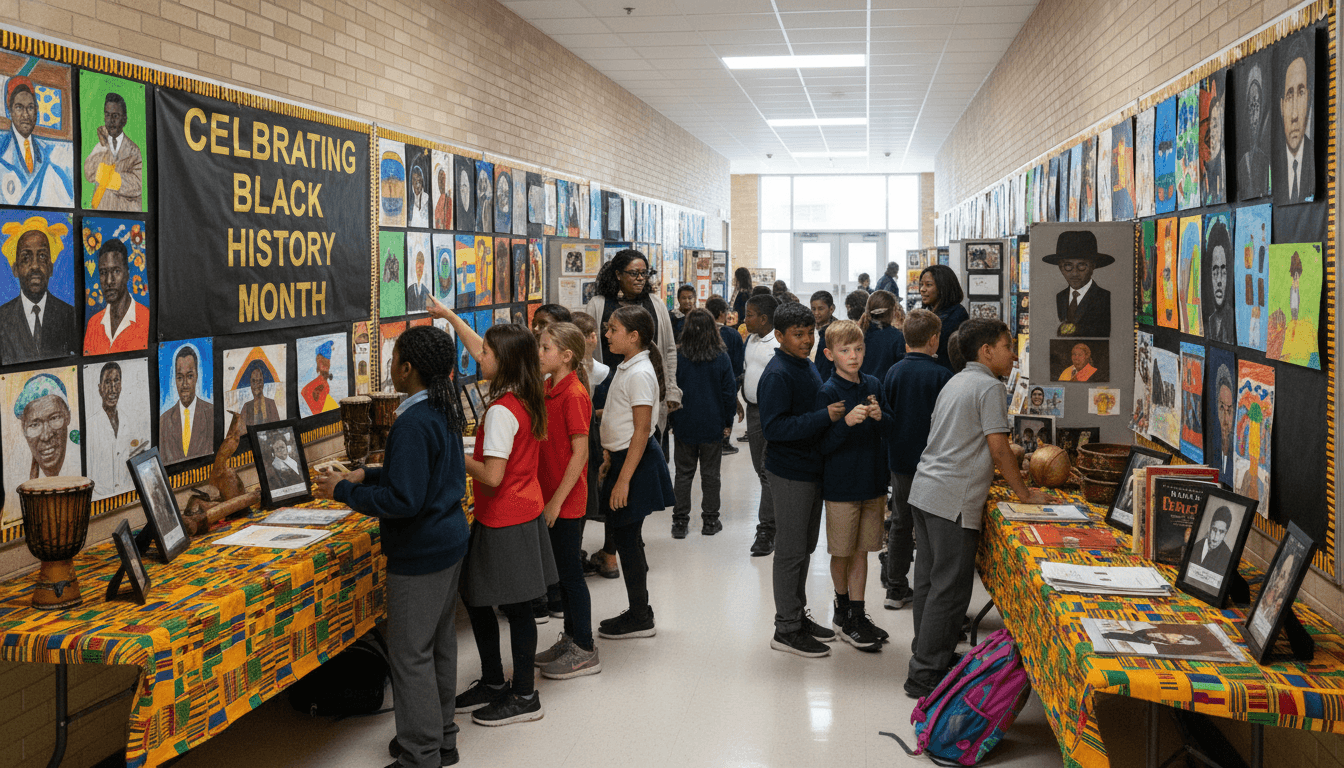
Student work from Black History Month projects, when shared with student permission, makes the newsletter concrete and human. A paragraph from a student essay, a photograph of a class project, a quote from a student reflection all ground the newsletter in what is actually happening in the building. This works best when the content is drawn from real, substantive work rather than decorated art projects. The quality of the student work on display communicates the quality of the learning that produced it.
Building toward next February from this one
The most effective Black History Month newsletters close with a clear indication of what comes next. What curriculum threads will continue in March? What is the school building toward for next year? What has the school learned this year about how to do this work better? Families who receive a newsletter that ends with next steps rather than conclusions understand that they are reading communication from a school that is growing, not a school that is meeting an annual obligation.
Get one newsletter idea every week.
Free. For teachers. No spam.
Frequently asked questions
What should a Black History Month school newsletter include?
Specific curriculum activities happening in classrooms, community events families can attend, book and resource recommendations, student work or voices where appropriate, and a clear statement of what the school is doing this month and why. Newsletters that are specific outperform newsletters that are inspirational but vague.
How do we avoid making our Black History Month newsletter feel performative?
Connect February's newsletter to what happened in November and what will happen in March. Schools that communicate Black history only in February signal that this is a compliance exercise, not a curriculum commitment. A February newsletter that references earlier units taught and previews upcoming work positions the month as a focus, not a starting point.
What tone works best for a Black History Month school newsletter?
Celebratory and substantive. The newsletter should communicate genuine pride in the curriculum work being done and genuine respect for the communities being honored. Avoid language that centers whiteness, such as framing that describes Black history as something students are being introduced to as if it is foreign rather than foundational.
How do we include Black student and family voices in the newsletter without tokenizing anyone?
Ask broadly and include anyone who wants to share, not just families who are visibly Black. Use student work samples, faculty reflections, and family perspectives that participants have explicitly offered. Never approach an individual student or family and ask them to represent their community. Create open channels that anyone can contribute to.
How does Daystage help schools manage Black History Month newsletters and year-round DEI communication?
Daystage subscriber lists let you reach your full community reliably every month, not just in February. Schools that use Daystage for year-round equity newsletters build the trust and credibility that makes their February communication land as the continuation of something real, rather than an annual obligation.

Adi Ackerman
Author
Adi Ackerman is a former classroom teacher and curriculum writer with 8 years in K-8 schools. She writes about school communication, parent engagement, and what actually works in real classrooms.
More for Diversity & Equity
Ready to send your first newsletter?
3 newsletters free. No credit card. First one ready in under 5 minutes.
Get started free