
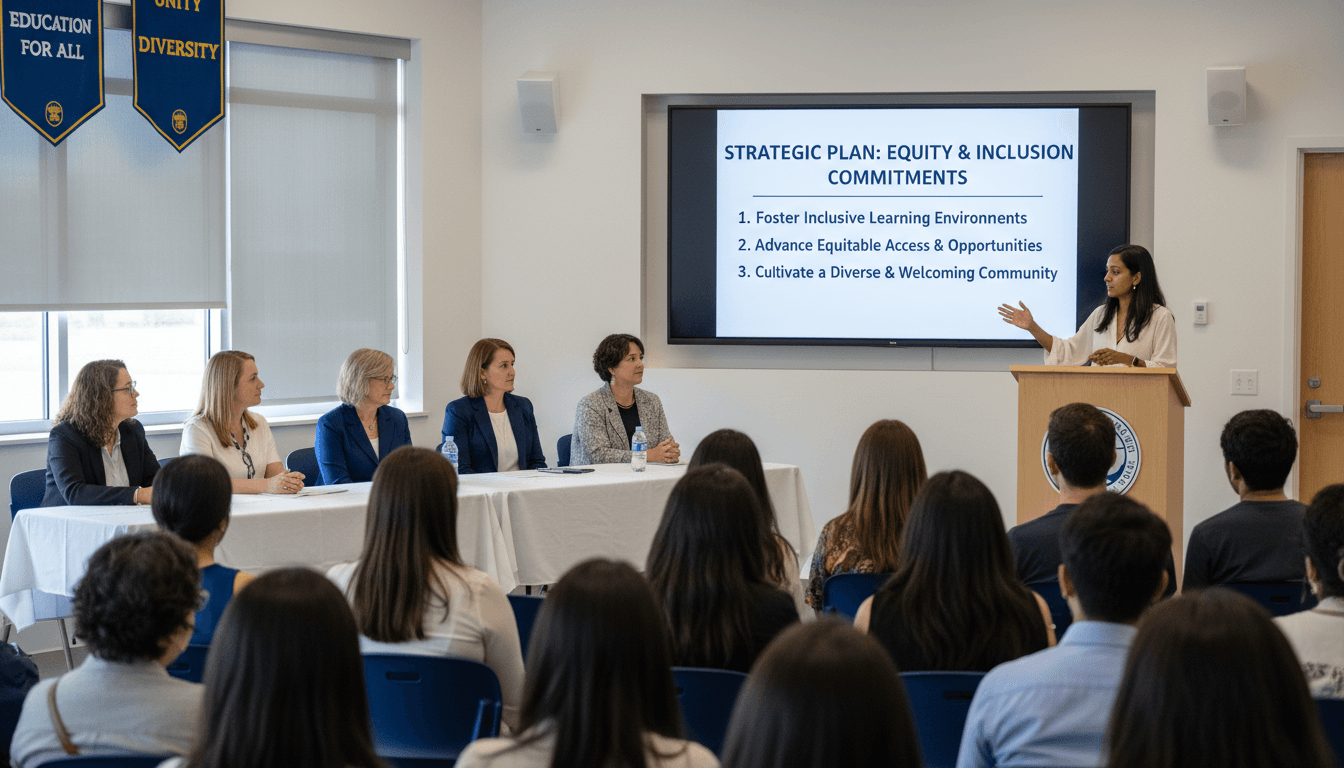
DEI Strategic Plan Newsletter: Our Commitment to All Students

A DEI strategic plan that families never hear about is an internal document, not a community commitment. The newsletter is how a plan becomes real to the people it is designed to serve. When school leaders communicate the goals, the timeline, the progress, and the setbacks with consistency and specificity, the plan moves from aspiration to accountability.
This guide covers how to structure a DEI strategic plan newsletter, what to include at launch versus in progress updates, and how to communicate in a way that builds trust across a community with different views about what DEI means and why it matters.
Open with student outcomes, not institutional values
The most effective DEI newsletters start with student data, not mission statements. The data anchors the plan in observable reality and signals that the work is driven by what students need rather than by administrative preference. "Last year, students with disabilities were suspended at three times the rate of students without disabilities. That gap is what this plan is designed to address" is a more persuasive opening than any values statement.
Name the specific student groups the plan is designed to serve better, the specific outcomes that are currently below where the school wants them, and the specific changes the plan makes to address those outcomes. Ground the work in students from the first sentence.
Describe the plan's structure in plain language
DEI strategic plans often have multiple goals, strategies, and initiatives organized in a framework that makes sense internally but is opaque to families. The newsletter's job is to translate that structure into clear, plain language that a busy parent can understand in three minutes.
Use one section per goal or pillar. For each, describe what the school is trying to achieve, what specific actions are underway, and what the school will track to know whether the work is producing results. Avoid jargon that is common inside education but unfamiliar outside it. If you use a term like "culturally responsive pedagogy," explain what it means in one sentence.
Name the people responsible for the work
Accountability requires names. When a newsletter describes the DEI plan without naming who is responsible for each initiative, it signals that no specific person is on the hook. That ambiguity erodes trust, especially among families whose children have been failed by prior equity commitments that had no clear owners.
Name the lead for each major initiative. Include their role and how families can reach them with questions. If the DEI coordinator is new, introduce them by name and describe their background and mandate. Putting names to the work signals that the school is serious about accountability, not just strategy documents.
Report on progress with real metrics, not anecdotes
Progress update newsletters need numbers. If the plan includes a goal to increase representation of students of color in advanced coursework, the progress newsletter should report the current enrollment rate compared to last year, whether the trend is moving in the right direction, and what the school now understands about what is working.
Anecdotes are supplements to metrics, not replacements. A brief story about a student who accessed a new program is a useful illustration of what the data shows. It is not a substitute for the data when the program is supposed to serve dozens of students. Families who track equity work across years will notice when progress newsletters replace metrics with stories.
Address community concerns directly
DEI strategic plans generate questions, concerns, and sometimes organized opposition in communities across the political spectrum. A newsletter that pretends this context does not exist reads as tone-deaf. One that acknowledges it directly, without being defensive, builds trust.
You do not need to validate every criticism to acknowledge that concerns exist. "We know that families have different views about what equity means and how schools should pursue it. Here is what we mean when we use the term, here is what the data tells us students need, and here is how we are addressing it" is a framing that is honest about complexity without abandoning the work.
Invite community participation in implementation
A DEI strategic plan that is designed without community input and then communicated to families as a finished product misses a key accountability mechanism. Even if the plan was built with community input, the newsletter should continue inviting participation in implementation: family DEI committee membership, feedback opportunities, community listening sessions, and ways to engage with specific initiatives.
Name the specific opportunities and how to participate. "Join the Family DEI Advisory Committee by emailing [name] at [email]" is an invitation. "We welcome community input" is a platitude. The specificity determines whether families actually show up.
Be honest about what is not working yet
DEI strategic plan newsletters that report only successes quickly become documents families stop reading. The most credible updates are the ones that report both movement toward goals and areas where the school has not made the progress it expected.
When an initiative is not producing results, say so and describe what the school has learned. "Our mentorship program enrolled only 40% of its target students in the first semester. We found that the referral process placed too much burden on individual teachers. We are restructuring it as an opt-out program starting in the spring." That kind of institutional learning, described plainly in a newsletter, is what trust is built from.
Daystage keeps DEI plan communication consistent across the year
Daystage lets school leaders build a DEI newsletter template once and use it across multiple progress updates throughout the year. The consistent format helps families know what to look for, while the content changes as the plan evolves. Distribution to staff and family lists in one send, plus open rate tracking, means you can see whether the community is actually engaging with the plan updates and adjust your communication strategy accordingly.
Get one newsletter idea every week.
Free. For teachers. No spam.
Frequently asked questions
What should a DEI strategic plan newsletter include?
Cover the plan's core goals, the specific strategies the school is using to achieve them, the timeline for each initiative, who is accountable, and how the school will measure progress. Include at least one concrete update on work already underway. A newsletter that describes only aspirations without actions or metrics reads as a values statement rather than a strategic plan update.
How do school leaders address community skepticism about DEI in newsletters?
Acknowledge that DEI means different things to different people and be specific about what it means in this school's context. Describe which students the plan is designed to serve better and how. Ground every claim in student outcome data rather than institutional intention. Specificity reduces the space for misreading. Vague statements about inclusion invite people to project their own concerns onto the plan.
How often should schools send DEI strategic plan newsletters?
Send a full plan overview newsletter when the plan launches or is updated, then send progress update newsletters at least twice per year. Quarterly is better for plans with active, visible initiatives. Families who hear about DEI commitments once at launch and nothing after for 18 months conclude, often correctly, that the plan is not being implemented.
What is the biggest mistake schools make in DEI newsletters?
Leading with philosophy rather than action. Parents and families want to know what is actually changing, who is benefiting, and what the school has learned so far. A newsletter that opens with a paragraph about the importance of equity and then describes planned future initiatives without reporting on current work loses readers before they get to the substance.
How does Daystage support DEI strategic plan communication across the school year?
Daystage lets school leaders build a consistent DEI newsletter cadence with structured progress sections, community feedback invitations, and staff-family distribution lists in one platform. You can create a DEI plan update template that reuses the same format across multiple sends, making it easy to maintain consistency while the content evolves as the plan progresses.

Adi Ackerman
Author
Adi Ackerman is a former classroom teacher and curriculum writer with 8 years in K-8 schools. She writes about school communication, parent engagement, and what actually works in real classrooms.
More for Diversity & Equity
Ready to send your first newsletter?
3 newsletters free. No credit card. First one ready in under 5 minutes.
Get started free