
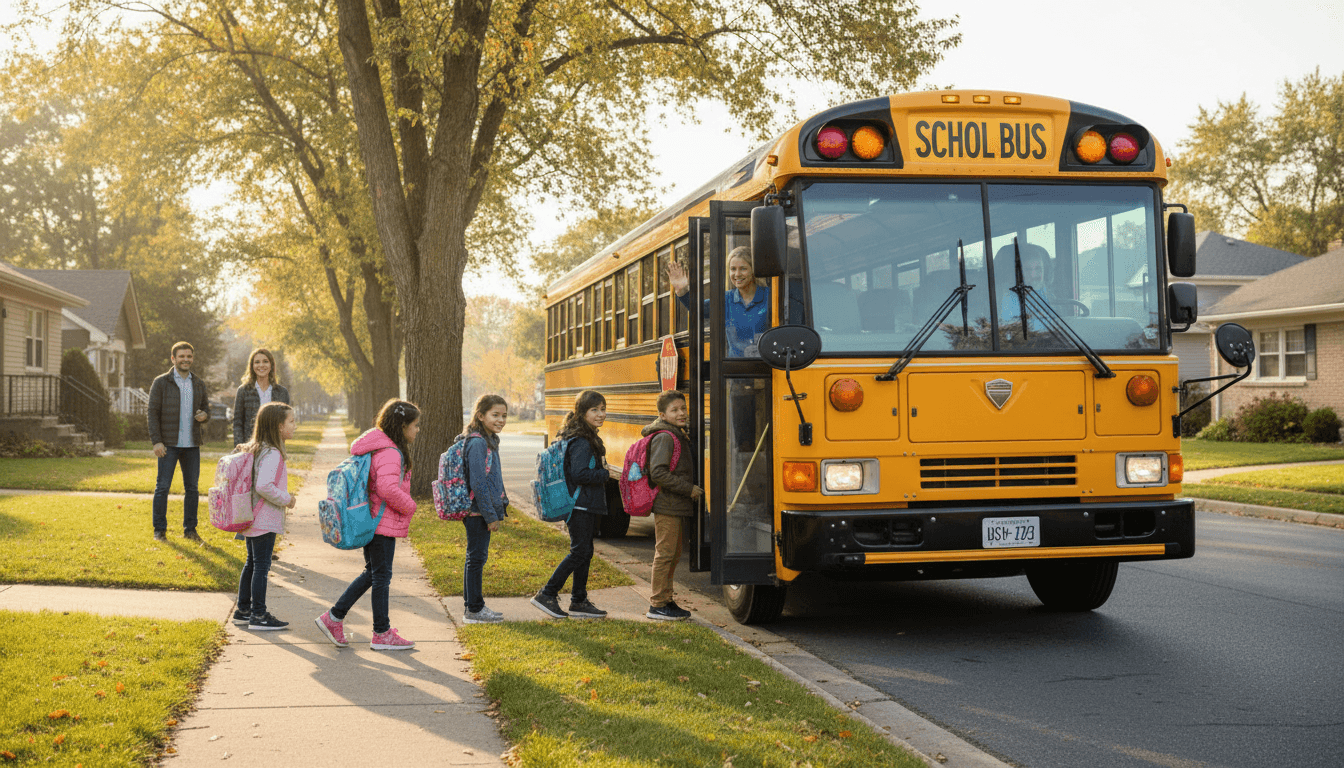
Transportation District Newsletter: How to Communicate Bus Route Changes, Policy Updates, and Safety Protocols to Families
Few district communications generate more phone calls than transportation updates. A change to a bus route affects hundreds of families at the exact moment their morning routine requires certainty. When the communication is unclear, late, or missing entirely, families fill the gap by calling the transportation office, the school office, each other, and in some cases the local news. Clear, timely transportation communication is not just good practice. It is a direct reduction in operational chaos.
Districts that communicate transportation changes well do something specific: they anticipate the questions families will ask and answer them before those families pick up the phone. That requires knowing what information families need and structuring the newsletter around those specific questions rather than around what is convenient for the district to say.
What Changes Require Immediate Communication
Not all transportation communications have the same urgency, but families cannot easily distinguish between a planned change and an emergency, so both require prompt notice. Situations that require immediate communication include:
- Route eliminations or consolidations that change a student's stop location
- Bus stop time changes, even minor ones
- Driver changes that affect pickup identification or authorization procedures
- Route delays caused by traffic, construction, or mechanical issues on the day of service
- School day schedule changes that affect dismissal times and bus pickup timing
- Emergency changes caused by road closures, weather, or driver shortages
- Policy changes that affect student eligibility for transportation services
For planned changes, give families as much notice as possible. Two weeks is a reasonable minimum for significant route changes. For same-day delays or emergencies, communicate as soon as the information is confirmed, even if the communication is brief and does not have all the details. A message that says "Route 14 is running approximately 20 minutes late this morning due to traffic on Route 9" is more useful than waiting until the full picture is clear.
The Structure of an Effective Transportation Update
Transportation newsletters that reduce confusion share a common structure. Lead with the change itself in the first sentence, not with background or context. "Starting Monday, October 6, the bus stop for Route 14 at Oak Street will move from the corner of Oak and Main to the corner of Oak and Elm" tells families what changed, when it changes, and where the new stop is. That information belongs at the top, not after two paragraphs explaining why the change was necessary.
Follow the change description with the effective date, a brief explanation of the reason (if it can be shared), any action families need to take, and contact information for questions. Keep the format consistent across all transportation communications so families learn to expect the information in the same place every time.
Transportation Eligibility: What Families Often Do Not Know
Transportation eligibility is one of the most commonly misunderstood areas of district policy. Families often assume transportation is provided for all students, or that their child qualifies based on factors that are not actually part of the eligibility criteria. The reality is that most districts provide transportation only to students who live beyond a certain distance from school, and that distance threshold varies by grade level.
Communicate eligibility criteria clearly at the start of each school year. Name the distance threshold for each grade band (elementary, middle, high school). Explain how the district measures distance. Describe the exceptions: students with disabilities may be entitled to transportation as part of their IEP regardless of distance, students experiencing homelessness under McKinney-Vento have transportation rights to their school of origin, and students in specific safety hazard zones may qualify regardless of distance.
If your district has an appeals process for families who believe their child should qualify for transportation, describe it. Families who know the process exists are more likely to use it rather than accepting a denial they believe is incorrect.
Bus Rider Safety: What Students and Families Need to Know
Safety communication is most effective when it is specific and behavioral. Rather than listing general safety values, describe the specific behaviors expected at the bus stop and on the bus:
- Arrive at the stop five minutes early and stand away from the road
- Wait for the bus to come to a complete stop and for the driver to signal before boarding
- Stay seated while the bus is moving and keep the aisle clear
- No fighting, yelling, or conduct that distracts the driver
- Exit at your assigned stop only; do not get off at an unassigned stop
For elementary families, add information about the authorized pickup procedure: what happens if a student arrives at their stop and no authorized adult is present, and how the driver or transportation office contacts the family.
Communicating Technology Tools for Transportation Tracking
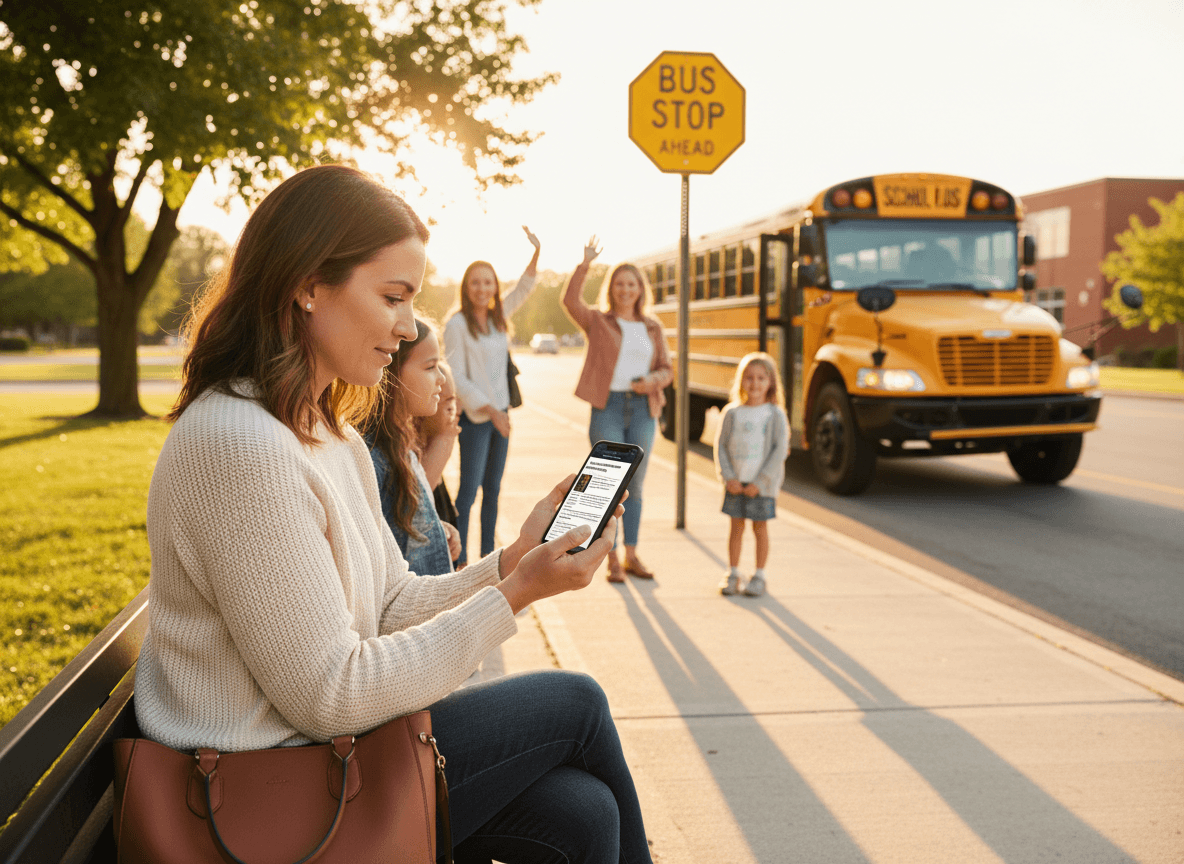
Many districts now use bus tracking apps that allow families to see where the bus is in real time. If your district offers a tracking app, your transportation newsletter is the right place to promote it. Families who can see that the bus is six minutes away do not call the school to ask where the bus is. That reduces call volume and reduces family anxiety simultaneously.
Describe how to download the app, how to link it to their student's route, and what information it provides. If the app has limitations (for example, it updates every two minutes rather than in real time, or it does not cover all routes), mention those limitations so families have accurate expectations.
Annual Transportation Communication: Back to School
The back-to-school transportation communication is the most important of the year. It reaches families before the first day, when they are actively trying to understand morning logistics. A strong back-to-school transportation newsletter covers: where to find your student's bus assignment, how bus assignments are determined, how to request a stop or eligibility review, the bus rider handbook or conduct policy, the authorized pickup procedure, and the district's bad weather or emergency day transportation protocols.
Send this communication as early as possible before the school year starts, and make bus assignment information available for lookup. Families who can confirm their child's bus number and stop location before the first day are confident on day one rather than scrambling at 6:45 AM.
After an Incident: Communication Protocol
When a bus is involved in an accident, a student is left at the wrong stop, or a conduct incident occurs on a bus, families expect to hear from the district quickly. Have a communication protocol ready before an incident occurs. What does the district communicate to affected families? What does it communicate to all families? How quickly does the communication go out?
Prompt, factual communication after a transportation incident prevents speculation and demonstrates that the district is responsive. The communication should describe what happened, what immediate actions the district took, and what next steps are planned. It should not include speculation, assign blame before an investigation is complete, or overstate the severity of the incident to protect the district's image.
Get one newsletter idea every week.
Free. For teachers. No spam.
Frequently asked questions
When should a district communicate transportation changes to families?
Communicate as early as possible, and always before the change takes effect. For planned route changes, give families at least two weeks notice whenever possible and send a reminder one or two days before the change begins. For emergency changes caused by road closures, weather, or driver shortages, communicate the same day with as much lead time as the situation allows. Families who are caught off guard by transportation changes lose trust quickly because the stakes are high: a child standing at a bus stop that no longer exists is a safety issue, not just an inconvenience.
What information should a transportation change newsletter include?
Include the specific change (which routes are affected, what the old stop location or time was, what the new stop location or time is), the effective date of the change, the reason for the change if it can be shared, contact information for families with questions, and any action required from families. If the change requires families to register for a new route, update an address, or confirm a bus stop, make that action step visible and easy to complete. Do not bury the action in the middle of a long communication.
How should districts communicate transportation eligibility policies to families?
Transportation eligibility is determined by factors like distance from school, grade level, and special circumstances such as IEP requirements or McKinney-Vento provisions. Many families do not know the eligibility rules until they find out their child does not qualify for a bus. Communicate transportation eligibility criteria at the start of each school year, including the distance threshold for each grade band, how eligibility is determined for students with disabilities, and how families can appeal a transportation eligibility determination.
How should districts communicate transportation safety protocols to families?
Safety communication should cover bus stop behavior expectations, what happens when a student misses the bus, bus rider conduct policies and consequences, and what to do if a student feels unsafe on the bus. For elementary students, it should also cover the authorized pickup procedure: who is authorized to pick up a student from the bus stop, and what the driver does if no authorized adult is present. This information is most effective when it goes home at the start of the school year and is reinforced after any safety incident.
How can Daystage help districts send transportation updates to families?
Daystage lets district transportation departments send route-specific updates to only the families affected by a change, rather than sending a confusing district-wide communication that describes changes irrelevant to most recipients. When a specific route is modified, you can pull the families on that route and send them a targeted update with their new stop information and effective date, reducing confusion and call volume to the transportation office.

Adi Ackerman
Author
Adi Ackerman is a former classroom teacher and curriculum writer with 8 years in K-8 schools. She writes about school communication, parent engagement, and what actually works in real classrooms.
More for District
New Schools and Boundary Changes District Newsletter: How to Communicate Attendance Zones and Transfer Processes to Families
District · 7 min read
School Improvement District Newsletter: How to Communicate CSI Status and Turnaround Plans to Families
District · 7 min read
ESSA District Newsletter: How to Communicate Accountability Results and School Ratings to Families
District · 7 min read
Ready to send your first newsletter?
3 newsletters free. No credit card. First one ready in under 5 minutes.
Get started free