
New Schools and Boundary Changes District Newsletter: How to Communicate Attendance Zones and Transfer Processes to Families

No communication a school district sends generates more community emotion than a boundary change announcement. Attendance boundaries determine which school a child attends, which affects friendships, commute times, program access, and in many communities, property values. Families who have chosen where to live based partly on school assignment are not indifferent when that assignment changes.
Districts that communicate boundary changes poorly, with little notice and thin rationale, turn policy decisions into community crises. Districts that communicate them well, with early engagement, clear rationale, and honest acknowledgment of the trade-offs, still encounter opposition but from a foundation of trust rather than surprise. The difference is not whether families are happy about the change. It is whether they believe the district is being straight with them.
Starting the Conversation Before the Decision Is Made
The most effective boundary change communications begin before the district has decided anything. When a new school is being built, or when enrollment data shows that a boundary review is coming, communicate that clearly: "Our district is growing, and we will need to review attendance boundaries in the next school year to balance enrollment across our schools. We will be hosting community input sessions and publishing a boundary review timeline. Here is how you can stay informed and participate."
This early communication serves two purposes. It prevents the shock of a sudden announcement. And it establishes the district as a transparent actor who involves the community in decision-making rather than presenting fully formed decisions for acceptance. Families who participated in the input process, even if they did not get the outcome they wanted, are less likely to feel that the district acted arbitrarily.
Explaining the Rationale Clearly
Boundary changes have reasons. Overcrowded schools need relief. New schools need students. Demographic shifts create imbalances across a district. Equity goals require redistribution of resources and programming. Whatever the specific rationale is for your district's boundary review, state it plainly in your communication.
Be specific. "School A is at 118 percent of capacity and students are in temporary classrooms. School B, which opens in August, is four miles away and will bring school A's enrollment to 87 percent of capacity while operating B at 82 percent" is more compelling than "we are making adjustments to ensure high-quality learning environments for all students." Families can evaluate specific data. They cannot evaluate vague assurances.
If equity is part of the rationale, say so and explain what that means specifically. Which schools have been under- or over-resourced? What will the boundary change address? Acknowledging equity explicitly signals that the district is making decisions based on student needs rather than the preferences of whichever community group organized most effectively.
Communicating the New Boundary Map
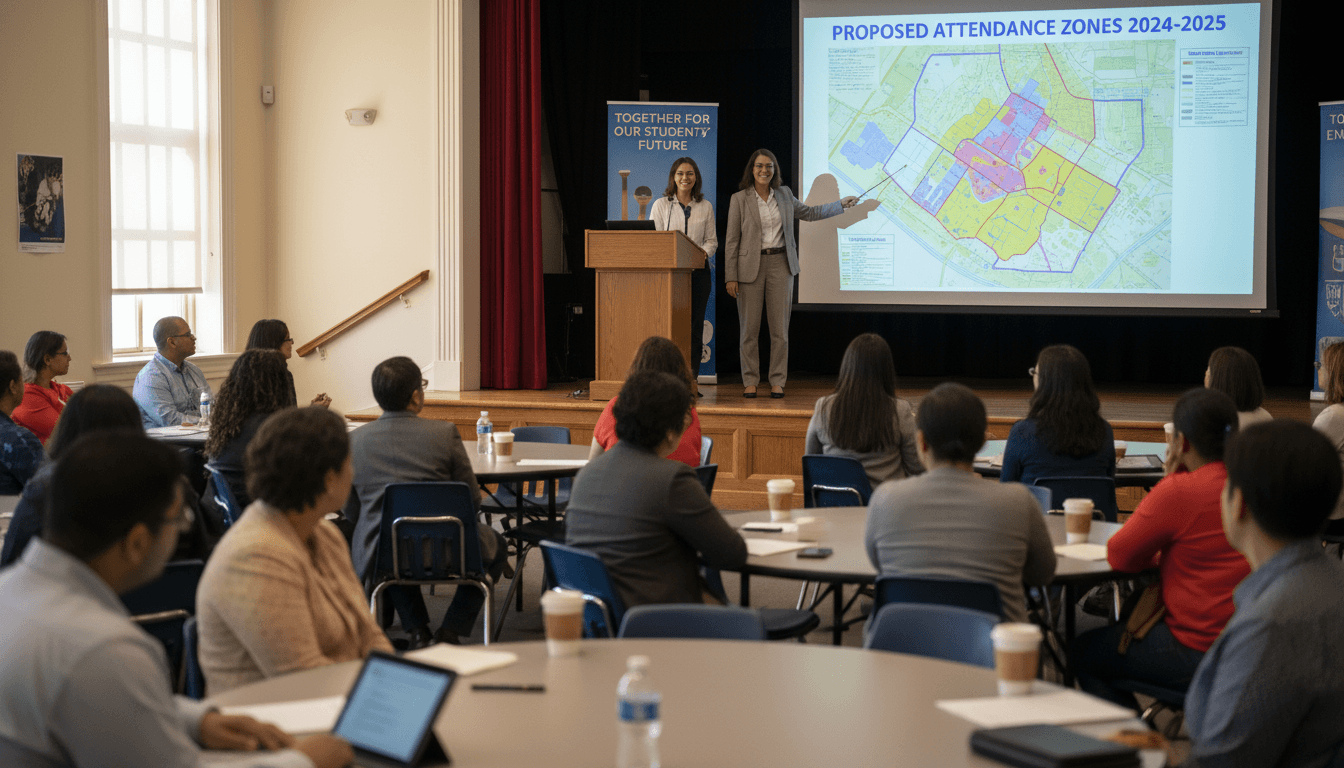
The boundary map is the centerpiece of every boundary change communication, and it is often the most confusing part. Families need to be able to determine whether their specific address is affected, and a district-wide map at low resolution does not allow that. Your newsletter should include:
- A link to an interactive or searchable map where families can enter their address and see their new school assignment
- The specific streets or areas that form the new boundary lines
- A summary of how many students are affected and which schools are involved
- The effective date of the boundary change
- Separate contact information or lookup tools for families who are not sure whether their address is affected
If your district does not have an interactive address lookup tool, build a clear FAQ into the newsletter that addresses the most common address ambiguities. Boundary lines often run down specific streets, creating confusion for families on both sides of the line about which side they are on.
Protecting Continuity for Affected Students
Boundary changes that take effect at the start of a new school year can displace students who have established relationships, activities, and routines at their current school. Most districts provide some form of continuity protection, but families often do not know these provisions exist.
Your newsletter should explain the continuity provisions clearly:
- Grandfathering provisions that allow currently enrolled students to remain at their school through a specific grade or transition point
- Sibling provisions that allow families with children at multiple grade levels to keep siblings at the same school
- Completion provisions that allow students in their final year at a school (fifth grade, eighth grade) to finish rather than being reassigned mid-cycle
- Athletic and activity continuity provisions for students in year-long activities at the affected school
Families who know these provisions exist will ask about them. Families who do not know will assume their child has no option but to change schools immediately. Communicating the provisions proactively reduces both the stress families experience and the volume of individual exception requests the district office receives.
Introducing the New School
For families who are assigned to a new school, either through a boundary change or because a new school is opening, the newsletter should do more than announce the assignment. It should begin building confidence in the new school.
Introduce the principal by name and in their own voice if possible. Describe the school's programs and what makes them strong. If the building is new, share photos or describe the facility. If the school is an existing building with a new assignment, describe the current school culture and what families can expect. The goal is for families to arrive at orientation already feeling some connection to the school rather than feeling reluctant and displaced.
If the new school has specific programs that are reasons to be enthusiastic about the assignment, lead with those. A family assigned to a new school that has a dual-language program, a CTE pathway, or a strong arts program has a reason to see the change as an opportunity rather than only as a disruption.
The Transfer Process: Who Qualifies and How to Apply
Boundary changes almost always generate transfer requests. Some will be for hardship reasons. Some will be from families who simply prefer their current school. Your newsletter should explain the transfer process with specificity: what types of transfers the district considers, the criteria for hardship transfers, the application deadlines, how decisions are made, and what the appeals process looks like if a request is denied.
Be honest about capacity constraints. If the district cannot accommodate all transfer requests to a popular school, say so rather than implying that transfers are available without limitation. Families who apply expecting approval and are denied experience the denial as a broken promise. Families who apply with accurate expectations of the process are better positioned to accept the outcome.
Communication Cadence for a Multi-Year Rollout
Major boundary changes or new school openings often unfold over multiple years. A school under construction requires boundary planning one to two years out, with community engagement, draft map publication, final map adoption, and implementation all requiring separate communications. Build a communication calendar that reaches families at each decision point with the information relevant to where they are in the process.
Send a brief update at each milestone, even when there is nothing new to announce. "The boundary review committee met this month and is currently evaluating three options" reassures families that the process is moving and that they have not been forgotten. Silence between updates generates rumors that are harder to correct than updates that contain nothing dramatic.
Get one newsletter idea every week.
Free. For teachers. No spam.
Frequently asked questions
When should a district communicate about upcoming boundary changes?
Begin communication as early as the process allows, ideally during the public planning phase before any decisions are finalized. Families and community members who learn about a boundary change from a news report before hearing from the district feel blindsided and are more likely to organize opposition. Early communication that explains the purpose of the process, how community input will be gathered, and what criteria the district will use to evaluate boundary options establishes the district as transparent before any specific change is announced.
What information must a boundary change communication include?
Families need to know which addresses are affected, what school their child will attend under the new boundary, when the change takes effect, what happens to students currently enrolled at a school who will be rezoned out, whether transfer options are available, and what the rationale for the change is. The rationale is particularly important: families who understand that a boundary change is tied to a new school opening, overcrowding relief, or equity goals are more likely to accept the change than families who receive no explanation.
How should districts communicate about new school openings?
New school opening communication should begin well in advance of the first day. Families need to know what grades the new school will serve, who the principal is, where the school is located, what programs will be offered, how transportation will work, and how enrollment or assignment works for the new school. Families who are assigned to a new school by a boundary change need reassurance about staffing, facilities, and programs. Families who have the option to choose the new school need enough information to make a meaningful choice.
What are hardship transfer provisions and how should districts communicate them?
Most districts provide some form of hardship or exception transfer process for families who are significantly affected by a boundary change. Common provisions include allowing a student to complete their current school year or finish elementary school before being required to change, sibling exception provisions that allow all children in a family to attend the same school, and hardship transfers for significant childcare, medical, or family circumstances. These provisions should be clearly communicated in every boundary change newsletter so families know they exist and understand how to request them.
How can Daystage help districts communicate boundary changes and new school openings?
Daystage lets district teams send targeted newsletters to families in specific geographic areas affected by a boundary change, so families who are not affected do not receive a confusing communication about changes that do not apply to them. For new school openings, you can build a newsletter series that introduces the school, its principal, its programs, and its first-day logistics over several months, giving families time to develop familiarity and confidence before day one.

Adi Ackerman
Author
Adi Ackerman is a former classroom teacher and curriculum writer with 8 years in K-8 schools. She writes about school communication, parent engagement, and what actually works in real classrooms.
More for District
Transportation District Newsletter: How to Communicate Bus Route Changes, Policy Updates, and Safety Protocols to Families
District · 6 min read
School Improvement District Newsletter: How to Communicate CSI Status and Turnaround Plans to Families
District · 7 min read
ESSA District Newsletter: How to Communicate Accountability Results and School Ratings to Families
District · 7 min read
Ready to send your first newsletter?
3 newsletters free. No credit card. First one ready in under 5 minutes.
Get started free