

School Improvement District Newsletter: How to Communicate CSI Status and Turnaround Plans to Families
When a school is identified for Comprehensive Support and Improvement, the district faces a communication challenge that has no clean solution. The school's performance is a matter of public record. State report cards are published. Local news outlets write about the accountability lists. Families will find out, one way or another.
The question for district leaders is whether families find out from you, with context and a plan, or from somewhere else, without either of those things. How a district communicates school improvement status determines whether families become partners in the turnaround or adversaries of it.
What CSI Status Actually Means
Under ESSA, states must identify schools for Comprehensive Support and Improvement based on their annual accountability data. The criteria vary by state, but CSI typically applies to schools in the bottom five percent of performance statewide, schools with graduation rates below 67 percent, and schools with persistent underperformance by all students across multiple indicators.
CSI status is not a punishment. It is a trigger for a more intensive support process. The district is required to develop a school improvement plan in partnership with the school, provide additional support, and submit the plan to the state for review. The state must also provide additional support to identified schools, though the nature of that support varies widely.
Your district newsletter should explain what CSI status means in these practical terms, not just as an accountability label. What changes at the school? What support is coming? What does the improvement plan require? Families who understand the mechanics of the designation are better positioned to evaluate the district's response.
The Needs Assessment: What the District Found
Before a school improvement plan can be developed, the district must conduct a comprehensive needs assessment. This assessment examines instructional quality, teacher and leader effectiveness, the use of evidence-based practices, and the needs of all student subgroups. It is the diagnostic that precedes the prescription.
Sharing key findings from the needs assessment in your newsletter is a powerful move. It demonstrates that the district is approaching improvement analytically rather than reactively. It shows families that the district understands why the school is struggling, not just that it is struggling. And it creates a baseline against which families can evaluate whether the improvement plan actually addresses the identified problems.
You do not need to share the full needs assessment. A paragraph summarizing the two or three primary findings is enough. "The assessment found that students in grades 3 through 5 are reading below grade level, that instructional time is frequently interrupted, and that the school has experienced high teacher turnover over the past three years" tells families more than a generic statement about the need for improvement.
What Goes Into the Improvement Plan
ESSA requires that CSI school improvement plans include evidence-based interventions for the identified areas of need. Evidence-based is a specific term: it means practices supported by rigorous research evidence, not just programs that schools believe are working. The improvement plan must also include a timeline, a method for evaluating progress, and provisions for family and community engagement.
When communicating the improvement plan to families, focus on what is tangible and observable. What will students experience differently this year? Will there be extended learning time before or after school? New reading or math programs? Additional counselors or family liaisons? Changed scheduling or grouping practices? These specifics give families something to watch for and ask about.
Be honest about what the plan does not address. If the needs assessment found multiple areas of concern but the plan is focusing on literacy first because that is where the evidence base is strongest, say so. Families who understand the reasoning behind prioritization decisions are more likely to trust that the district is making thoughtful choices.
Family Engagement as a Required Component
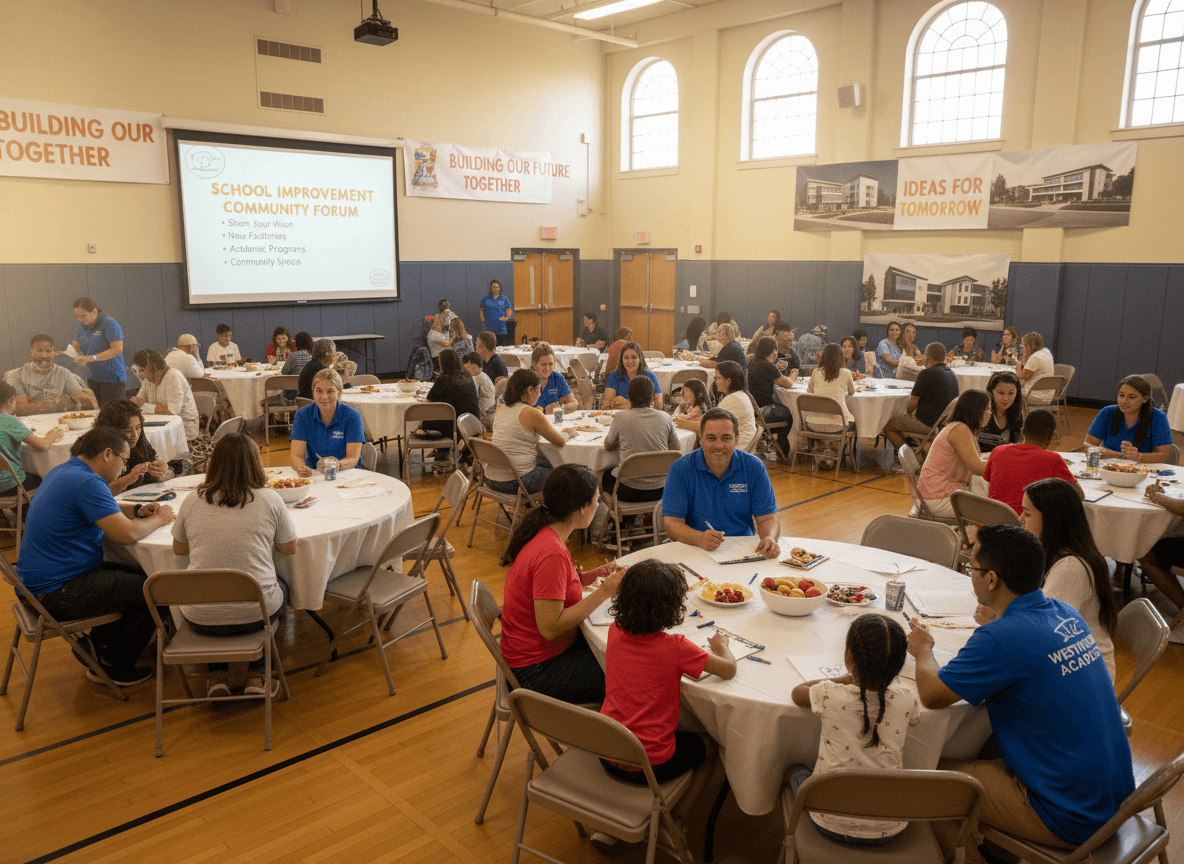
ESSA explicitly requires family and community engagement in the school improvement process. This is not optional and it is not satisfied by one community meeting with low attendance. Meaningful engagement means creating multiple access points, reaching families who do not typically attend school events, collecting and responding to family input, and communicating back to families about how their input shaped the plan.
Your newsletter is an engagement tool, but it is not enough on its own. Use the newsletter to announce input opportunities, explain how to participate, and summarize what families said and what the district did with that feedback. This creates a communication loop that demonstrates the district is listening rather than just broadcasting.
If your district is establishing a school improvement advisory committee or family engagement team, recruit through the newsletter. Families who participate in improvement governance are among the most powerful communicators of school progress to the broader community. Getting them involved early produces dividends well beyond compliance.
Progress Updates: Closing the Communication Loop
A single communication at the time of CSI identification is not enough. Families need to see that the improvement plan is being implemented, that data is being collected, and that the district is willing to adjust its approach when something is not working. Regular progress updates, even brief ones, sustain family confidence through what is often a multi-year improvement process.
Consider a quarterly update newsletter for families in CSI schools. Each update should address the same questions: What did we say we would do? What have we done? What are we seeing in the data? What are we adjusting? This structure creates accountability for the district's own commitments and gives families a framework for evaluating progress.
What Happens If the School Does Not Improve
Families deserve to know what the escalation path looks like. Under ESSA, schools that do not meet their improvement targets after a set period face more intensive state-directed interventions. The specific consequences vary by state, but they can include changes to school governance, leadership transitions, or in some cases school restructuring.
Communicating this information proactively, rather than waiting until the district faces a more difficult announcement, builds trust. It demonstrates that the district understands the stakes and is taking the improvement process seriously. It also gives families a clearer picture of what continued underperformance means for the school's future.
Tone Matters as Much as Content
School improvement communication is high-stakes, and the temptation is to write in formal, distancing language that feels safer than plain speech. Resist that. Families of students in low-performing schools are not served by bureaucratic language that obscures more than it reveals. Write directly. Acknowledge that the data reflects real challenges for real students. Make the improvement plan feel like a commitment, not a compliance document.
A district that communicates about school improvement in plain, honest, specific language builds trust that compounds over time. That trust is what makes it possible to deliver harder news later, ask for patience during a difficult transition, or request community support for additional resources. The communication investment made during an improvement designation pays dividends long after the school exits that status.
Get one newsletter idea every week.
Free. For teachers. No spam.
Frequently asked questions
What is CSI status and what does it trigger?
Comprehensive Support and Improvement (CSI) is the federal designation for schools identified as the lowest-performing in a state under ESSA accountability. It applies to schools in approximately the bottom five percent of performance statewide, as well as schools with graduation rates below 67 percent. CSI status triggers a required school improvement planning process that must include community and family engagement, evidence-based interventions, additional supports from the district, and state review of the improvement plan.
Are districts required to notify families about CSI status?
ESSA requires that school improvement information be publicly reported on state and district report cards. Districts are also required to notify parents of students in CSI schools about the school's status and the improvement actions being taken. Beyond that minimum, proactive communication is both a best practice and a trust issue. Families who find out about CSI status through news coverage before hearing from the district start the improvement process with significantly less confidence in school leadership.
How should a district communicate about a school's improvement plan without alarming families?
Lead with honesty, specificity, and action. Acknowledge the accountability finding clearly. Explain what the data showed that led to the designation. Then pivot quickly to the specific actions in the improvement plan: new instructional approaches, staffing changes, extended learning time, family engagement strategies, and the timeline for implementation. Families who understand the plan and see the district taking concrete steps are far more likely to support the improvement process than families who only hear vague reassurances.
How can families be involved in the school improvement process?
ESSA requires that CSI school improvement plans include meaningful engagement with stakeholders, including families. This means more than holding one community meeting. Districts should create opportunities for families to provide input on needs assessments, review draft improvement plans before they are finalized, serve on school improvement teams, and receive regular updates on progress. Your newsletter can recruit for these opportunities, not just report on them.
How can Daystage help districts communicate school improvement updates?
Daystage lets district teams send targeted newsletters to families in specific schools, so families at a CSI school receive a detailed improvement plan summary while the broader district receives a general accountability update. You can schedule follow-up communications tied to implementation milestones and track which families have received updates, making it easier to meet ESSA's engagement documentation requirements.

Adi Ackerman
Author
Adi Ackerman is a former classroom teacher and curriculum writer with 8 years in K-8 schools. She writes about school communication, parent engagement, and what actually works in real classrooms.
More for District
ESSA District Newsletter: How to Communicate Accountability Results and School Ratings to Families
District · 7 min read
Gifted Education District Newsletter: How to Communicate Identification, Programs, and Enrichment to Families
District · 6 min read
Bilingual Education District Newsletter: How to Communicate Dual-Language Programs and Language Development to Families
District · 6 min read
Ready to send your first newsletter?
3 newsletters free. No credit card. First one ready in under 5 minutes.
Get started free