

STEM Department Newsletter: Science Technology and Innovation Updates
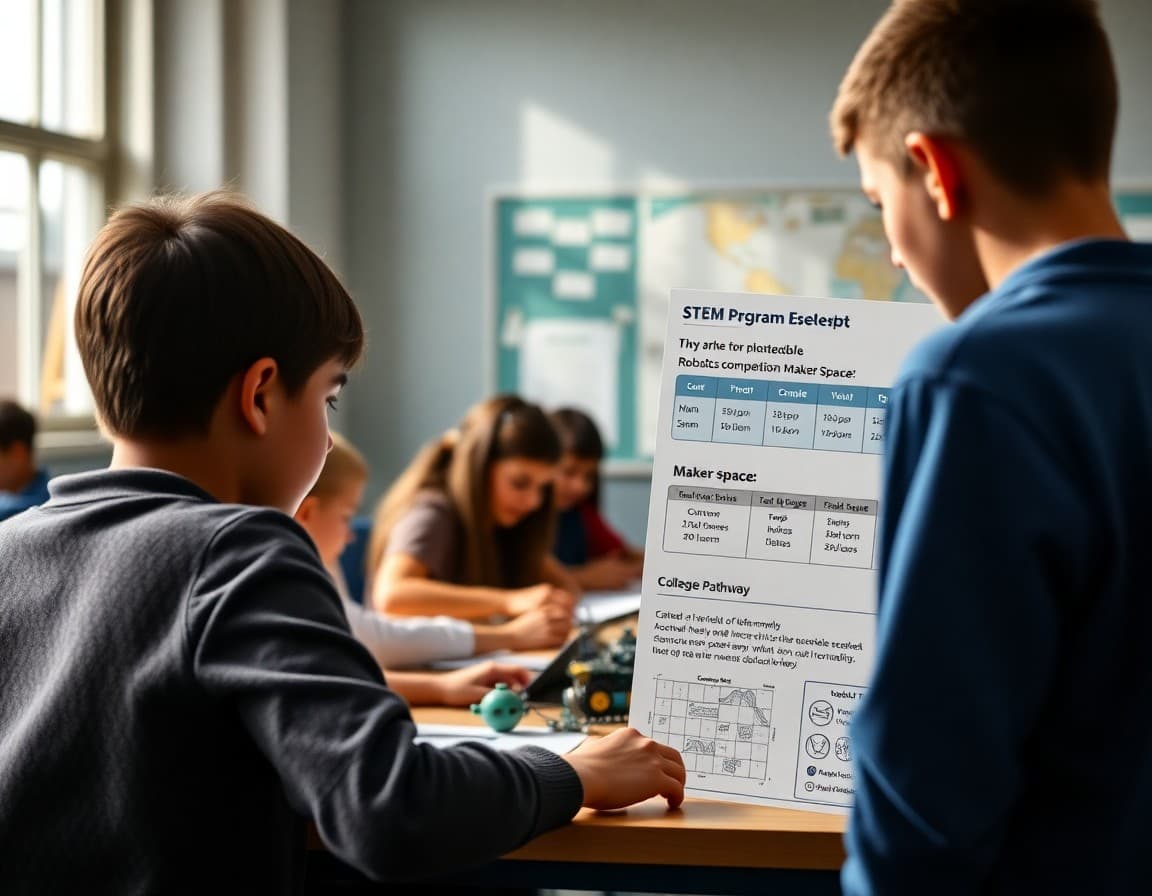
STEM programs have more to show than almost any other department in a school. Students are building robots, designing bridges, coding apps, investigating environmental chemistry, and launching model rockets. A STEM newsletter that shows this work -- not just describes it -- is one of the most effective communication tools available. Families who see their student's project in a photo taken in the maker space understand what the program offers in a way that a bulleted list of course names cannot convey.
Lead With What Students Are Building Right Now
The first section of every STEM newsletter should describe what students across the program are currently working on. Specific, concrete, and active. "Robotics students are in the prototyping phase of their autonomous navigation challenge. Three teams are testing different sensor configurations. Engineering students are mid-way through the bridge load-bearing competition: the current record holder can support 18 pounds before failure. Computer Science students are deploying their first web apps to a live server this week." That kind of update makes the program feel alive and makes families want to know more.
Competition Calendars Are High-Value Content
STEM students participate in a range of competitions throughout the year, and the registration deadlines are often strict. A competition calendar published at the start of the year prevents students from missing opportunities because they found out a week after registration closed. Include: FIRST Robotics Competition (FRC) build season dates and regional events, Science Olympiad invitational and regional dates, MATHCOUNTS school competition date, TSA (Technology Student Association) chapter and regional competition schedule, Science Fair school deadline and regional advancement date, and any local STEM challenges or hackathons.
Make the Maker Space Known
Many schools have maker spaces that are underutilized because students do not know they exist or do not know they are welcome to use them independently. A newsletter section describing what the maker space offers, what certifications are required for specific equipment, and the open hours invites the students who most need it -- the ones building a project for a competition or working on a personal invention -- to take advantage of the resource. "Our maker space is open Monday through Thursday 3-5 PM with a staff member present. Equipment available: Prusa 3D printers, Glowforge laser cutter, Arduino and Raspberry Pi kits, soldering stations, and a vinyl cutter. Students using the laser cutter or soldering station must complete a 30-minute safety certification first."
A Sample STEM Department Newsletter Section
Here is a template for a fall newsletter:
"STEM Program Update, Fall 2025 -- Robotics (FIRST Robotics): Build season kickoff: January 4. Regional competition: March 14-16, Riverside Convention Center. Family volunteers needed for regional: sign up at [link]. Current off-season: students building practice bots for skills development. Practices Tuesdays and Thursdays, 3:30-6 PM. Science Olympiad: 15 events, 15 student specialists. Invitational: November 22 (away, bus transportation). Regional: February 8. New members can join through November 1. Contact Ms. Park. Maker Space: open Monday-Thursday 3-5 PM. New equipment: laser cutter now available (certification required). Certification sessions: October 21 and 28, 3 PM. STEM Pathway: students interested in engineering, computer science, or biomedical science should speak with the STEM coordinator about course selection for next year. Industry partner event: Google engineers visiting November 7, 4 PM, STEM Lab. Open to all students. RSVP at [link]."
Industry Partnerships Are Recruiting and Retention Tools
STEM programs that connect students with working engineers, data scientists, and researchers retain students better and produce stronger career motivation than those that operate in isolation from industry. When an industry partner visits, guest speaks, or offers a site visit, communicate it prominently and in advance. "Google engineers will visit our STEM lab on November 7 to discuss how they use machine learning in Google Maps. Open to all students interested in computer science. RSVP required, space limited to 30." That event is a reason for a borderline student to stay interested in computer science. Do not let it pass without a newsletter notice.
Communicate About Girls in STEM Specifically
STEM programs nationally face persistent gender imbalance. A newsletter that specifically mentions programs, competitions, and communities designed for girls and young women in STEM -- Girls Who Code, Society of Women Engineers competitions, FIRST's all-girls robotics teams, STEM summer programs specifically for girls -- communicates that the program actively works to include students who are statistically underrepresented. Daystage supports schools that include targeted communication like this alongside broader STEM announcements.
Post-Competition Results Build Department Pride
When STEM students compete and place, the newsletter is where the whole school community hears about it. "Our Science Olympiad team placed second at regionals in five events, including first place in Experimental Design. Two students, Marcus and Julia, are advancing to state in Environmental Chemistry." Specific, named recognition builds pride across the department and motivates the younger students who are still deciding whether STEM is for them.
Get one newsletter idea every week.
Free. For teachers. No spam.
Frequently asked questions
What should a STEM department newsletter include?
Current project descriptions and what students are building or investigating, competition calendars with registration deadlines (FIRST Robotics, Science Olympiad, MATHCOUNTS, TSA), maker space hours and what equipment is available, internship and research opportunities for high school students, STEM career pathway information, any guest speakers or industry site visits, and summer STEM program opportunities.
How does a STEM newsletter communicate about robotics teams?
Include the team's current build season status, upcoming competition dates and locations, what family support is needed (transportation, chaperoning, team meals), how students can join the team or as what roles, and the cost of participation including any fee support options. Robotics teams are significant time commitments during build season, and families who understand the schedule upfront are better prepared to support their student through it.
How should a STEM newsletter communicate about maker space resources?
List the equipment available (3D printers, laser cutter, soldering stations, CNC router, electronics components), the hours students can access the maker space with or without a teacher, any safety certification required before using specific equipment, and current projects or prototypes being built by students. A maker space that is well-publicized attracts the students who would most benefit from its resources.
How do STEM departments communicate about industry partnerships and internships?
Include the partner company or institution, the type of opportunity (job shadow, summer internship, project mentorship, guest speaker), eligibility requirements, application deadline, and what students can expect to learn from the experience. STEM internship opportunities for high school students are increasingly common but still underutilized because students and families do not know about them until after the application window has closed.
Can Daystage support a STEM department newsletter?
Yes. Daystage lets STEM coordinators build a newsletter with project photos, competition calendars, and maker space announcements and send it to students and families in one step. Photo-rich newsletters that show students actually building, designing, and competing are especially effective for STEM departments because the visual evidence of hands-on learning is more compelling than any written description.

Adi Ackerman
Author
Adi Ackerman is a former classroom teacher and curriculum writer with 8 years in K-8 schools. She writes about school communication, parent engagement, and what actually works in real classrooms.
More for Department Newsletters
Science Department Newsletter: Labs Research and Learning Updates
Department Newsletters · 6 min read
Math Department Newsletter: Updates for Students and Families
Department Newsletters · 6 min read
Career Technical Education Department Newsletter: Programs and Pathways
Department Newsletters · 6 min read
Ready to send your first newsletter?
3 newsletters free. No credit card. First one ready in under 5 minutes.
Get started free