

Career Technical Education Department Newsletter: Programs and Pathways
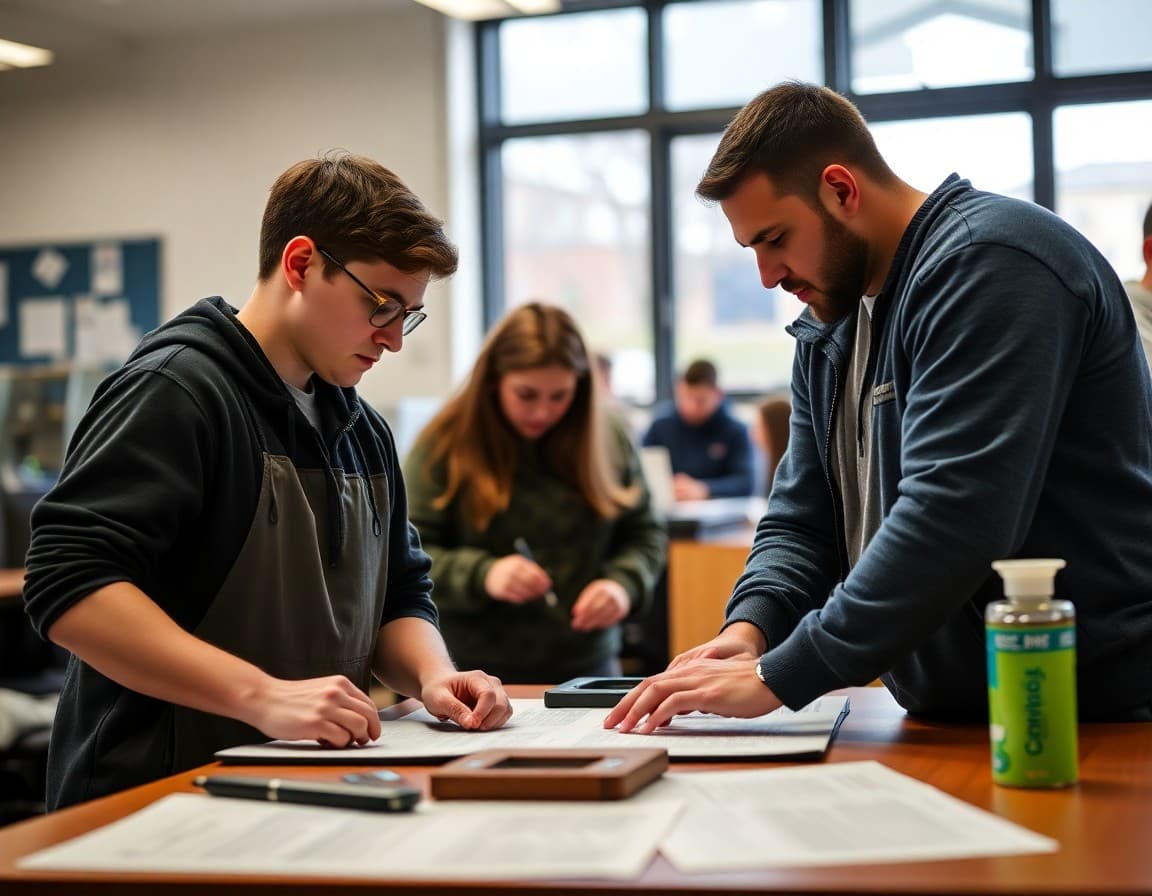
Career Technical Education programs are among the most underexplained offerings in high schools. Students who could earn industry certifications, accumulate college credits, and connect with direct-hire employers before graduation do not always know what is available to them. Families who hear "CTE" often picture shop class from 1985, not a health science pathway that leads directly to a nursing certification or a computer science program that prepares students for Google internships. A well-run CTE department newsletter changes that perception and turns program awareness into student opportunity.
Lead With Outcomes, Not Course Descriptions
Course descriptions focus on what is taught. Outcomes focus on what students earn. "Introduction to Health Science (one semester)" is less compelling than "Students who complete the Health Science pathway earn CNA certification eligibility and can apply directly to local hospitals as certified nursing assistants before graduating." Lead every program announcement with the outcome: the certification, the employment connection, the college credit, or the skill that translates to a job. That framing tells families what the program is worth, not just what it covers.
Publish the Full Program Pathway Map
CTE programs build progressively: introductory course, concentrator course, completer course. Students who do not understand this sequence often take the first course and stop, missing the certification eligibility, college credit, or advanced coursework that only comes with completing the pathway. Your newsletter should include a visual pathway map once a year, organized by career cluster: "Health Science pathway: Health Science Foundations (Year 1) -- Medical Terminology (Year 2) -- Clinical Internship (Year 3). Completers earn: 6 articulated college credits and CNA certification exam eligibility."
Industry Certification Exams Need Advance Communication
Many industry certifications offered through high school CTE programs have exam windows, registration deadlines, and fees that students need to plan around. Your newsletter should announce each certification exam at least six weeks before the registration deadline, with the exam date, registration process, cost and fee waiver availability, and what preparing looks like. "Adobe Certified Professional exam: offered the week of November 18. Registration closes October 31. Cost: $180, covered by school for enrolled students who complete all coursework. Prep resources provided in class. Contact Mr. Davis, Room 207."
A Sample CTE Department Newsletter Section
Here is a template for a quarterly newsletter:
"CTE Department Update, Fall 2025 -- Business and Finance pathway: FBLA chapter meeting every other Tuesday, 3 PM, Room 112. Regional competition: January 24. Registration deadline: December 15. Students who advance to state represent the school; travel expenses covered. Health Science pathway: CNA exam prep workshop, November 15 (optional, in Room 118). Exam window: December 8-12. Students who complete the 3-course pathway are eligible to take the exam at no cost through Perkins funding. Computer Science pathway: Google certification exam for students in CyberSecurity Advanced, offered January 10. Practice tests in class starting October 28. Work-based learning: 4 internship placements available at Riverside Medical Center, spring semester. Application deadline: November 1. Transportation provided. Open to Health Science concentrators and completers. Contact department chair Ms. Okafor at mokafor@school.edu."
SkillsUSA and FBLA Competitions Deserve Visibility
CTE competitions through organizations like SkillsUSA, FBLA (Future Business Leaders of America), HOSA (Health Occupations Students of America), and FFA give students external validation and resume-building experience that academic courses rarely provide. Your newsletter should explain what each organization does, how students can join, what the competition structure looks like, and what winning at different levels means: "Students who place at the state SkillsUSA competition advance to nationals in Atlanta. Three of our students placed in the top five at state last year." That specificity makes competitions feel achievable rather than distant.
Highlight Employer Partnerships
Many CTE programs have direct relationships with local employers who hire graduates, provide equipment, or offer internships. A newsletter section that names these partners and what they provide gives students and families a concrete picture of where the program leads. "Our computer science program is partnered with Riverside Tech, who last year hired three graduates directly into entry-level positions. Two of those graduates are now enrolled in community college part-time." That outcome story converts a skeptical family into a CTE advocate.
Explain Graduation Pathway Credit
In most states, CTE courses can fulfill graduation requirements in ways that families do not know about. A CTE newsletter should explain any credit-bearing connections: courses that fulfill elective requirements, courses that count toward specific pathway endorsements on the diploma, and articulation agreements with community colleges. "Students who complete the full Computer Science pathway earn 6 articulated college credits transferable to [partner community college]. These credits transfer as CIS 101 and CIS 110, covering 6 of the 60 units required for an Associates in Computer Science."
Get one newsletter idea every week.
Free. For teachers. No spam.
Frequently asked questions
What should a CTE department newsletter include?
Industry certification examination schedules and registration information, internship and work-based learning opportunities, program pathway descriptions from introductory through capstone courses, advisory committee updates, equipment or materials students need, any industry partner visits or events, student achievement in competitions like SkillsUSA or FBLA, and graduation pathway information for students using CTE courses to meet graduation requirements.
How should CTE departments explain program pathways to families?
Use a course map that shows the sequence from introductory course through concentrator and completer status. Explain what each level requires and what students gain: 'Students who complete the full Health Science pathway (3 courses) earn CNA certification eligibility and 6 transferable college credits.' Families who understand the full pathway value invest more in supporting their student's progression than those who see each course as a standalone elective.
How do CTE newsletters communicate about industry certifications?
Include the certification name, what it is recognized for, who administers the exam, when the exam is offered, what the registration deadline is, and what score or outcome is required. For certifications that have a fee, explain the school's policy on covering costs and how families who cannot pay can access fee waivers. Many industry certifications are free or subsidized for high school students through Perkins funding, and families should know this.
How do CTE departments communicate about work-based learning and internship opportunities?
Announce each opportunity as early as possible with the employer name, what students will do, the time commitment, whether transportation is provided or needed, the application or interview process, and the deadline to express interest. Include what students gain beyond the experience: industry hours that count toward certifications, connections to employers who hire directly from these programs, and how the experience looks on a college application.
Can Daystage support a CTE department newsletter?
Yes. Daystage lets CTE department chairs build a newsletter with program pathway charts, certification exam schedules, and internship announcements and send it to all CTE students and their families in one step. Including employer logos or photos of students in work-based learning settings makes the newsletter concrete and compelling for families comparing CTE to academic course options.

Adi Ackerman
Author
Adi Ackerman is a former classroom teacher and curriculum writer with 8 years in K-8 schools. She writes about school communication, parent engagement, and what actually works in real classrooms.
More for Department Newsletters
Math Department Newsletter: Updates for Students and Families
Department Newsletters · 6 min read
STEM Department Newsletter: Science Technology and Innovation Updates
Department Newsletters · 6 min read
Athletics Department Newsletter Guide: Communicating Sports Programs, Eligibility, and Events to Families
Department Newsletters · 5 min read
Ready to send your first newsletter?
3 newsletters free. No credit card. First one ready in under 5 minutes.
Get started free