

Science Department Newsletter: Labs Research and Learning Updates
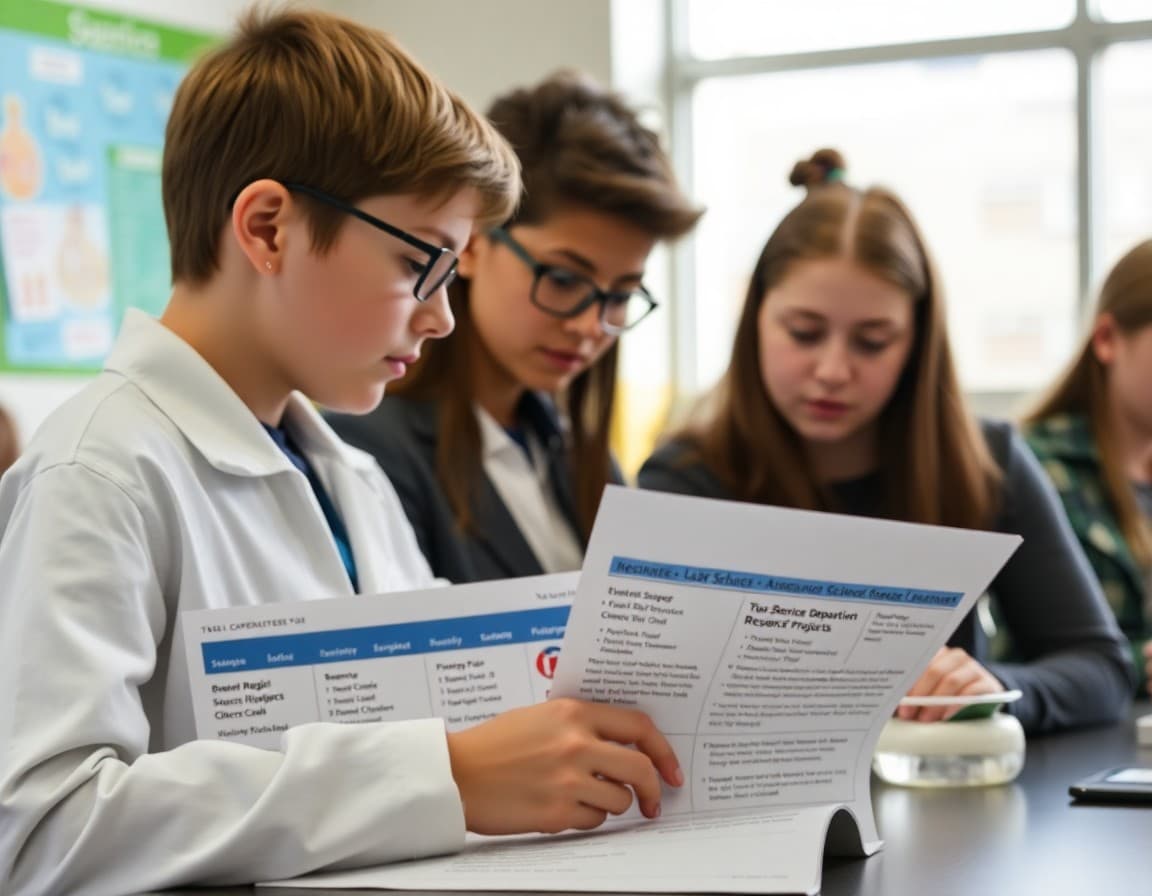
Science departments have more to communicate than most because their courses involve materials, safety protocols, and experiential components that directly affect what students need to bring, what families need to know, and what decisions students and families need to make about advanced coursework. A quarterly newsletter that covers all of this systematically prevents the individual questions that otherwise flood into department chairs' inboxes during lab season and science fair registration.
Organize by Course and Lab Unit
Science students are in very different places at any given time: biology students may be starting dissection while chemistry students are doing titration labs and physics students are running projectile motion experiments. A newsletter organized by course level gives each section a dedicated paragraph that covers the current unit, the next lab, any materials needed, and upcoming assessments. Families who go directly to their student's course section find the information they need without reading two pages of content that does not apply to them.
Address Lab Safety Proactively
Nothing generates more parent phone calls to a science department than an unexpected lab activity that a student comes home and describes in alarming terms. Proactive communication prevents this. Before the first dissection lab, the first chemistry lab involving open flame, or the first biology lab working with live organisms, send a brief lab preview in your newsletter: what students will do, what safety equipment they will use, what alternative assignments exist for students with objections, and who to contact with concerns. That one paragraph converts potential complaints into informed preparation.
Science Fair Is a Multi-Month Communication Project
Science fair is where science department communication most often fails. The timeline from project proposal to final submission to the school fair spans weeks or months. Students who miss any single deadline can be disqualified from advancing. Your newsletter should include a science fair calendar timeline at the start of the year for the grade levels that participate, with a reminder newsletter sent at each major milestone: proposal submission, check-in with the adult mentor, display board submission, and school fair day. Students who receive advance notice at each step submit complete projects. Students who find out about deadlines the day before miss them.
A Sample Science Department Newsletter Section
Here is a template for a quarterly newsletter organized by course:
"Biology (all sections) -- Current unit: Cell structure and function. Lab: Microscopy lab series continues through October 30. Bring your own prepared slide if possible (optional). Next assessment: Cell organelles quiz, October 22; Cells unit test, November 5. Dissection labs begin November 12. Parent notification form required by November 7. AP Chemistry -- Current unit: Thermodynamics and thermochemistry. AP exam registration opens November 1. Register through the Counseling Office by November 30. Free AP Chemistry prep: Khan Academy AP Chem course at khanacademy.org. Lab hours: AP Chemistry students need 90 lab hours for the AP designation. We are at 24 hours through October. Science Fair: Grades 9-11 proposals due November 15. School fair: January 30. Regional fair: qualifying projects advance February 12."
Highlight Research and Internship Opportunities
Science students who are interested in research careers rarely know about the opportunities available to them in high school. Your newsletter should include summer research internship programs at local universities, hospital or medical center volunteer science programs, citizen science projects students can participate in year-round, and state or national science competitions beyond the standard school fair. These opportunities are often underutilized because students and families never encounter them. The newsletter is the most efficient way to change that.
Connect Labs to Real-World Applications
Science newsletters that explain why a current lab matters in the real world create student engagement that extends beyond the classroom. "This week, chemistry students are testing the pH of local water samples. The same testing protocols are used by municipal water treatment facilities to ensure safe drinking water." That one sentence connects a school assignment to a professional application and gives students a reason to care about the work beyond the grade. Parents who read that context see science class differently too.
Communicate Equipment and Material Needs Clearly
Some lab activities require students to bring specific items from home: safety goggles that have been checked for fit, lab notebooks, graph paper, or specific protective clothing. State these requirements in the newsletter at least two weeks before the lab begins, not the day before. For students in lower-income households, two weeks provides enough time to acquire items through the school's supply fund, the teacher's resource stash, or a local store visit. One-day notice provides no time at all.
Get one newsletter idea every week.
Free. For teachers. No spam.
Frequently asked questions
What should a science department newsletter communicate to families?
Current units of study and the labs associated with them, upcoming assessments, science fair timeline and requirements, lab safety protocols that families should know about, AP and IB exam information for advanced courses, research internship and summer program opportunities, and any special equipment or materials students need to bring for upcoming labs. Safety information is particularly important: families should know when students are working with chemicals, dissection materials, or other specialized equipment.
How does a science department communicate lab safety information through newsletters?
Include a brief safety update whenever a new lab type begins. 'This month, Biology students will begin dissection labs. All materials are provided by the school. Safety goggles and gloves are required and provided. Students who have religious or ethical objections should contact their teacher by October 10 for alternative assignments.' That kind of clear, preemptive communication prevents last-minute conflicts and gives families the information they need to prepare their students.
What science fair information should appear in a school newsletter?
The project proposal deadline, the display board guidelines, any required components for the school fair submission, the school fair date, and information about advancing to regional or state competitions. For middle and high school students entering formal competitions, include links to ISEF guidelines if the fair is affiliated, and explain any adult sponsor or mentor requirements. Many students who would excel at science fair never participate because they did not understand the process in time.
How do science departments communicate about AP and IB science courses in newsletters?
Cover the AP exam registration timeline, the specific skills and content the course covers that differ from non-AP sections, lab expectations (AP and IB science courses have significant lab hour requirements), and free prep resources. Also address the question families ask most: is this course worth it if my student is not going into a science field? Answering that with specific data about how AP science credits transfer at local universities gives families a concrete basis for the decision.
Can Daystage help science department chairs send newsletters?
Yes. Daystage lets department chairs build a newsletter with current unit summaries, lab schedules, and science fair deadlines organized by course, then send it to students and families in one step. Photo-rich newsletters that include lab photos from the current unit create excitement and show families what hands-on science learning looks like in the classroom.

Adi Ackerman
Author
Adi Ackerman is a former classroom teacher and curriculum writer with 8 years in K-8 schools. She writes about school communication, parent engagement, and what actually works in real classrooms.
More for Department Newsletters
Math Department Newsletter: Updates for Students and Families
Department Newsletters · 6 min read
STEM Department Newsletter: Science Technology and Innovation Updates
Department Newsletters · 6 min read
Athletics Department Newsletter Guide: Communicating Sports Programs, Eligibility, and Events to Families
Department Newsletters · 5 min read
Ready to send your first newsletter?
3 newsletters free. No credit card. First one ready in under 5 minutes.
Get started free