

School Newsletter: Celebrating Our School Nurse This Week
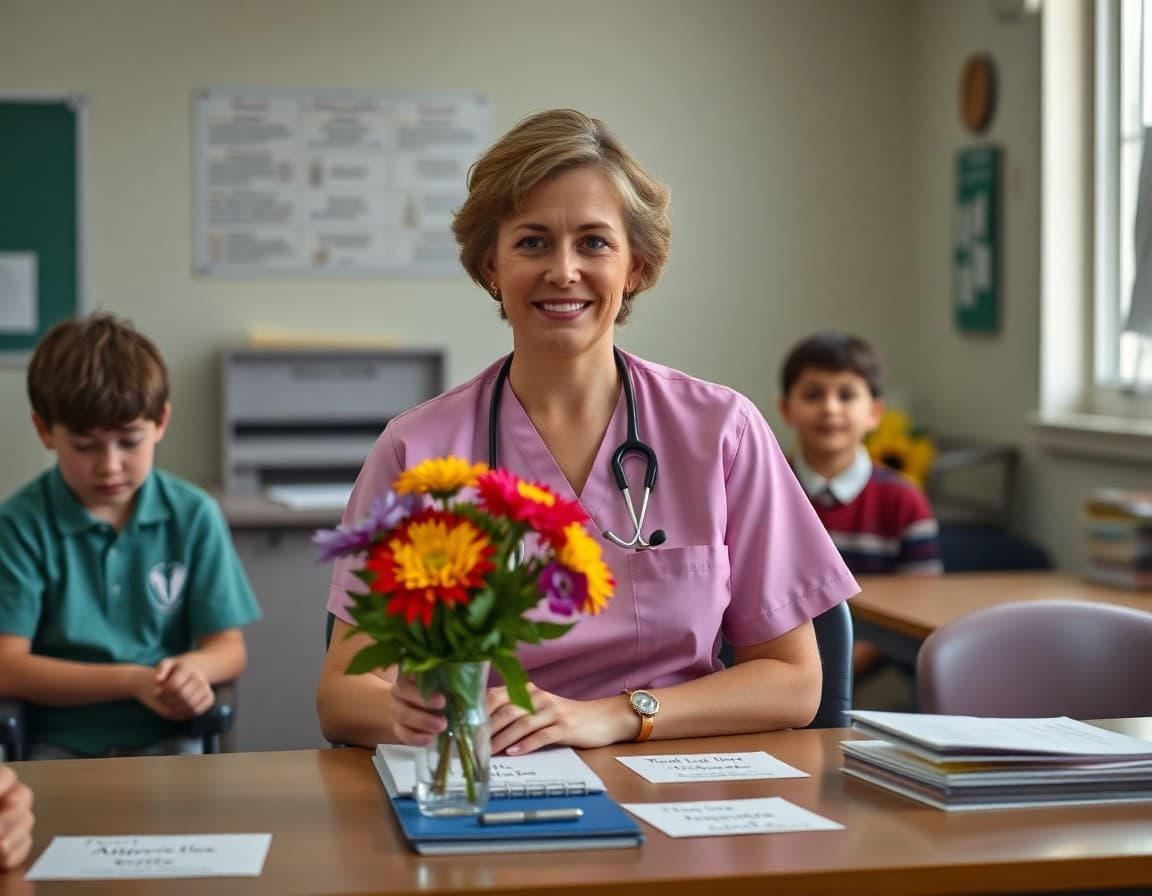
National School Nurses Day falls during Nurses Week in early May, and it is a natural moment to introduce or reintroduce families to the school health office and the nurse who runs it. Many families only interact with the school nurse in emergencies. A newsletter that describes the full scope of what the nurse does -- and how families can access health services -- turns an appreciation week into a practical communication opportunity.
What the School Nurse Does Every Day
School nurses do far more than treat injuries and administer medication. They conduct vision and hearing screenings. They manage chronic health conditions like asthma, diabetes, and seizure disorders in the school setting. They identify and respond to mental health crises. They connect families to community health resources. They provide first aid and triage for injuries. They maintain accurate health records and coordinate with physicians. A newsletter that names this full scope of work builds appropriate respect for a role that is often visible only when it is urgently needed.
How to Access School Health Services
Tell families clearly how to access the school health office. How to update emergency health information. How to authorize medication administration. How to communicate about a chronic condition or new health concern. Who to contact when a child returns after a health-related absence. The health office needs accurate information to do its job well, and families who understand how to provide that information make the nurse's work more effective for every child.
Health Screenings Happening This Year
Note any health screenings the school nurse conducts this year and when: vision, hearing, scoliosis, height and weight. Tell families when they will receive results and what to do if a concern is identified. Families who understand the screening process are not surprised when they receive a notice and are more likely to follow up on any referrals.
Mental Health and the School Nurse
School nurses are often the first point of contact for students experiencing mental health crises. A student who goes to the health office complaining of a stomach ache is sometimes a student who does not know how else to ask for help with anxiety or depression. A brief acknowledgment of this role in the newsletter -- that the nurse is trained to recognize and respond to mental health concerns as well as physical ones -- helps families understand the breadth of care available in the health office.
Chronic Condition Management at School
For families of students with chronic conditions -- asthma, diabetes, severe allergies, epilepsy -- the school nurse is a critical safety partner. A brief paragraph describing the school's capacity to manage these conditions, what documentation is needed, and how the nurse communicates with families about health events gives families of medically complex students confidence that their child is safe at school.
Appreciation Beyond the Week
School nurses deserve year-round support from families: keeping health records updated, sending accurate absence documentation, following up on health referrals, and communicating proactively about new health concerns rather than waiting for an emergency. A brief, specific note in the newsletter about how families can be good partners to the school health program turns appreciation week into a practical conversation.
One Nurse, Many Students
Close with an honest note about the demands on the school nurse's time. One nurse serving an entire school building means every family call and every health record update matters. Families who understand the workload are more likely to communicate proactively, follow through on referrals, and treat the school health office as the professional medical resource it is. Appreciation that is accompanied by understanding produces the kind of community partnership that makes a school's health program genuinely effective.
Get one newsletter idea every week.
Free. For teachers. No spam.
Frequently asked questions
What should this newsletter cover?
Lead with what your school is specifically doing to observe or celebrate this topic. Then connect it to family action at home, community resources, and who to contact at school for more information. Generic awareness newsletters are ignored. Specific, school-rooted newsletters get read and shared.
When should the school send it?
The week before or the first week of the relevant observance. Families need enough lead time to participate in events, prepare for activities, or have conversations with their children. A newsletter that arrives after the observance has started is contextual but misses the action window.
How do you keep it from feeling generic?
Name specific students, staff, or community members. Share a specific classroom activity in progress. Connect the theme to something real happening in the building this week. Specificity is what separates a newsletter that gets shared from one that gets archived.
Should it include community resources?
Yes, briefly. One or two relevant organizations or helplines, with contact information. Families who find a useful resource in a school newsletter develop trust in the school as a community hub, not just an educational institution.
How does Daystage help send this newsletter?
Daystage lets school staff create a clean, formatted newsletter and send it directly to all families' inboxes. You write the content, Daystage handles the formatting and delivery. Families receive it in their inbox and can reply directly to follow up.

Adi Ackerman
Author
Adi Ackerman is a former classroom teacher and curriculum writer with 8 years in K-8 schools. She writes about school communication, parent engagement, and what actually works in real classrooms.
More for Community Outreach
School Newsletter: Celebrating Our School Counselors This Week
Community Outreach · 6 min read
School Newsletter: Appreciating Our Administrative Professionals
Community Outreach · 6 min read
Back to School Health Office Newsletter: What Families Need to Know About School Health Services
Back to School · 5 min read
Ready to send your first newsletter?
3 newsletters free. No credit card. First one ready in under 5 minutes.
Get started free