
School Newsletter: Family Engagement Month Activities and Opportunities
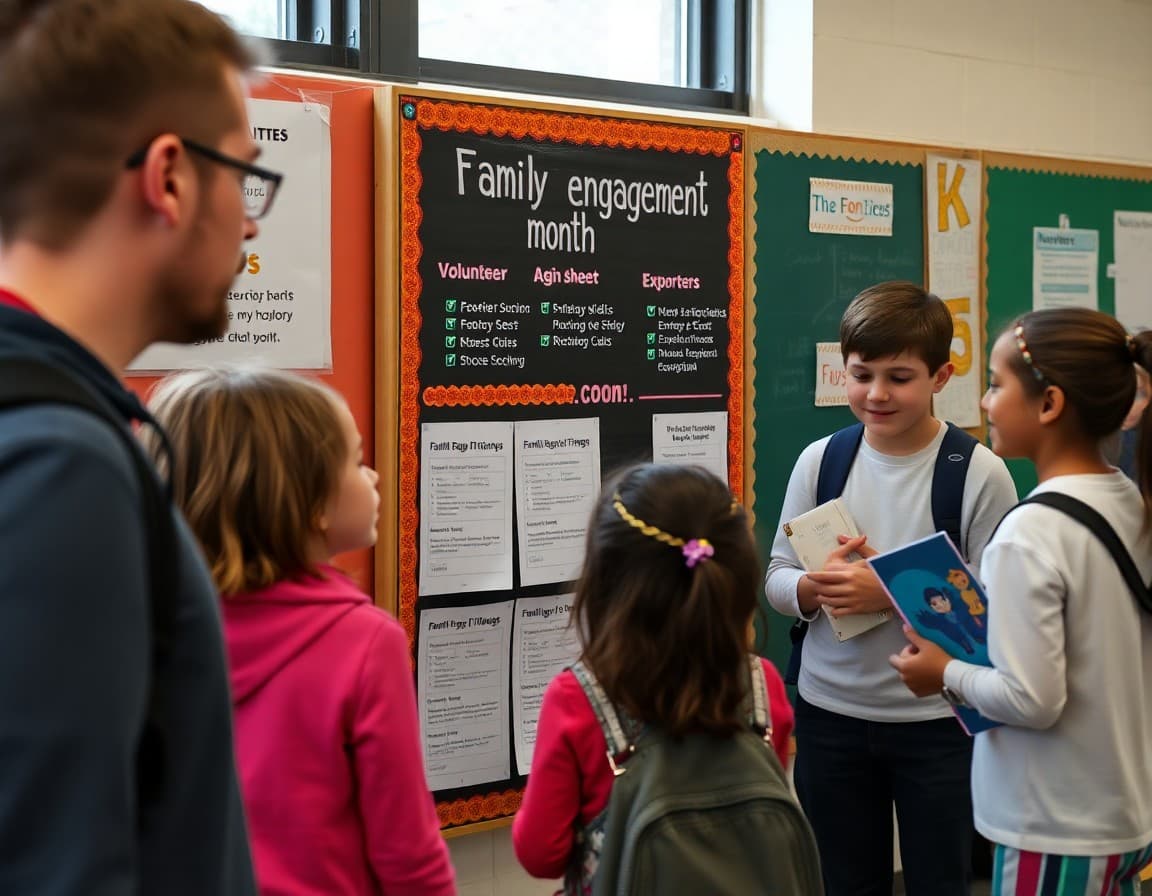
November is National Family Engagement Month, designated by the Department of Education to focus attention on the research-backed connection between family involvement in education and student success. A newsletter that translates this research into specific, accessible actions for real families with real constraints does more for engagement than any general call for involvement.
The Research on Family Engagement
A brief, clear statement of what the research shows: students with engaged families demonstrate better academic achievement, higher school attendance, better social skills, and greater likelihood of graduating. This is not about helicopter parenting or constant school presence -- it is about families who are connected to and interested in their children's education. A newsletter that shares this research gives families a reason to prioritize engagement, not just a request to show up.
What Family Engagement Actually Looks Like
Many families equate family engagement with school volunteering, but the research includes a much broader range of involvement. Families who talk to their children about school, set expectations around homework, attend conferences, and communicate with teachers are meaningfully engaged -- even if they never set foot in the building as a volunteer. A newsletter that communicates this broad definition removes the barrier that keeps less available families from seeing themselves as engaged.
Specific November Engagement Opportunities
List every family engagement opportunity available in November: parent-teacher conferences, curriculum night, family reading events, PTA meetings, school board meetings, volunteer opportunities. Give complete information for each. Families who see a menu of options can find what fits their schedule and interests. Families who receive only a generic call for engagement often do nothing.
Removing Barriers to Engagement
Acknowledge the real barriers many families face: work schedules that do not accommodate daytime events, language barriers, transportation challenges, distrust of schools based on prior experiences, and the general exhaustion of managing a household and a career simultaneously. Note specifically what the school does to address each barrier: evening options, translation services, virtual participation, and a staff that is trained to welcome families across backgrounds.
The Family-School Partnership Model
Frame the relationship between families and the school as a genuine partnership, not a client-provider dynamic. Families bring knowledge of their children that teachers cannot have. Teachers bring expertise in learning and development that families may not have. Both parties are essential. A newsletter that communicates this mutual respect changes the tone of the entire family-school relationship for families who have historically felt like outsiders in the school community.
A Story of Engagement That Made a Difference
Share a brief, anonymized story about how family engagement made a specific difference for a student at your school. A family who communicated a home stressor early, allowing the teacher to adjust expectations, and saw their child recover academically. A parent who attended one curriculum night and discovered a learning strategy that helped their child at home. Real stories make the abstract concept of family engagement concrete and motivating.
Your Invitation to Engage This Month
Close with a specific, personal invitation for every family to engage in one concrete way this month. Attend the November parent-teacher conference. Come to family reading night. Fill out the volunteer interest form. Read the school newsletter every week. Whatever the specific ask, make it direct, specific, and achievable. Families who receive a specific invitation are more likely to act than families who receive a general encouragement to be involved.
Get one newsletter idea every week.
Free. For teachers. No spam.
Frequently asked questions
What should this newsletter cover?
Lead with what your school is specifically doing or observing this month. Connect the theme to family action at home, name who at school to contact, and include one community resource. Specific, school-rooted content gets read. Generic awareness content gets archived.
When should it go out?
The week before or the first week of the relevant observance. Families need lead time to participate in events, prepare for activities, or have conversations with their children. A newsletter that arrives after the observance has started is contextual but misses the action window.
How do you make it feel personal rather than institutional?
Name specific students, staff, or community members. Share a classroom activity in progress. Include a direct quote from a teacher, counselor, or student. Specificity is what makes a school newsletter feel like it comes from people who care, not from a template.
How does Daystage help with this newsletter?
Daystage lets school staff create a clean, formatted newsletter and send it to all families' inboxes in minutes. Templates can be reused each year for recurring observances. Families receive the newsletter directly in their email and can reply to ask questions.
Should it include community resources?
Yes, briefly. One or two relevant organizations or helplines make the newsletter useful beyond school hours. Families who find a practical resource in a school newsletter develop trust in the school as a community hub, not just an educational institution.

Adi Ackerman
Author
Adi Ackerman is a former classroom teacher and curriculum writer with 8 years in K-8 schools. She writes about school communication, parent engagement, and what actually works in real classrooms.
More for Community Outreach
School Newsletter: Back to School and First Month Highlights
Community Outreach · 6 min read
School Newsletter: Building a Culture of Gratitude in November
Community Outreach · 6 min read
School-Community Partnership Newsletter: Building and Sustaining External Relationships Through Communication
Community Outreach · 6 min read
Ready to send your first newsletter?
3 newsletters free. No credit card. First one ready in under 5 minutes.
Get started free