
How to Explain Think-Pair-Share to Families in Your Teacher Newsletter

Think-Pair-Share is one of the most widely used instructional strategies in education because it solves a real problem in classroom discussion: most students do not form a complete thought before speaking, and only the most confident students speak at all. The structure of Think-Pair-Share gives every student thinking time and a low-stakes practice conversation before the higher-stakes whole-class discussion. A newsletter that explains this to families and gives them a home version to try converts a classroom strategy into a family practice.
Describe each stage of the process
"Think-Pair-Share has three stages. In the Think stage, I pose a question and give students one to two minutes to think silently and often jot down their response. In the Pair stage, students turn to a partner and discuss their thinking for one to two minutes. In the Share stage, I call on several pairs to share their discussion with the class. The whole process takes five to eight minutes for a substantial question."
Explain why the Think stage matters most
"The most important part of Think-Pair-Share is the silent Think time at the beginning. Students who have thought independently for two minutes have a more considered response to share with their partner than students who are processing the question for the first time in the conversation. The Think stage is not waiting for the answer to come. It is actively forming one before any social influence shapes it."
Tell families about the Pair stage and what it teaches
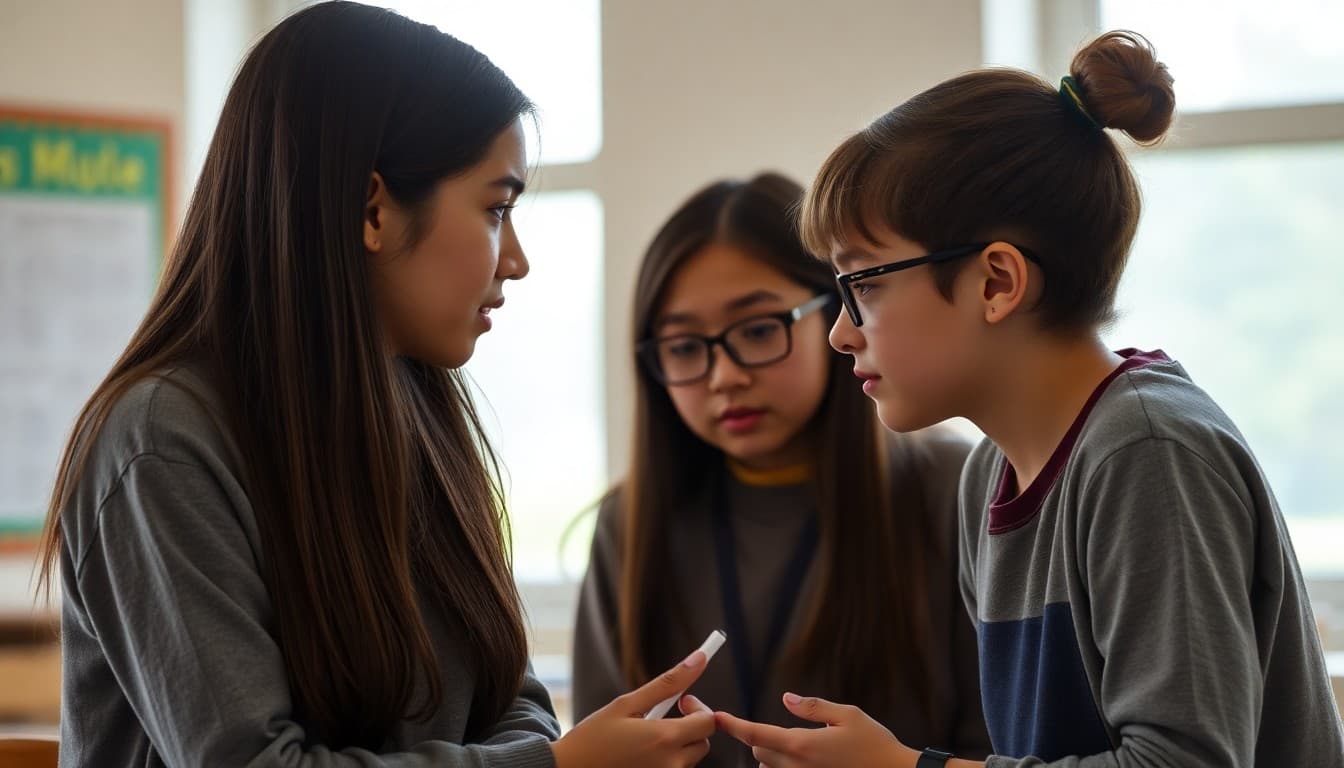
"The Pair stage is where most of the learning in Think-Pair-Share actually happens. When students explain their thinking to a peer, they identify where their reasoning is incomplete. They hear a different perspective and revise their own. They practice the language of academic discussion in a safe, low-stakes context before speaking to the whole class. The conversation between partners is an assessment for both participants."
Offer a home version families can use
"You can use Think-Pair-Share at home in a modified two-person version. Ask a question and say: 'Think about it for sixty seconds before you answer.' Then after the student answers, share your own response: 'Here is what I thought.' That exchange is the Pair stage. The discipline of waiting one full minute before responding is the home version of the classroom Think stage. It produces noticeably more complete answers."
Connect the strategy to academic outcomes
"Students who practice Think-Pair-Share regularly develop the habit of thinking before speaking. In reading and writing, that habit translates to students who pause to plan before writing and who consider multiple interpretations before committing to one. The brief silence at the beginning of the strategy is one of the most productive academic behaviors a student can develop."
Share what you observe in students who use it consistently
"Students who have been in classrooms that use Think-Pair-Share consistently tend to give longer and more specific verbal responses. They also tend to reference their partner's thinking: 'My partner made a point I had not thought of, which was...' That kind of response is the mark of genuine discussion rather than parallel monologue."
Daystage newsletters that explain classroom strategies with a clear home extension suggestion build a bridge between school practice and family conversation that multiplies the impact of instruction over time.
Get one newsletter idea every week.
Free. For teachers. No spam.
Frequently asked questions
What is Think-Pair-Share and how does it work?
Think-Pair-Share is a structured discussion strategy with three stages. Think: each student independently considers a question for a set time, usually one to two minutes. Pair: two students share their thinking with each other. Share: selected pairs share their discussion with the whole class. The structure ensures every student thinks before anyone speaks, which dramatically improves the quality of whole-class discussion.
Why use Think-Pair-Share instead of simply asking the class a question?
When a teacher asks a question to the whole class, only the fastest or most confident students respond. The majority of students have not had time to form a complete thought. Think-Pair-Share gives every student the think time and partner conversation they need before speaking publicly, which produces higher-quality whole-class discussion and includes more students meaningfully.
How can families use Think-Pair-Share at home?
Ask a question, give the student one minute to think before responding. This simple modification to a normal family conversation trains the same skill the classroom is building: forming a complete thought before speaking. Students who are rushed to respond at home often do not develop the patience to think before speaking in class.
Is Think-Pair-Share only for older students?
No. It is effective for kindergarten through twelfth grade with appropriate adjustments. Younger students may pair for thirty seconds. Older students may think for three to four minutes. The structure is the same regardless of age.
Can Daystage newsletters explain classroom strategies like Think-Pair-Share in a family-friendly format?
Yes. A Daystage newsletter with a brief explanation of the strategy, an example from class, and a home extension suggestion is a practical way to share instructional practices with families.

Adi Ackerman
Author
Adi Ackerman is a former classroom teacher and curriculum writer with 8 years in K-8 schools. She writes about school communication, parent engagement, and what actually works in real classrooms.
More for Classroom Teachers
Ready to send your first newsletter?
3 newsletters free. No credit card. First one ready in under 5 minutes.
Get started free