

How to Explain Jigsaw Learning to Families in Your Teacher Newsletter
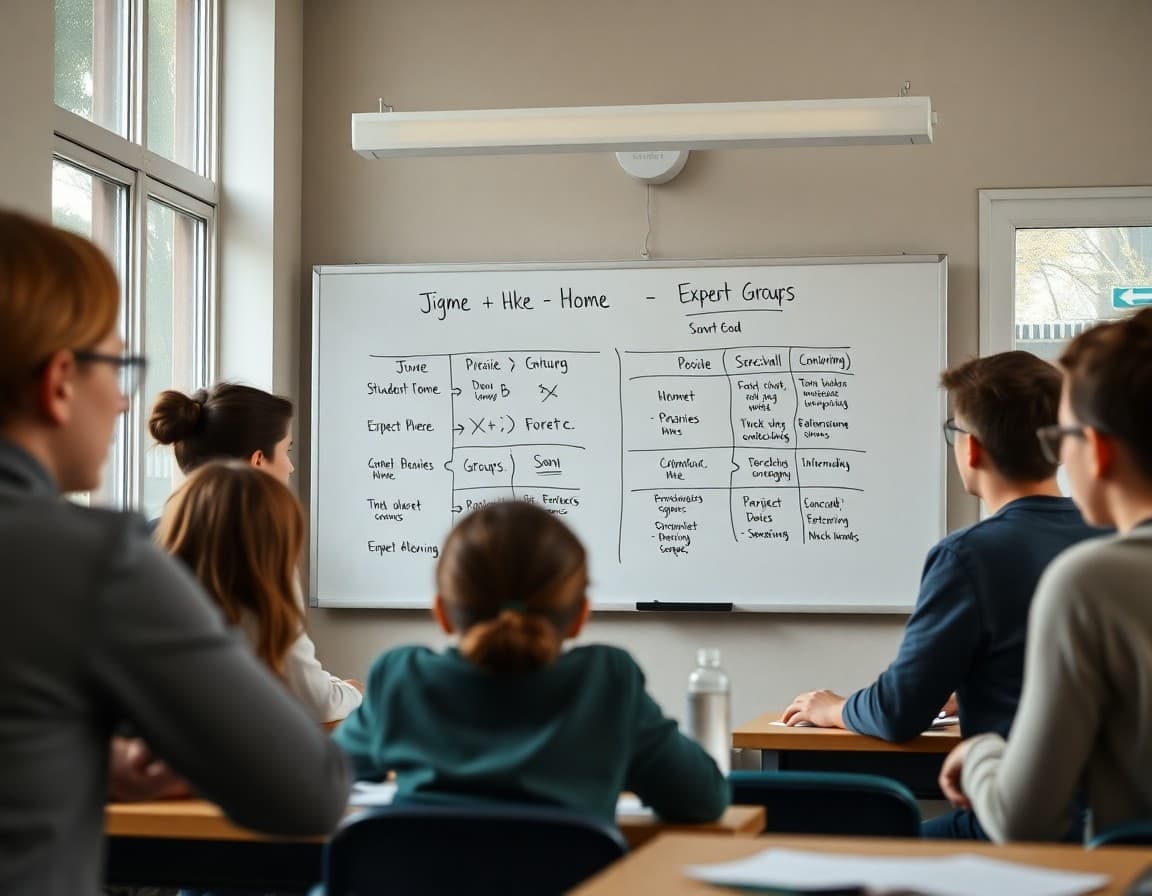
Jigsaw learning is one of the best-studied cooperative learning strategies in education and one of the least understood by families who hear their student say "we did groups today." The structure is specific and the learning rationale is clear. A newsletter that explains both gives families a way to engage with the specific content their student taught and learned during the activity.
Explain the two-group structure clearly
"Jigsaw involves two types of groups. First, students are placed in home groups of four to five, and each member is assigned one section of the content to become expert in. Second, students with the same assigned section meet together in expert groups to study their topic in depth. After the expert group preparation, students return to their home groups and teach each other. Every student in the home group is responsible for both their own section and for learning what their peers teach."
Name the content covered in the most recent jigsaw
"This week we used the jigsaw format for our civil rights unit. The four sections were: the legal strategies used in civil rights cases, the role of nonviolent protest, the economic dimensions of the movement, and the international context. Each student became an expert in one section and then taught it to their home group." Naming the specific content tells families what their student can speak to and gives them a dinner conversation starting point.
Explain why teaching produces deeper learning than studying
"The jigsaw structure is effective because teaching requires a different and deeper kind of understanding than simply knowing. A student who has read about the economic dimensions of the civil rights movement can describe what happened. A student who must teach it to three peers must anticipate questions, organize the information, and explain causation in a way that someone who did not read the same text will understand. That effort creates a memory trace that rereading does not."
Ask families to test their student's expert knowledge
"Ask your student which section they were assigned in today's jigsaw. Then ask them to teach it to you. Not explain: teach. Tell them you are going to ask questions at the end. The exercise of teaching an adult who is paying attention is a more demanding but more effective review than rereading the text before a test."
Address the accountability question
"A common family concern about jigsaw is whether a student who does not prepare well in the expert group fails the whole home group. I address this through a structured expert group preparation checklist that every student completes before returning to their home group. Students who are not prepared get additional support from the expert group before the teaching phase begins."
Connect jigsaw to real-world skills
"The skill of becoming expert in one area and synthesizing it with the expertise of others is one of the most practical skills in professional and academic life. Jigsaw in fifth grade is a rehearsal for the collaborative knowledge-building that happens in every workplace and every research team."
Daystage newsletters that describe cooperative learning activities with specific content examples help families understand what their student learned, not just that they worked in groups.
Get one newsletter idea every week.
Free. For teachers. No spam.
Frequently asked questions
What is jigsaw learning and how does it work?
In jigsaw learning, the class is divided into home groups and each member is assigned a different topic or section to become an 'expert' in. Students with the same assigned topic meet in expert groups to study it together. Then they return to their home groups and teach each other what they learned. Every student is responsible for both learning their own section and teaching it to their group.
What subjects benefit most from jigsaw learning?
Jigsaw works well for content that can be divided into meaningful sections of equal complexity. Social studies units with multiple factors or perspectives, science content with distinct subtopics, and literature analysis with different character perspectives all adapt well to the jigsaw format.
What does a student learn from teaching their section to peers?
Teaching requires the deepest level of understanding. A student who knows that something is true is not necessarily able to explain why or answer questions about it. The process of preparing to teach and then actually teaching forces students to organize their knowledge and anticipate what their peers will not understand.
What if one student teaches their section incorrectly to their home group?
This is a legitimate risk in jigsaw and teachers address it through expert group preparation, a teacher check before students return to home groups, and a whole-class synthesis after all teaching is complete. The potential for misconception is managed, not eliminated.
Can Daystage help teachers explain jigsaw learning activities in newsletters?
Yes. A Daystage newsletter with a clear description of how jigsaw works and what students covered in the activity gives families the context to engage with what their student learned.

Adi Ackerman
Author
Adi Ackerman is a former classroom teacher and curriculum writer with 8 years in K-8 schools. She writes about school communication, parent engagement, and what actually works in real classrooms.
More for Classroom Teachers
How to Explain Think-Pair-Share to Families in Your Teacher Newsletter
Classroom Teachers · 6 min read
How to Explain a Gallery Walk Activity in Your Teacher Newsletter
Classroom Teachers · 6 min read
How to Explain Student Choice Menus to Families in Your Teacher Newsletter
Classroom Teachers · 6 min read
Ready to send your first newsletter?
3 newsletters free. No credit card. First one ready in under 5 minutes.
Get started free