
How to Explain a Gallery Walk Activity in Your Teacher Newsletter
A gallery walk is one of those classroom activities that students remember long after the content fades because the physical movement, the social dimension, and the visual engagement combine in a way that sitting and reading does not. Families who hear "we did a gallery walk" often have no idea what that means. A newsletter that explains the activity, describes what students experienced, and gives families a conversation prompt connects the event to the learning that happened during it.
Describe what a gallery walk is
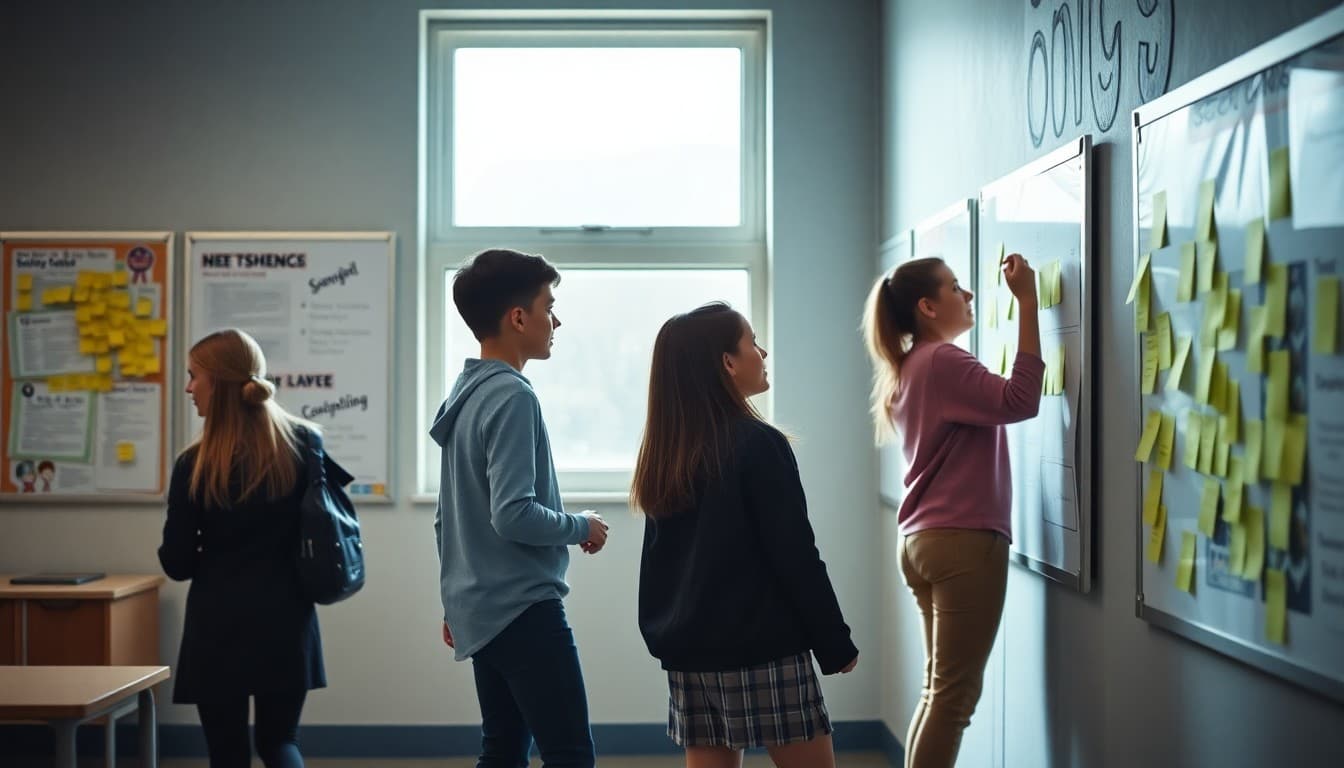
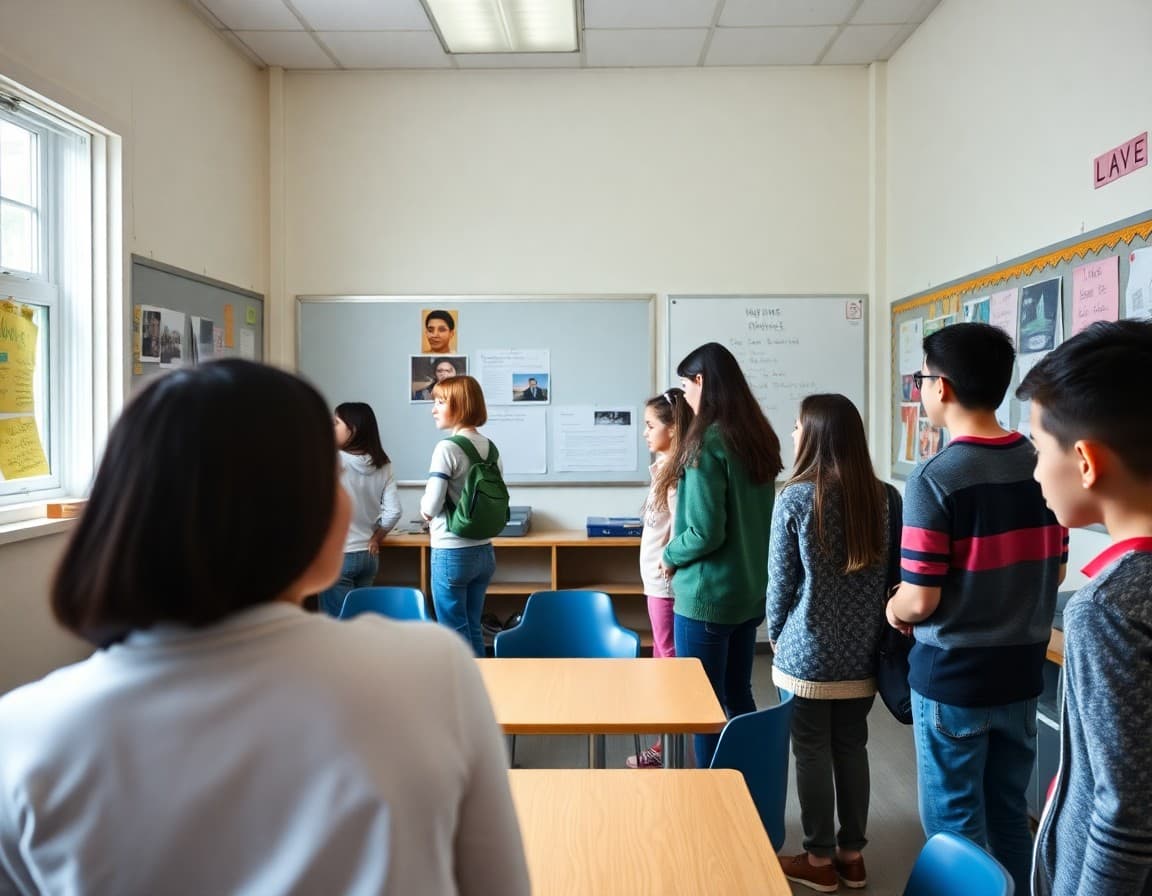
"A gallery walk is an active learning activity where student work, images, sources, or questions are posted around the room at different stations. Students move through the space with a partner or small group, spending two to four minutes at each station. At each station they read, discuss, and respond. Responses go on sticky notes, in a response journal, or in a group discussion. The format gets students out of their seats and into direct interaction with the content."
Tell families what was posted in your most recent gallery walk
"This week's gallery walk featured the research summaries students wrote about different causes of World War I. Each summary was posted with two discussion questions the author crafted. Students visited each poster, read the summary, and responded to the questions on sticky notes. After the walk, each student reviewed the feedback on their own poster and shared one surprising response with the class."
Explain the learning purpose of moving through content
"Reading ten different perspectives on the same event posted around the room is a different cognitive experience from reading ten paragraphs in sequence on a worksheet. The physical movement between stations, the change of perspective at each one, and the social discussion with a partner at each stop create a richer engagement with the content. Students who did the gallery walk can recall and compare multiple perspectives more accurately than students who only read their own."
Share what you observed during the activity
"During the gallery walk I circulated and listened to pair discussions. The most interesting moment was at the station on economic causes: three separate pairs independently reached the same conclusion that economic interdependence made war more likely rather than less. When we debriefed, one student said that surprised them because they expected interdependence to prevent conflict. That observation drove a fifteen-minute whole-class discussion."
Give families a conversation prompt
"Ask your student: what was on the most interesting station you visited? What response or comment on your poster surprised you most? What would you change about your own summary based on the peer responses you received?" Those three questions cover the content, the feedback, and the revision thinking that the gallery walk generated.
Note how gallery walk responses are used after the activity
"The sticky note responses from today's gallery walk were returned to each author. Students will use the feedback to revise their summaries before the unit test. The feedback from peers is often more specific and more surprising than feedback from the teacher because peer readers bring different prior knowledge to the text."
Daystage newsletters with gallery walk photos and a learning description make the activity visible to families in a way that generates genuine conversation at home.
Get one newsletter idea every week.
Free. For teachers. No spam.
Frequently asked questions
What is a gallery walk and how does it work in the classroom?
A gallery walk is an activity where student work, questions, or content is posted around the classroom on walls or tables. Students move through the space with a partner or small group, reading and responding to each station. Responses might be written on sticky notes, in a response journal, or discussed aloud. The movement and distributed format increases engagement over passive seated reading.
What subject areas use gallery walks effectively?
All of them. A gallery walk can feature student-produced writing for peer feedback, historical primary sources for analysis, math problems for group solving, science data for interpretation, or open-ended discussion questions for any subject. The format is flexible and works for any content that benefits from extended attention and response.
How long does a gallery walk typically take?
Fifteen to thirty minutes depending on the number of stations and the depth of response expected. A ten-station gallery walk with three minutes per station is thirty minutes. A five-station walk with two minutes per station is ten minutes. The pacing depends on the purpose and the content depth.
What do students do with gallery walk responses afterward?
Responses are used in a class debrief where patterns and highlights are discussed. Student work that received sticky note feedback is returned to the author. Discussion questions that generated interesting responses are used to anchor a whole-class conversation. The gallery walk is always followed by some form of synthesis.
Can Daystage help teachers share gallery walk highlights with families?
Yes. A Daystage newsletter with photos from a gallery walk and a description of the content covered makes the activity visible to families and gives them conversation prompts to use at home.

Adi Ackerman
Author
Adi Ackerman is a former classroom teacher and curriculum writer with 8 years in K-8 schools. She writes about school communication, parent engagement, and what actually works in real classrooms.
More for Classroom Teachers
Ready to send your first newsletter?
3 newsletters free. No credit card. First one ready in under 5 minutes.
Get started free