

Teacher Newsletter for Student Awards Day: Celebrate Every Winner
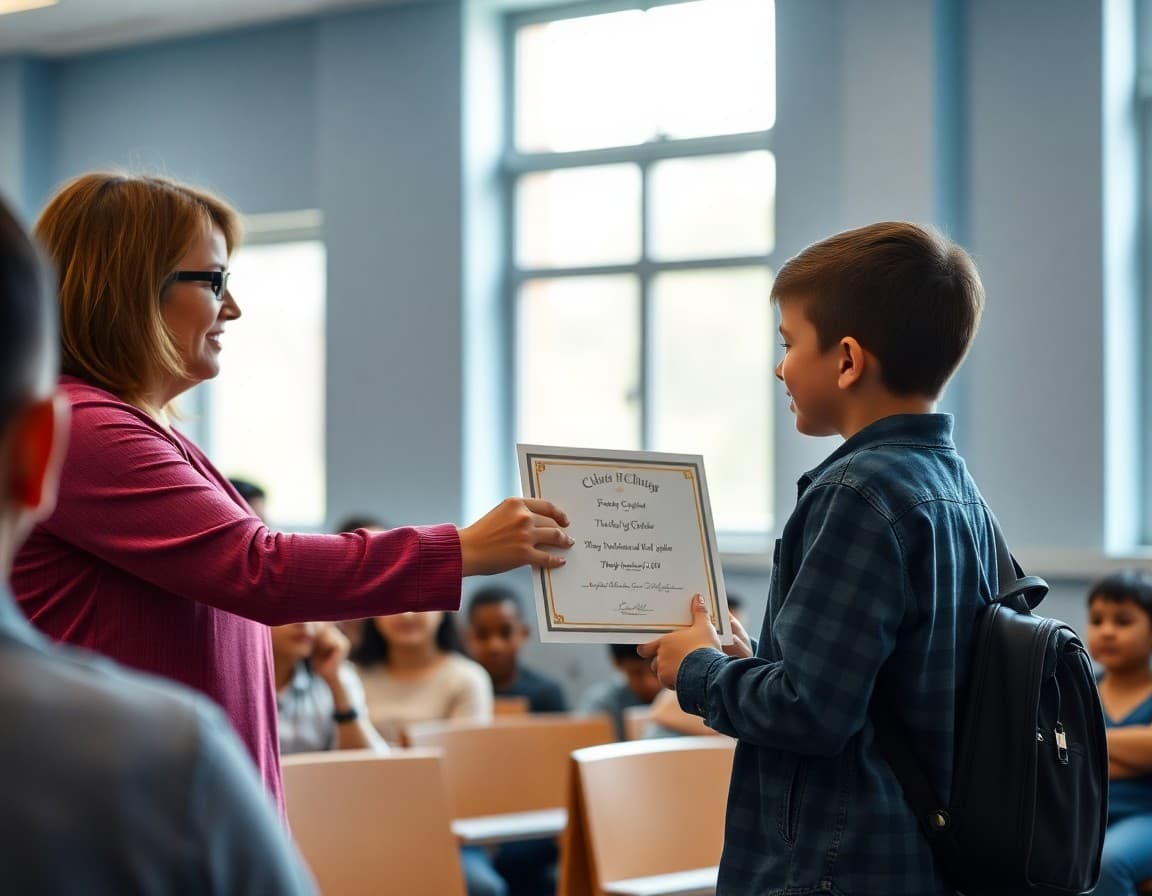
Student awards day is one of the highest-stakes communication days of the school year. Families clear their schedules to attend. Students who are recognized feel that validation deeply. The newsletter you send before the ceremony shapes how families understand and experience the day, and the newsletter you send after extends that celebration to every family regardless of whether they attended.
Share the Ceremony Logistics Early
Date, time, location, parking, expected duration, and whether families need tickets or can walk in should be in the newsletter at least a week before the event. Families who need to arrange childcare, request time off work, or coordinate transportation need as much lead time as possible. A family who misses their child's award because they did not get the logistics in time is a communication failure, not a scheduling failure.
Explain Each Award Category
Name every award that will be given and describe briefly what it recognizes. Academic excellence, most improved, citizenship, leadership, creative achievement, perseverance, and community contribution are common categories. Families who understand the range of recognition know that awards day honors more than grades. Students who are recognized in less visible categories like perseverance or citizenship deserve to have their families understand what those awards mean before the ceremony.
Describe How Students Were Selected
Whether awards are teacher-nominated, voted on by peers, determined by GPA, or based on a combination of criteria, families appreciate knowing the selection process. Transparency about how awards were determined helps families interpret the results and reduces the sense that recognition is arbitrary or based on teacher favoritism.
Prepare Families for the Day
A brief practical section covers dress code for students, where families should sit, whether photography is permitted from the audience, and what students do after their award is announced. If siblings or other guests are welcome, say so. If there is a reception or photo opportunity afterward, include that information. Families who arrive knowing what to expect can focus on their child rather than figuring out the room.
Celebrate Every Student in the Newsletter Itself
Awards day recognizes specific students for specific achievements. Your newsletter can honor the entire class by noting what the group accomplished together this year: the projects they completed, the challenges they navigated, the growth you observed across the room. A ceremony recognizes individual achievement. The newsletter can capture what it meant to be part of this class.
Follow Up After the Ceremony
A brief next-day newsletter with a photo from the ceremony, a summary of what was recognized, and a note of genuine congratulations to every student closes the awards day loop for families who could not attend. Using Daystage, you can send that follow-up message within hours of the ceremony so the celebration is still fresh when families receive it.
Get one newsletter idea every week.
Free. For teachers. No spam.
Frequently asked questions
What should a student awards day newsletter include?
Share the ceremony logistics (date, time, location), explain what each award category recognizes, describe how students were selected, give families guidance on photography and seating, and let families know whether their child is receiving an award if school policy allows advance notice.
Should I tell families in advance if their child is receiving an award?
School policies vary. If your school allows it, advance notice gives families time to arrange their schedule, bring extended family, and prepare their child emotionally. If the ceremony is meant to be a surprise, the newsletter can still explain what award categories exist so families understand what might be recognized.
How do I ensure awards day feels inclusive for all students?
Design award categories that recognize a wide range of strengths: academic achievement, most improved, citizenship, creativity, perseverance, leadership, and community contribution. When every student has a realistic path to recognition, the ceremony reflects genuine class community rather than a ranking of academic performance.
What should families know about the ceremony day?
Arrival time, parking, seating arrangements, photography guidelines, dress code for students, and approximate ceremony length are all details families need. A newsletter that covers logistics reduces the day-of questions significantly.
What tool helps teachers send newsletters efficiently?
Daystage makes awards day newsletters polished and easy to distribute. You can include the ceremony details, award descriptions, and a photo placeholder for the day-of celebration all in one message that reaches every family well in advance.

Adi Ackerman
Author
Adi Ackerman is a former classroom teacher and curriculum writer with 8 years in K-8 schools. She writes about school communication, parent engagement, and what actually works in real classrooms.
More for Classroom Teachers
Ready to send your first newsletter?
3 newsletters free. No credit card. First one ready in under 5 minutes.
Get started free