

How to Write a Science at Home Tips Newsletter for Families
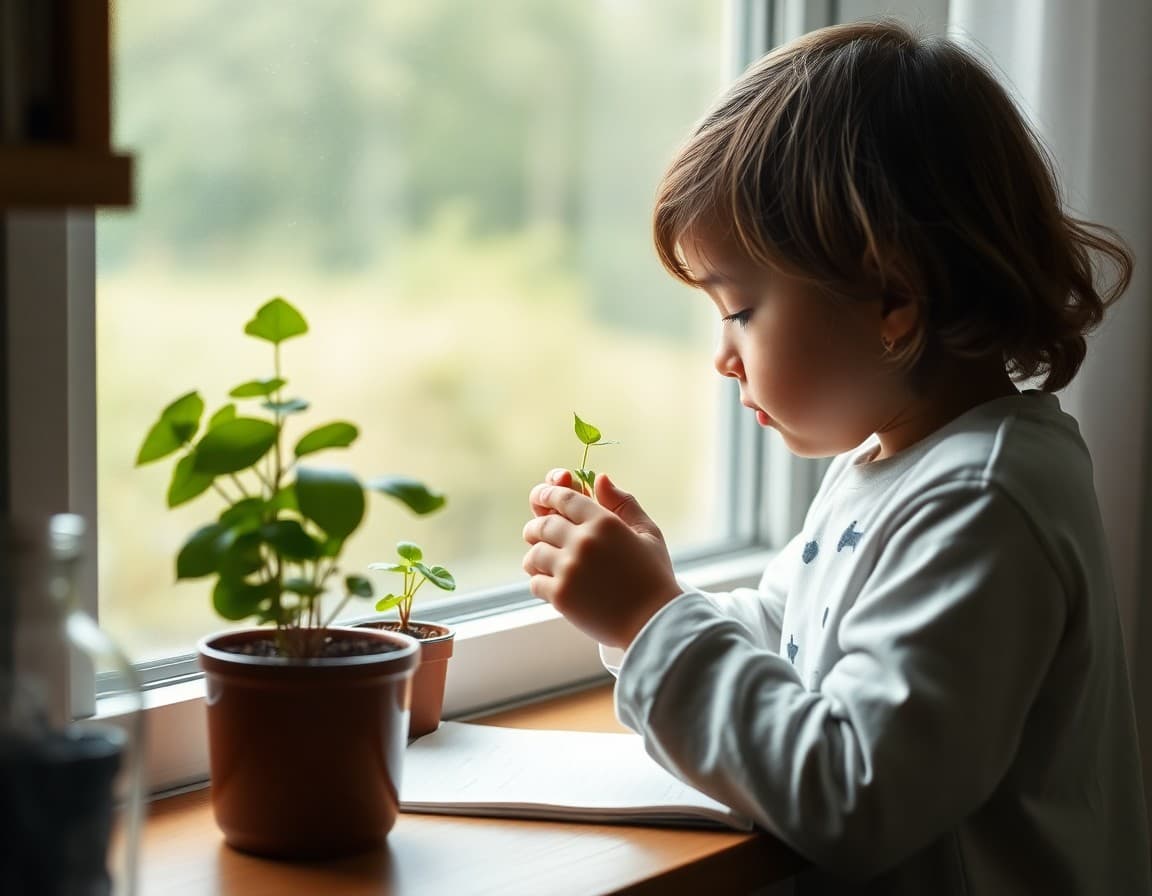
Science at home newsletters have a specific opportunity that math and reading newsletters do not: science experiments are genuinely fun for most kids and many adults. A newsletter that channels that natural enthusiasm toward activities connected to your classroom curriculum turns home time into a genuine extension of school learning rather than a separate obligation.
Connect every suggestion to your current unit
Relevance is what makes at-home science activities stick. If your class is studying ecosystems, suggest a backyard biodiversity survey where students count every species they can find in one square meter. If you are covering forces and motion, suggest a ramp experiment with household objects. Families who can connect the activity to what their student is talking about at dinner see the value immediately.
Give the full simple science method frame
Help families understand the scientific thinking process so they can facilitate it at home. Ask a question, make a prediction, try the experiment, observe and record, discuss what happened. You do not need formal lab sheets. A conversation with these four steps is enough. Families who use this frame naturally do science at home without it feeling like homework.
Celebrate failed experiments
This is worth saying explicitly in your newsletter. When an at-home experiment does not produce the predicted result, the conversation that follows is more scientifically valuable than a successful demonstration. "What happened? What did we predict? Why might the result be different?" This is how real science works and families who know this come away from a failed experiment energized rather than deflated.
Include one specific experiment with instructions
A newsletter that only describes general principles without giving a specific, doable activity is less useful than one that says "here is an experiment you can try tonight with materials you already have." Include one specific experiment with a materials list and simple steps. This is the thing families actually do, and it becomes the entry point for the broader scientific curiosity you are trying to build.
Point families toward nature as a science resource
Formal experiments require materials and setup. Nature observation requires nothing except going outside and paying attention. A walk where a student observes and asks questions about what they see, collects leaves for a classification activity, or tracks weather patterns over a week is genuine science practice. Encourage families to see their natural environment as a free, always-available science classroom.
Suggest science-rich media
High-quality science documentaries, science podcast series for kids, and well-curated nonfiction books can extend science learning at home in less active ways that also count. Families who do not have the energy for an experiment can still support science curiosity through these options. Including two or three specific recommendations gives families something to act on immediately.
Share what to do with observations
If students are keeping a science journal at school, encourage families to help them maintain an observation notebook at home. A few sentences or a quick drawing after an at-home activity connects home science to classroom science practices. Students who bring home observations to share often find they have something genuinely interesting to contribute to class discussions.
Daystage makes it easy to send a science at home newsletter with experiment instructions and current unit context so families have a reference they can pull up when their student wants to try something at home after an exciting day of classroom science.
Get one newsletter idea every week.
Free. For teachers. No spam.
Frequently asked questions
What are the best at-home science activities that connect to school curriculum?
The best activities connect to whatever your class is currently studying. If you are covering matter, a simple kitchen experiment with baking soda and vinegar demonstrates chemical reactions. If the focus is plant biology, a seed germination observation uses only a bag, a paper towel, and a few seeds. Specific connection to current learning makes at-home activities feel purposeful.
How do I explain the scientific method to parents so they can support it at home?
Simplify it to the core practice: ask a question, make a prediction, try it and observe, talk about what happened. Families do not need to run formal controlled experiments. The habit of asking 'what do you think will happen?' before trying something and 'what did you notice?' afterward is the scientific habit of mind you are building.
What should families do if an at-home experiment does not work as expected?
Celebrate it. Failed experiments are the foundation of real science. Your newsletter can explicitly address this: when things do not go as predicted, the conversation becomes even more valuable. 'What happened? Why might that be? What could we change?' These questions are more scientifically rigorous than a successful experiment that confirms a prediction.
How do I help families find science in everyday life without special materials?
Science is everywhere. Cooking is chemistry. Gardening is biology. Construction is physics. Weather watching is meteorology. Your newsletter should help families see that science observation does not require a lab kit. Looking closely and asking questions about what they observe is the core scientific practice.
What tool helps teachers send science at home newsletters?
Daystage makes it easy to send a science at home newsletter with specific activity instructions and current unit connections so families have a ready resource for extending classroom learning at home.

Adi Ackerman
Author
Adi Ackerman is a former classroom teacher and curriculum writer with 8 years in K-8 schools. She writes about school communication, parent engagement, and what actually works in real classrooms.
More for Classroom Teachers
Ready to send your first newsletter?
3 newsletters free. No credit card. First one ready in under 5 minutes.
Get started free