
How to Write a STEM Fair Newsletter to Students and Families

STEM fairs generate real excitement in students and real anxiety in parents. The anxiety usually comes from uncertainty: What exactly is the project? When is it due? How will it be judged? How involved should I be? A well-structured newsletter at the start of the project eliminates most of those questions and sets the whole experience up for success.
Open with the big picture
Before diving into requirements and dates, give families a sense of what this project is about and why it matters. STEM fairs develop scientific thinking, engineering habits of mind, persistence through failure, and the ability to communicate ideas clearly. A quick frame on the purpose helps families treat the project as significant without treating it as a competition to win at any cost.
Break the project into phases
Large projects are much less overwhelming when they are presented as a sequence of smaller steps. List the phases with their deadlines: topic selection, research and planning, building or testing, documentation, presentation preparation. Each step with a clear deadline gives families a structure to work within and prevents the "we forgot about it until the night before" scenario.
Clarify what families can and cannot do
This is one of the most important sections of a STEM fair newsletter. Be direct about the boundary between support and taking over. Families can help brainstorm, purchase or source materials, help a student articulate their ideas clearly, and support practice presentations. Building the model, writing the report, or making the poster for the student crosses a line that affects both the student's learning and the integrity of the fair.
Share the judging criteria
If you are using a rubric, share it or a simplified version of it. Families and students who know how projects will be evaluated can direct their energy toward what matters. Common criteria include scientific method, creativity, presentation quality, and ability to explain the project verbally. Sharing this in advance removes the mystery and helps students focus rather than scatter.
Describe the presentation format
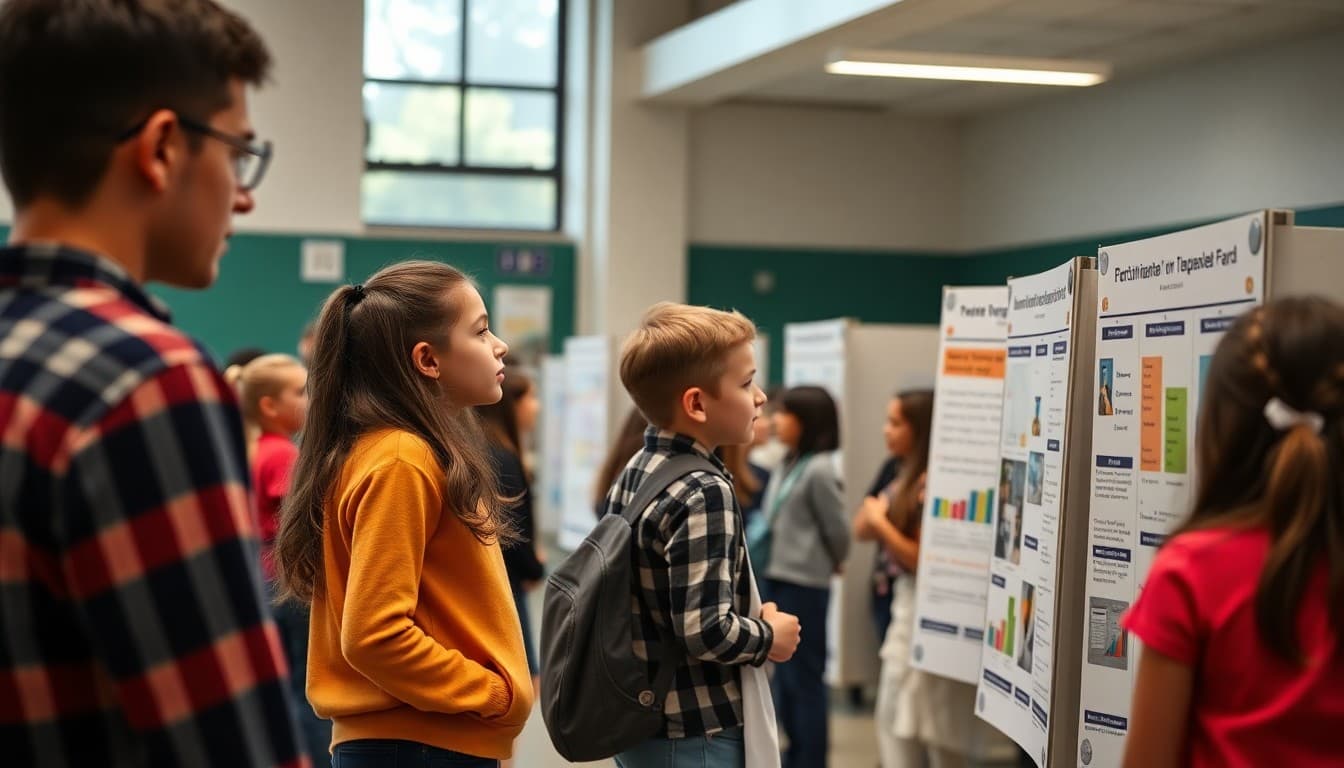
Walk families through what presentation day looks like. Will students be at a table with a display? Will they give a brief verbal explanation to judges? How many minutes do they have? Can families attend? Are there audience viewing hours? Students who have practiced for the right format present much more confidently than students who are surprised by how it works.
List materials the school provides
Clarify what students will receive from school versus what they need to bring from home. If the school provides display boards but not building materials, say so. If students are expected to print their research at home or at school, say so. Clear expectations prevent last-minute scrambles and ensure that all students start on equal footing.
Send timeline reminders as deadlines approach
A single newsletter at the start of the project is not enough. Build in reminder messages as each major deadline approaches. Students who are behind benefit from the reminder, and students who are on track benefit from the confirmation that they are in good shape. Consistent communication across the project arc is what separates a smooth STEM fair from a stressful one.
Daystage lets you send the initial overview, deadline reminders, and presentation day logistics all through the same platform. Families who feel informed throughout the project show up to the fair ready to celebrate, not scrambling to understand what is happening.
Get one newsletter idea every week.
Free. For teachers. No spam.
Frequently asked questions
What should a STEM fair newsletter include?
Project requirements and scope, the timeline with all major deadlines, judging criteria, how families can support without doing the work for their student, the presentation format, and any materials the school is providing versus what students need to source themselves.
How do I explain the project scope in my newsletter without overwhelming families?
Break the project into phases and give a simple explanation of what each phase involves. Introduction to the challenge, brainstorming, building or testing, documenting results, presentation. When families see it as a sequence of manageable steps rather than one large assignment, the project feels approachable.
How should families support their student without taking over?
Be explicit in your newsletter about the boundary between support and doing-it-for-them. Families can help students brainstorm, source materials, and practice their presentation. They should not be designing, building, or writing the student's portions for them. Stating this clearly protects both the student's ownership and the fairness of the judging.
How do I communicate judging criteria to families?
Share the rubric or a simplified version of it in your newsletter. Families who understand how projects will be evaluated can help their student focus their effort on what matters most. Surprises at judging time usually reflect unclear communication about expectations upfront.
What tool helps teachers communicate about STEM fair projects?
Daystage makes it easy to send a detailed STEM fair overview newsletter and follow up with deadline reminders and presentation day logistics all through the same platform.

Adi Ackerman
Author
Adi Ackerman is a former classroom teacher and curriculum writer with 8 years in K-8 schools. She writes about school communication, parent engagement, and what actually works in real classrooms.
More for Classroom Teachers
Ready to send your first newsletter?
3 newsletters free. No credit card. First one ready in under 5 minutes.
Get started free