
How to Announce a Student Podcast Unit in Your Teacher Newsletter
A student podcast unit is one of the richest multimodal learning experiences available in a modern classroom. It requires students to research a topic deeply enough to explain it clearly, organize their thinking into a narrative structure, communicate confidently on audio, and reflect on their own voice and delivery. A newsletter that introduces this unit to families with the right context generates genuine excitement and ensures families understand why their student is practicing an interview script at the kitchen table.
Lead with what students will create and who will hear it
The most motivating thing about a podcast unit is that the audience is real. Lead with that. "Over the next four weeks, students will research a topic of their choice, script a ten-minute podcast episode, record it, and edit it. Every finished episode will be shared with families and with our partner classroom at [school]. Students are creating work for a real audience, which changes how seriously they take every step of the process."
Explain the research component
Families who understand that the podcast unit is heavily research-based will not confuse it with a performance exercise. "The first two weeks of the unit are focused on research. Students choose a topic, identify reliable sources, take notes, and develop a thesis-level position or narrative they will present in the episode. The script comes from the research. The recording comes from the script." The sequence communicates that this is rigorous academic work.
Describe the audio recording process
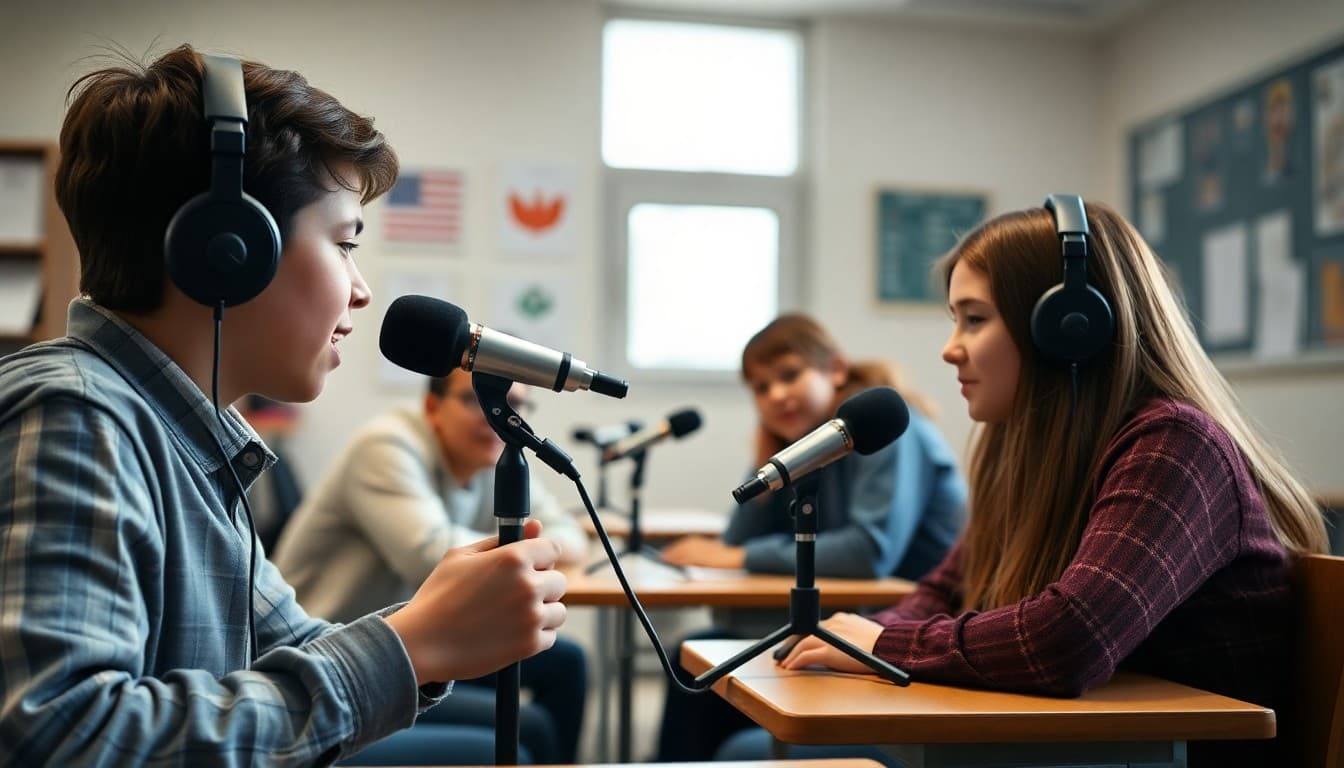
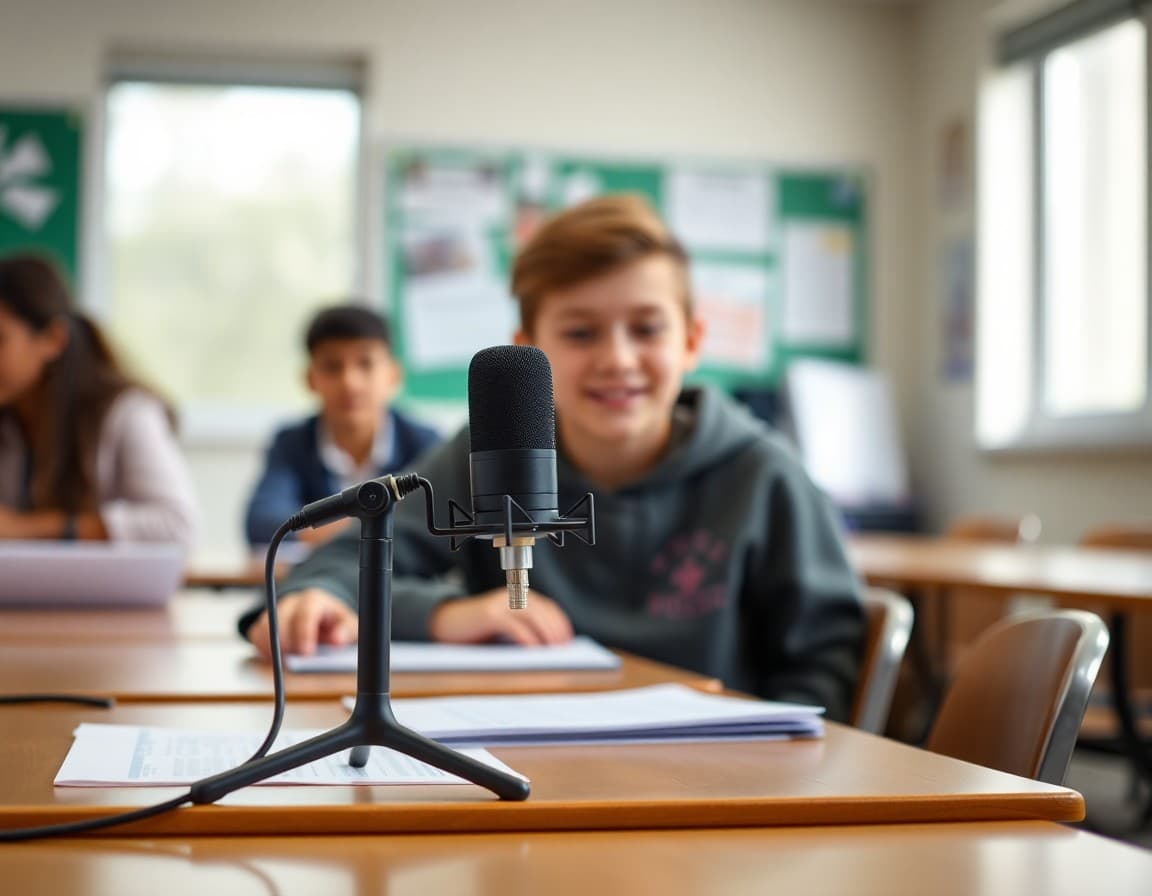
Families are often curious about how students record in school. Be specific. "Students will use tablet microphones in a quiet corner of the classroom or in the media room with supervision. We use a free audio editing app to trim, layer, and finalize each episode. No special equipment is needed and no recording will happen at home unless a student chooses to record their own follow-up interview outside of school."
Address the sharing plan and privacy clearly
Where will the podcast episodes go? Families need to know before their student is recorded. "Episodes will be shared with families through the class newsletter and with our partner classroom. They will not be published publicly. Any episode that a family would like to keep private should be communicated to me before recording week begins."
Tell families how to support the research process at home
The home support for a podcast unit is different from traditional homework support. "The most useful thing at home is conversation. Ask your student: what is your episode about? What is your main argument or story? Who would benefit from hearing this? These questions prompt the kind of thinking that makes a podcast compelling rather than merely informative."
Promise to share the finished episodes
Close the newsletter with a commitment to share the work. "When episodes are finished I will share a link to each student's episode in the newsletter. I would encourage you to listen with your student and ask them how they felt about hearing their own voice and what they would do differently next time." The promise of sharing creates investment in the quality of the work.
Daystage is particularly well-suited to sharing student podcast episodes because you can embed an audio link directly in the newsletter and families can listen from any device.
Get one newsletter idea every week.
Free. For teachers. No spam.
Frequently asked questions
What skills does a student podcast unit develop?
Research skills, oral communication and voice projection, script writing and editing, interviewing techniques, audio recording and editing, listening comprehension, and the ability to synthesize information into a format accessible to a broad audience. It also builds confidence in speaking for a real audience.
What should a podcast unit newsletter include?
The unit topic and driving question, the skills being developed, the format and length of student episodes, the publishing or sharing plan, the timeline from research to recording to final episode, and how families can support at home.
How do I handle concerns about recording student voices?
Address privacy proactively. Explain where the recordings will be shared (only in class, with families directly, or on a password-protected platform). Reference your school's media consent policy and note that recordings will not be published publicly unless families have signed media consent forms.
Should student podcasts be shared with families?
Yes, when consent allows. Student podcasts that families can listen to at home are deeply motivating for students because they have a real audience beyond the classroom. A newsletter link to the episode is a powerful way to share the work.
Can Daystage help teachers share student podcast episodes with families?
Yes. You can embed a podcast link or audio player in a Daystage newsletter, making it easy for families to listen from any device.

Adi Ackerman
Author
Adi Ackerman is a former classroom teacher and curriculum writer with 8 years in K-8 schools. She writes about school communication, parent engagement, and what actually works in real classrooms.
More for Classroom Teachers
How to Share a Student Animation Unit in Your Teacher Newsletter
Classroom Teachers · 6 min read
How to Explain Multimedia Projects to Families in Your Teacher Newsletter
Classroom Teachers · 6 min read
How to Announce a Project Based Learning Launch in Your Teacher Newsletter
Classroom Teachers · 6 min read
Ready to send your first newsletter?
3 newsletters free. No credit card. First one ready in under 5 minutes.
Get started free