

How to Announce a Project Based Learning Launch in Your Teacher Newsletter
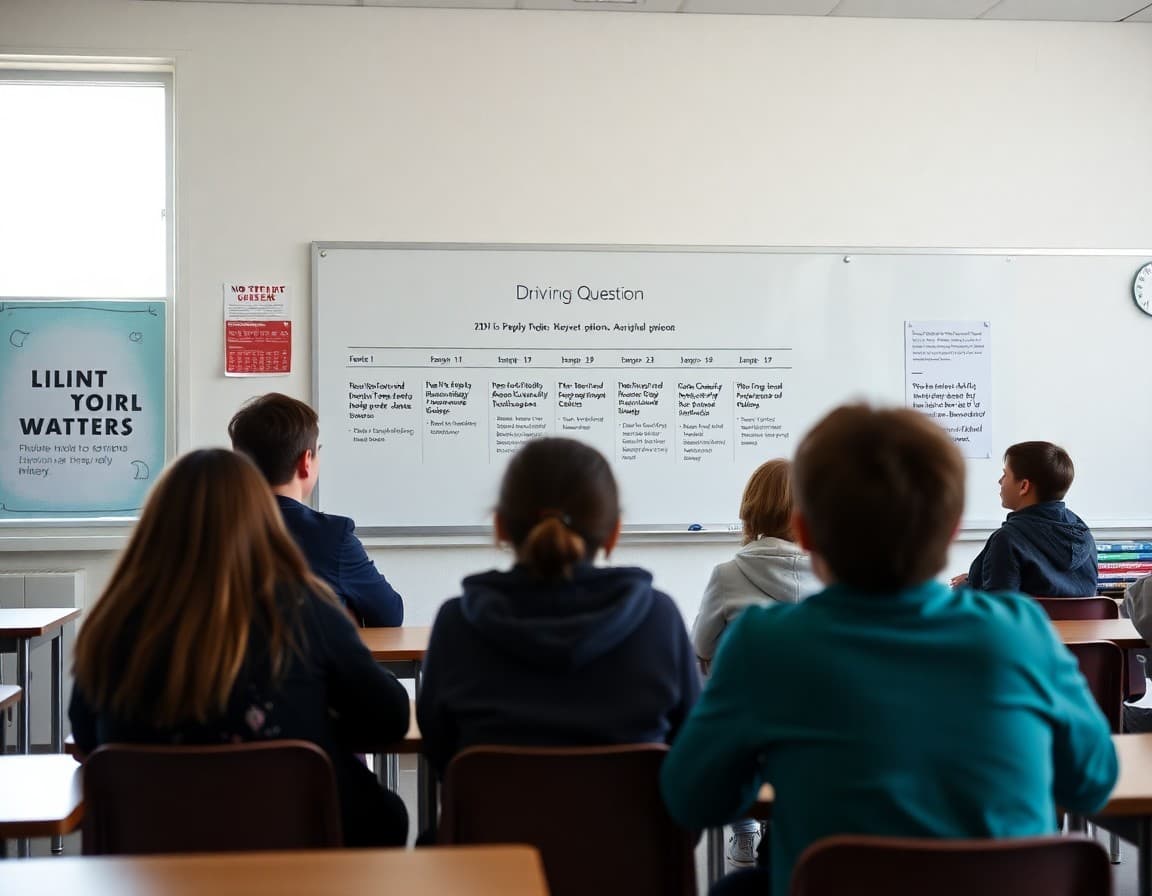
Project based learning creates some of the most memorable experiences in a school year. It also generates a specific kind of family question: "What is my student doing? How can I help? When is it due?" A launch newsletter that answers these questions before families have to ask them sets up the project for success at home as well as at school. Families who are informed from day one are more likely to provide the right kind of support throughout the project timeline.
Lead with the driving question
The driving question is the heart of any PBL project. Make it the first thing families read. "This month we are launching our community design project. The driving question is: How can students design a public space that serves every member of our community? Students will be researching, interviewing community members, and creating design proposals that they will present at our end-of-unit showcase." The driving question immediately communicates that this project is real and meaningful, not a class exercise.
Explain the real-world connection
PBL gets its power from authentic context. Tell families why the project matters beyond the classroom. "The designs students create will be presented to the city parks department. While we cannot guarantee implementation, the department has agreed to review submissions and provide feedback. Students are creating work for a real audience, which changes how they approach the quality of their work." Families who understand the authentic audience invest differently in supporting the project.
Share the project timeline
Families who see the full timeline can plan their support around the right moments. "Week 1: research and community interviews. Week 2 and 3: design and refinement. Week 4: presentation preparation. Week 5: showcase." A simple timeline tells families when their student will need the most support and when the deadline is approaching.
Give families specific ways to support without doing the work
This is the most important guidance in a PBL launch newsletter. "The most useful thing you can do at home is ask your student questions, not provide answers. 'Who are you designing for? What does your research show? What would a community member who doesn't use this space think about your design?' Good questions are more valuable than help with the poster." Families who have specific questions to ask support student thinking rather than student output.
Describe what the final product will be
Tell families what students will create. "Each student will produce a design brief, a visual prototype or model, and a three-minute presentation. The showcase is open to families and will be held on [date] at [time]. Students will be presenting their work to classmates, families, and a panel of community reviewers."
Include the rubric or a link to it
A rubric in the launch newsletter gives families a reference point throughout the project. "The project rubric is linked below. It covers research quality, design reasoning, and presentation clarity. Reviewing it with your student at the start of the project helps them understand what success looks like from day one."
Teachers who use Daystage for PBL communications find that a compelling launch newsletter drives family engagement throughout the project timeline, not just at the showcase.
Get one newsletter idea every week.
Free. For teachers. No spam.
Frequently asked questions
What should a PBL launch newsletter include?
The driving question or central challenge of the project, the real-world context that makes it meaningful, the timeline from launch to showcase, what students will be creating or producing, the role of families during the project, and how families can ask good questions without providing answers.
How do I explain project based learning to families who are unfamiliar with it?
Describe it in terms of the student experience rather than the pedagogical framework. 'Instead of learning about the water cycle from a textbook, students will investigate a real local water quality question and present their findings to actual stakeholders.' The student experience description is more compelling than an explanation of the methodology.
How do I tell families to support the project without doing it for their student?
Give families specific conversation prompts rather than task prompts. 'Ask your student: what is the hardest part of your project so far? What surprised you about your research? What would you change if you had more time?' Questions that promote reflection are more useful than offers to help with the poster.
Should I include the rubric in the PBL launch newsletter?
Yes, or a link to it. Families who can see how the project will be evaluated understand what success looks like and can reinforce those expectations at home. A rubric in the launch newsletter also gives families something concrete to reference during the project rather than guessing what matters.
Can Daystage help teachers send a PBL launch newsletter to families?
Yes. Daystage supports newsletter formats with project photos, timeline visuals, driving questions, and rubric links that make a PBL launch announcement compelling and complete.

Adi Ackerman
Author
Adi Ackerman is a former classroom teacher and curriculum writer with 8 years in K-8 schools. She writes about school communication, parent engagement, and what actually works in real classrooms.
More for Classroom Teachers
Ready to send your first newsletter?
3 newsletters free. No credit card. First one ready in under 5 minutes.
Get started free