

How to Explain Photo Essay Projects to Families in Your Teacher Newsletter
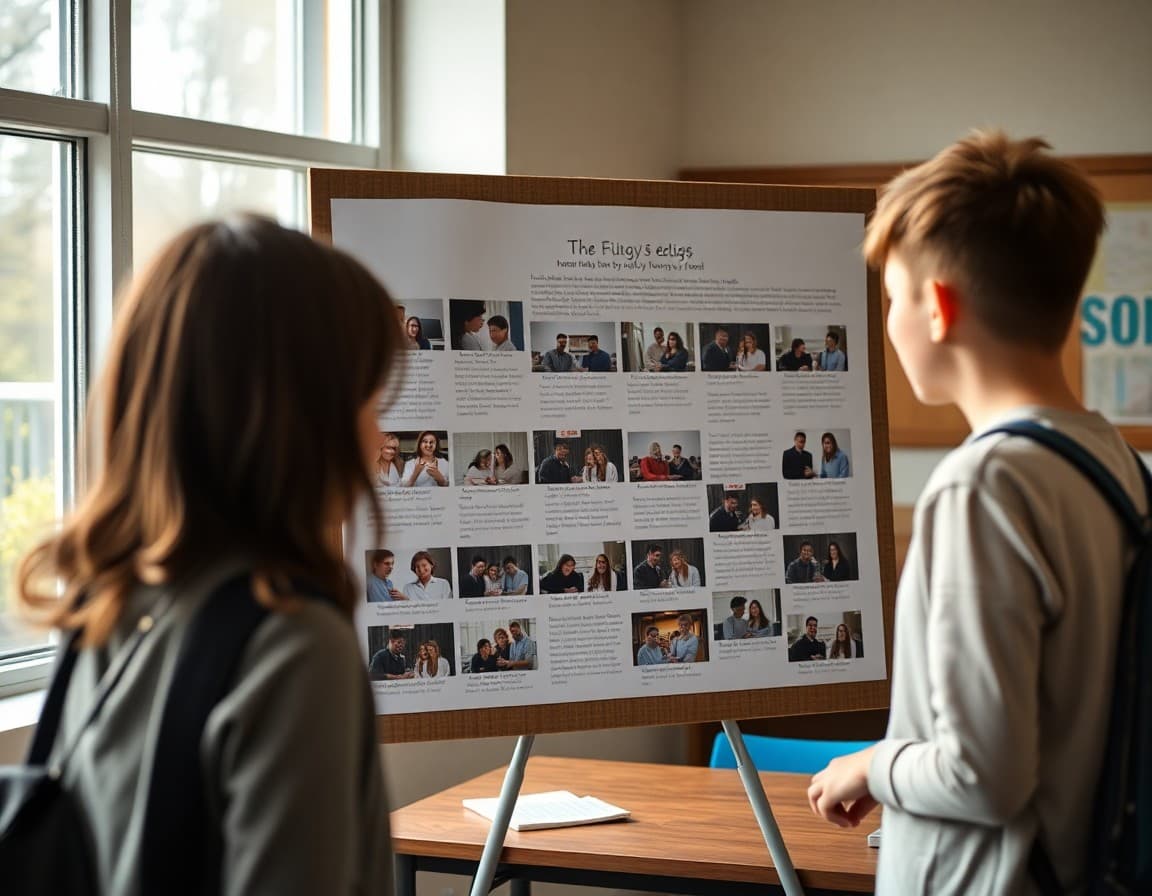
A photo essay is a demanding creative and analytical assignment that combines visual thinking with argument. Students who complete a photo essay are not taking snapshots. They are choosing subjects deliberately, framing images to communicate meaning, sequencing photographs to build a narrative, and writing captions that extend rather than repeat what the image shows. Families who understand what a photo essay requires can support both the photography and the writing in more targeted ways.
Explain what a photo essay is
"A photo essay is a visual argument or narrative told primarily through a sequence of photographs. Each image is chosen and framed deliberately to contribute to the overall message. Captions provide context and meaning that the image cannot show alone. A strong photo essay has a clear subject, a consistent perspective, and a sequence that builds from one image to the next so the reader arrives at a conclusion by the end."
Describe the current photo essay assignment
"Students are creating photo essays documenting something that is changing in their neighborhood or community. The essay must include eight to twelve photographs taken by the student, a written caption of two to three sentences for each image, and a 100-word introduction that explains the argument the essay is making. Students have two weeks to take photographs. They are assembling the final essay digitally using Google Slides."
Explain the thinking behind the assignment
"This assignment asks students to look at their own environment with the kind of observational attention that writers, journalists, and documentarians use. A student who photographs a construction site for an essay about neighborhood change is not just taking a picture of a building. They are deciding: what aspect of this scene shows the change most clearly? Do I photograph the crane, the fence, the sign, or the nearby business that is still open? That decision is analysis, not just photography."
Tell families how they can support the photography phase
"If your student asks you to walk around the neighborhood with them while they take photographs, that is a useful and meaningful way to support the project. Ask questions while they work: why are you photographing that? What does it show? Is there a better angle? The conversation about what to photograph and why is the same thinking the essay requires in writing. You are doing a walking version of the revision process."
Explain what makes a strong caption
"A caption should tell the reader something the image cannot show on its own. 'A construction fence surrounds the site of the old community center' is a weak caption because anyone can see the fence. 'The site of the Riverside Community Center, which provided after-school programs for 200 students, has been fenced since its demolition last March' is a strong caption because it gives context the image cannot convey. Ask your student to read their captions aloud. If the caption only describes what is visible, it needs revision."
Tell families how essays will be shared
"Finished photo essays will be shared in our digital class gallery, linked in next month's newsletter. Some essays may also be printed and displayed at our end-of-unit showcase. Families who want to see their student's essay before the gallery can ask their student to share the Google Slides link at home."
Including photo essay images in a Daystage newsletter showcases student visual thinking in a way that families rarely get to see and that is substantially more compelling than a grade on a written report.
Get one newsletter idea every week.
Free. For teachers. No spam.
Frequently asked questions
What is a photo essay and how is it different from a written essay?
A photo essay tells a story or makes an argument primarily through a sequence of photographs, with text captions or brief written passages that support rather than replace the visual narrative. It is different from a written essay because the images carry the primary meaning. The photographer must make deliberate choices about what to photograph, how to frame it, and how to sequence images to create meaning.
What makes a photo essay educational rather than just a photo project?
A photo essay requires the same skills as a written essay: a clear argument or narrative, evidence that supports the argument, logical sequencing, and a conclusion. The mode is visual rather than verbal, but the thinking is the same. Students who produce a strong photo essay have argued visually in the same way strong writers argue in prose.
What cameras or devices can students use for a photo essay?
Any device with a camera: a phone, tablet, Chromebook with a camera, or a basic point-and-shoot camera. Photo essays are not about equipment. They are about seeing. A student with a phone who notices the right moment and frames it intentionally will produce a stronger essay than a student with an expensive camera who photographs randomly.
How long should a student photo essay be?
Most classroom photo essays include eight to fifteen images. Fewer than eight often does not give enough visual evidence to build a complete argument. More than fifteen often includes images that do not contribute meaningfully. Like editing prose, editing a photo essay to its strongest images is part of the skill.
Can Daystage help teachers share student photo essays with families in newsletters?
Yes. A Daystage newsletter with embedded photo essay images is one of the most visually compelling communications teachers can send. Families respond strongly to seeing their student's original photography alongside their writing.

Adi Ackerman
Author
Adi Ackerman is a former classroom teacher and curriculum writer with 8 years in K-8 schools. She writes about school communication, parent engagement, and what actually works in real classrooms.
More for Classroom Teachers
How to Explain Infographic Projects to Families in Your Teacher Newsletter
Classroom Teachers · 6 min read
How to Share Community Research Projects With Families in Your Teacher Newsletter
Classroom Teachers · 6 min read
How to Explain Multimedia Projects to Families in Your Teacher Newsletter
Classroom Teachers · 6 min read
Ready to send your first newsletter?
3 newsletters free. No credit card. First one ready in under 5 minutes.
Get started free