
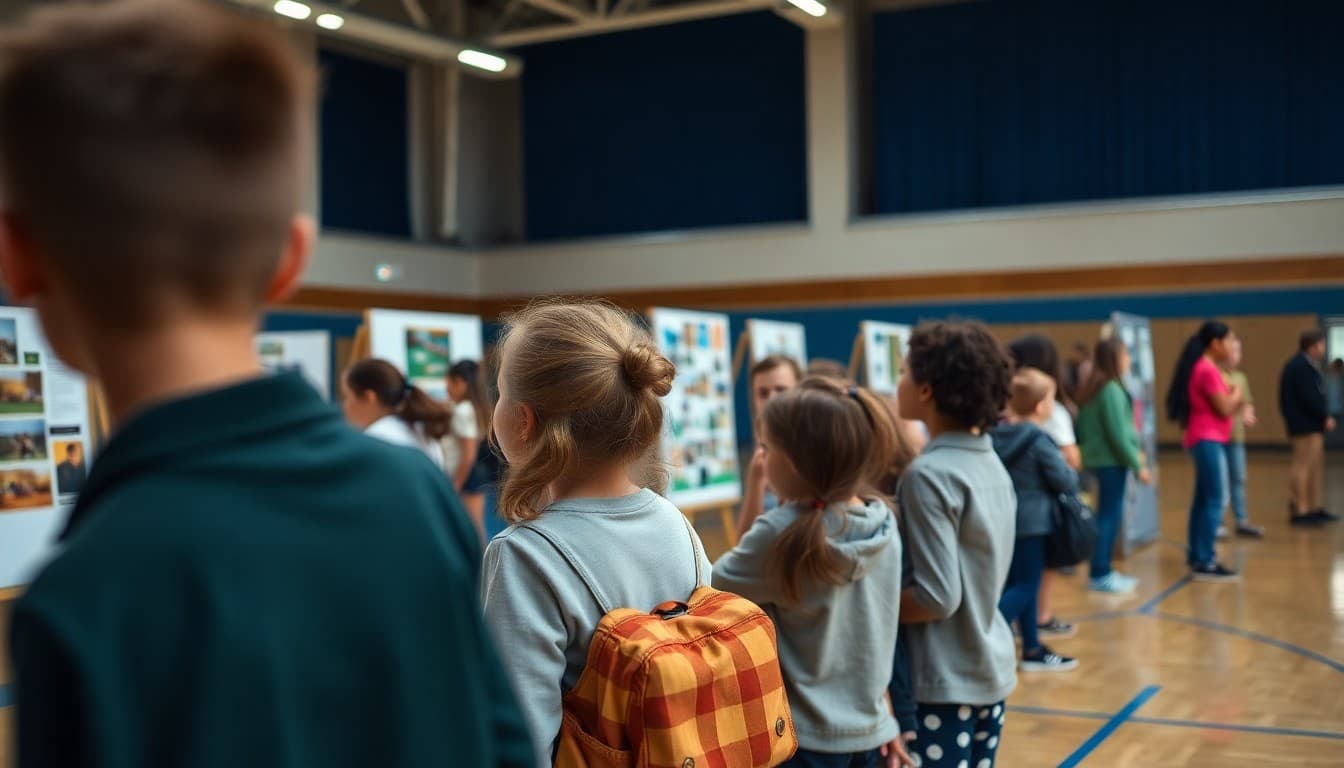
How to Invite Families to an Exhibition Night in Your Teacher Newsletter

Exhibition nights are among the most powerful school events a teacher can organize because they give students a real audience for their work. When a student presents their project to families and community members who ask genuine questions, the learning is consolidated in a way that no classroom presentation fully replicates. A newsletter that explains the event clearly, tells families what to expect, and coaches them on how to engage gives exhibition night the audience it deserves.
Announce the exhibition night clearly
"You are invited to our classroom Exhibition Night on [date] from [time] to [time] in [location]. Students will present the projects they have been working on for the past [weeks] to an audience of families and community members. This is not a drop-in event where students wait for you to arrive. Your student will be at their display for the full event and expects you to visit, listen to their presentation, and ask questions."
Explain what students will be presenting
"This year's exhibition features our passion projects. Each student chose an independent research question eight weeks ago and has spent one period per week investigating it. Projects include original research, created products, documented experiments, and curated multimedia presentations. Topics range from the engineering of suspension bridges to the history of folk music to how social media affects teen mental health. Every project is different. Every student has put significant work into it."
Coach families on how to engage with student presentations
"When you reach your student's display, let them lead. Do not jump to explain their work for them or tell other visitors what they made. Ask them to walk you through it. Then ask real questions: what was the most interesting thing you found? What did not work the way you expected? What would you do differently? A student who can answer all three of those questions in detail has internalized their project in a meaningful way."
Tell families to visit other students' displays as well
"After you visit your own student's display, please walk through the rest of the exhibition. Ask other students about their projects. Exhibition night is a community event and the student presenters are practicing real presentation skills with every visitor who stops. A student who explains their research on electric vehicles to five different adults has done more communication practice in one evening than most class presentations provide in a week."
Provide logistics and what to bring
"The event is free and open to all family members including younger siblings. No materials are needed , everything students need for their display is provided in class. Parking is available in the school lot. We expect approximately [number] visitors. If your student is one of several presenting in a group, each member will have a designated section of the display."
Explain how the evening connects to the learning goals
"Exhibition night is not a celebration separate from learning. It is the final assessment. Students are graded on the quality of their presentation to a real audience. A student who presents clearly, answers questions confidently, and demonstrates genuine understanding of their research earns the highest marks. The audience you provide by attending is part of the assignment."
A Daystage newsletter with the exhibition night details, what to expect, and an RSVP option ensures families arrive prepared to be a real audience rather than just visitors, which is the difference between an exhibition that matters and one that is just a display.
Get one newsletter idea every week.
Free. For teachers. No spam.
Frequently asked questions
What is an exhibition night and how is it different from a science fair?
An exhibition night is a structured showcase where students present their work directly to an audience of families, community members, and peers. It can feature any subject or type of project. Unlike a science fair, which typically focuses on scientific experimentation, an exhibition night can include writing, research, creative projects, multimedia work, and passion projects across all subjects.
What will students actually do at the exhibition night?
Students stand at their project display and explain their work to visitors. This is different from a static display that families walk past. Visitors are expected to ask questions and listen to the student's presentation. The presentation skill is part of what is being developed and assessed at the exhibition.
What should families do when they visit a student's display?
Ask genuine questions. Listen to the student's explanation without interrupting. Ask follow-up questions: 'What was the hardest part?' 'What did you discover that surprised you?' 'What would you do differently?' Visiting other students' displays and engaging with their work is also part of the evening.
How is the exhibition night assessed?
Student presentations are typically assessed on clarity of explanation, depth of content knowledge, ability to answer questions, and presentation skills like pacing and eye contact. The grade reflects the quality of the presentation as much as the quality of the project itself.
Can Daystage help teachers communicate about exhibition nights with families in newsletters?
Yes. A Daystage newsletter is the ideal channel for an exhibition night invitation: logistics, what to expect, how to engage, and how to prepare. Sending the invitation through Daystage also allows families to confirm attendance if RSVP is enabled.

Adi Ackerman
Author
Adi Ackerman is a former classroom teacher and curriculum writer with 8 years in K-8 schools. She writes about school communication, parent engagement, and what actually works in real classrooms.
More for Classroom Teachers
Ready to send your first newsletter?
3 newsletters free. No credit card. First one ready in under 5 minutes.
Get started free