
How to Write a Museum Partnership Newsletter to Families

Museum partnership newsletters introduce families to a learning relationship that goes beyond a one-day field trip. When a class has an ongoing connection to a museum whose collection and educators are woven into the curriculum, students develop a different relationship with that museum than they would from a single visit. They know where things are, they have questions to answer, they have a relationship with someone who works there. A newsletter that explains this partnership and shows families how to extend it gives the relationship a life outside of school hours.
Explain the partnership structure
Tell families what the partnership involves. Multiple visits or one extended visit? Museum educators coming to the classroom, students visiting the museum, or both? Specific collections or exhibitions the class is working with? A museum educator who knows your students' names and tracks their learning across visits? The structure of the partnership determines what students get out of it, and families who understand that structure can support it appropriately.
Connect the museum program to the classroom curriculum
Show families how the museum content connects to what students are studying in class. A history museum partnership that deepens the unit on local history students are already exploring. A science museum partnership that provides physical specimens and experiments connected to the science curriculum. An art museum partnership that develops visual literacy and art history knowledge while also building observation skills used across all subjects. The connection makes the museum visit clearly academic rather than recreational.
Describe what students do during museum visits
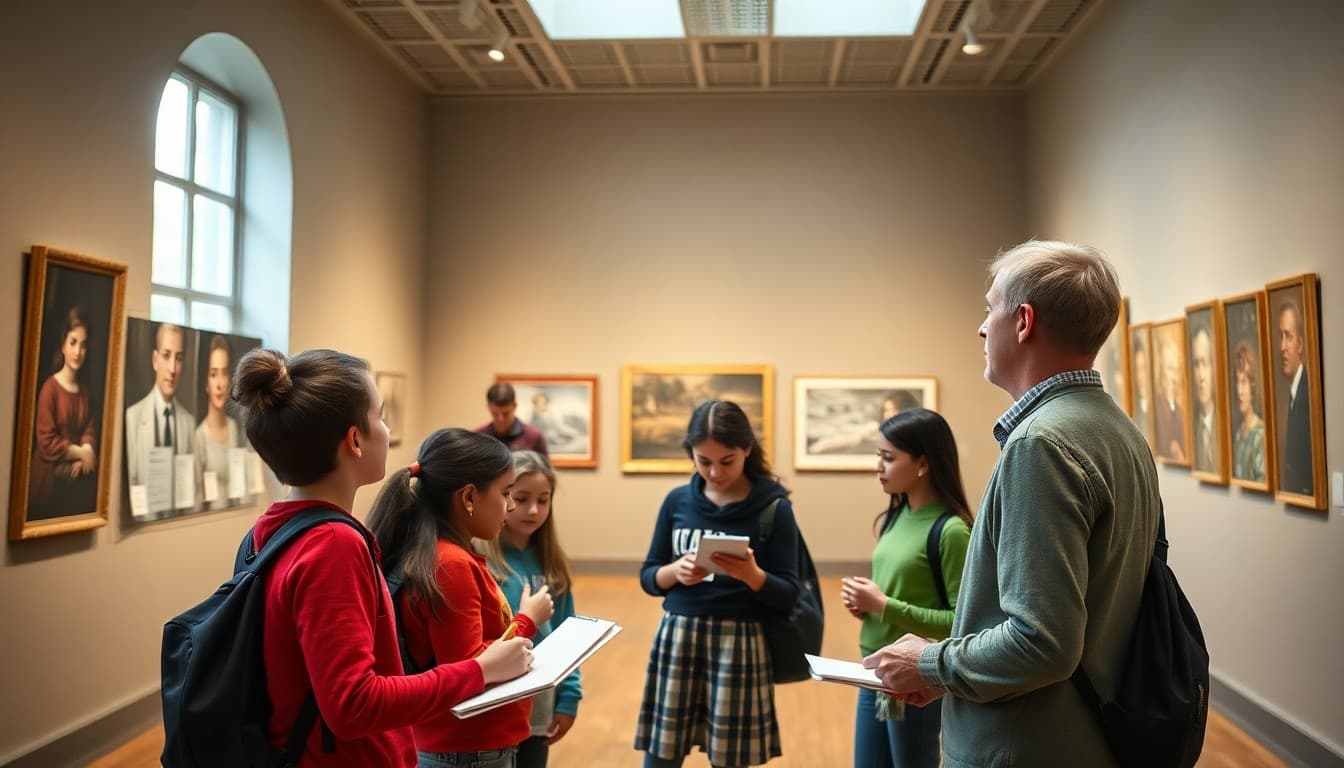
Museum learning is different from classroom learning and families benefit from understanding what it looks like. Students might spend time closely observing and sketching artifacts or artworks before they read about them, developing observation skills that precede interpretation. They might engage with a museum educator who asks questions rather than delivers answers. They might encounter primary sources, original objects, or specimens that no photograph or textbook can replicate. Describing this helps families appreciate what is uniquely valuable about the museum environment.
Tell families how to visit independently
Give families the practical information to visit the museum on their own. Hours, admission cost, whether the museum has free family days, and what collections or exhibitions students have been working with in the partnership program. A family visit to the same museum during the partnership period deepens the student's connection to the collection and gives them something to bring back to class. Many families do not visit local museums because they do not know what to look for. Your newsletter can change that.
Share the questions students are investigating
Tell families what questions students are using to frame their museum investigation. What stories does this collection tell and whose voices are missing? How does this object reflect the society that made it? What can we learn from physical evidence that a written account would not show us? These questions give students a productive framework for the museum experience and give families something substantive to discuss when their student comes home from a visit.
Describe the culminating product or project
If the museum partnership culminates in a student project, tell families what it is. A museum-quality exhibition of student work displayed in the school or at the museum. A research paper drawing on museum artifacts as primary sources. A creative piece inspired by specific works in the collection. A documentary or presentation about the collection's historical significance. Understanding the culminating product helps families see the partnership as a coherent academic experience rather than a series of special days.
Invite families to the museum together
Close by actively inviting families to visit the museum during the partnership period. Even a single shared visit where a student plays the role of guide for their own family creates a different relationship with the museum and the curriculum. Students who teach their families what they have learned solidify their own understanding and develop the kind of confidence in their knowledge that only comes from explaining it to someone who does not already know it.
Daystage makes it easy to send a museum partnership newsletter with visit details and family access information so students and families can extend the curriculum connection into the museum spaces that make certain kinds of learning possible that no classroom can replicate.
Get one newsletter idea every week.
Free. For teachers. No spam.
Frequently asked questions
What is a school-museum partnership?
A school-museum partnership is a structured relationship between a classroom and a museum where museum educators work with students over multiple visits or through in-class programs. Unlike a one-day field trip, a partnership involves repeated engagement with museum collections and educators that is directly tied to the classroom curriculum. The partnership deepens the learning available from a single visit.
How does a museum partnership connect to academic standards?
Museum partnerships are designed around curriculum standards. An art museum partnership might address visual arts standards, historical analysis, and cultural studies. A science museum partnership addresses science content, inquiry skills, and data analysis. Museum educators work with classroom teachers to ensure the museum program aligns with what students are learning in class.
How can families extend museum learning at home?
Visiting the museum outside of school hours gives students additional time with the collections they studied in class. Many museums have free family admission days, digital collections available online, or family programming connected to current exhibitions. Discussing what a student saw, what surprised them, or what they want to know more about keeps the learning active after the partnership visits.
What should students bring or know before a museum visit?
Students should understand the connection between the visit and what they are studying in class, have specific questions they are hoping to answer through the museum experience, and know the observation and documentation skills they will use during the visit. A sketch pad, observation journal, or structured note-taking form makes the visit more productive than simply walking through galleries.
What tool helps teachers communicate about museum partnerships?
Daystage makes it easy to send a museum partnership newsletter with visit details and family access information so families can extend the partnership experience beyond the school day and deepen the curriculum connection.

Adi Ackerman
Author
Adi Ackerman is a former classroom teacher and curriculum writer with 8 years in K-8 schools. She writes about school communication, parent engagement, and what actually works in real classrooms.
More for Classroom Teachers
Ready to send your first newsletter?
3 newsletters free. No credit card. First one ready in under 5 minutes.
Get started free