

How to Explain Student Choice Menus to Families in Your Teacher Newsletter
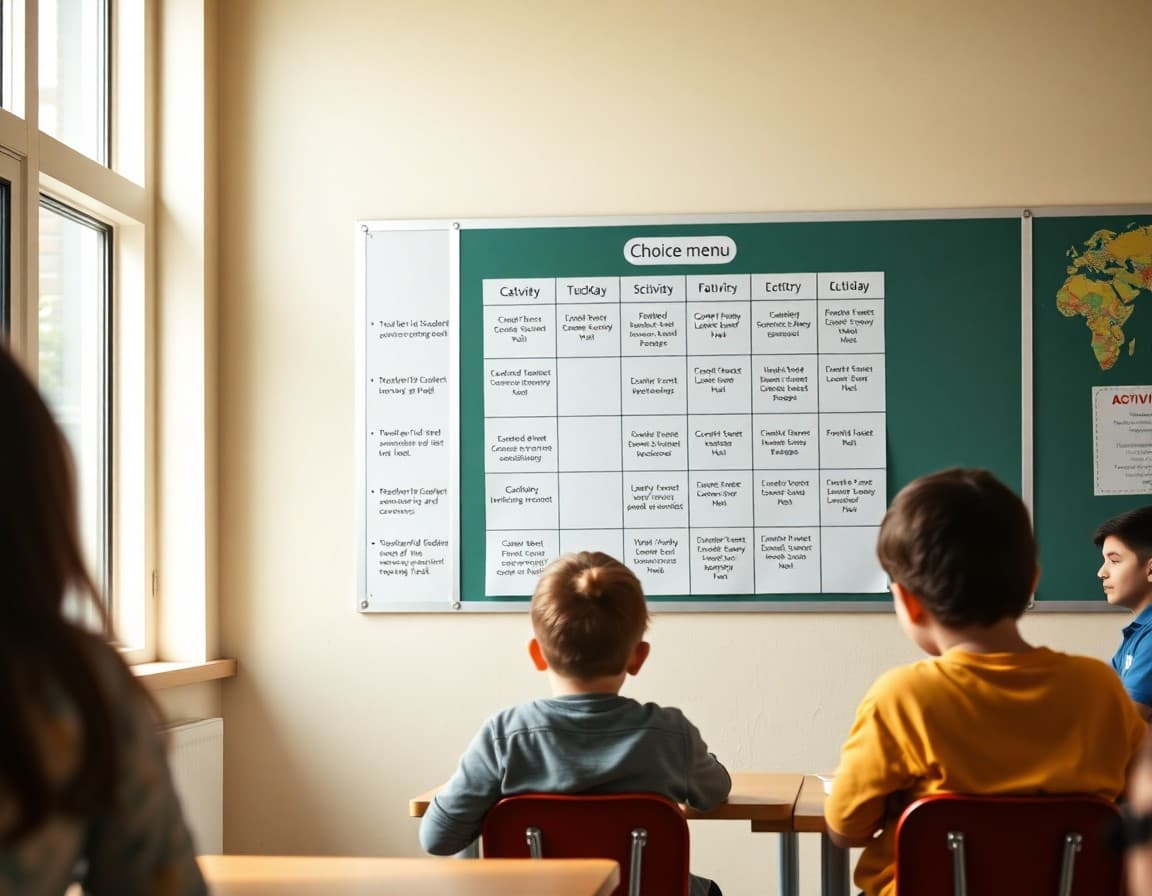
Choice menus give students agency over how they demonstrate learning. They are a differentiation tool that respects the reality that students learn and show learning differently. A newsletter that explains the choice menu your class is using gives families a way to support the choice process without inadvertently making it for their student. The goal of the newsletter is to make families informed supporters of student self-direction rather than inadvertent directors of it.
Explain what a choice menu is
"A choice menu is a structured set of project options where every option addresses the same learning standard but in a different format. Students who prefer written work can choose an essay option. Students who are more visual can choose a poster or infographic. Students who learn through making can choose a physical model. The format varies. The academic expectation does not. Every choice is equally valid and equally assessed."
Share the specific choice menu currently in use
"This month's choice menu for the ecosystems unit has nine options: a written research report, an illustrated field guide, a narrated video explanation, a comic strip, a model of an ecosystem, a persuasive speech, a data-based analysis, an annotated map, or a children's book. Each option is listed with the same rubric expectations. The full menu is linked below." Sharing the actual menu tells families what options exist and gives them something concrete to discuss with their student.
Tell families how to support the choice process without directing it
"When your student brings home the choice menu, ask: which option do you want to do? If they do not know, ask: which one sounds most interesting? Which one feels like the right kind of challenge? Which one uses a skill you want to practice? Your job is to ask questions, not to point to an option. The best learning from a choice menu happens when the student chose it genuinely and owns the decision."
Address concerns about students choosing the easiest option
"Some families worry that students will choose the easiest option rather than the most challenging one. Two things address this. First, a well-designed choice menu has no easy options. All paths require the same depth of knowledge. Second, students who choose an option they are genuinely interested in tend to work harder than students assigned a task that holds no appeal. Interest-driven effort often produces better work than assigned effort."
Describe how choice menus are assessed
"All options are assessed using the same rubric criteria: depth of content knowledge, accuracy, clarity of presentation, and evidence of revision. The rubric is format-agnostic. A video essay is assessed by the same criteria as a written essay. Both should demonstrate deep understanding, accurate information, and clear communication. The format difference is not an assessment advantage in either direction."
Note the timeline for the current choice menu
"Students have two weeks to complete their chosen option. The deadline is [date]. We will share all finished projects in a mini-gallery before the end of the unit. All families are welcome to attend."
Daystage newsletters with an embedded or linked choice menu image are highly engaged because families find the variety of options inherently interesting and often discuss which they would have chosen.
Get one newsletter idea every week.
Free. For teachers. No spam.
Frequently asked questions
What is a student choice menu?
A choice menu is a structured set of activity options that all address the same learning goals but in different formats. Students choose which option to complete based on their interests, strengths, or learning preferences. Common formats include choice boards with nine options arranged in a grid, tiered menus with required options plus elective additions, and free-choice with constraints.
Are all choices on a choice menu equally challenging?
In a well-designed choice menu, yes. The goal is to offer different modes of demonstrating the same learning, not easier or harder paths. Some teachers design tiered menus where options are differentiated by complexity, but in most classroom choice menus the options are equivalent in academic demand.
Does student choice reduce accountability?
No. Every option on a choice menu is assessed against the same learning standard. Choice affects the format of the demonstration, not the rigor of what is expected. A student who makes a video and a student who writes an essay are both assessed on whether they understand and can apply the content.
How do families support their student in making a good choice from the menu?
Ask questions rather than directing. 'Which option interests you most? Which one feels like the right challenge? What would you need to do this one well?' The goal is for the student to own the choice. A choice their parent made for them is not the same educational experience as a choice they made themselves.
Can Daystage help teachers share choice menus with families in newsletters?
Yes. A Daystage newsletter can include the choice menu as an image or linked document so families can see the options and support their student's selection process.

Adi Ackerman
Author
Adi Ackerman is a former classroom teacher and curriculum writer with 8 years in K-8 schools. She writes about school communication, parent engagement, and what actually works in real classrooms.
More for Classroom Teachers
How to Explain Jigsaw Learning to Families in Your Teacher Newsletter
Classroom Teachers · 6 min read
How to Explain Passion Projects to Families in Your Teacher Newsletter
Classroom Teachers · 6 min read
How to Introduce Interactive Notebooks to Families in Your Teacher Newsletter
Classroom Teachers · 6 min read
Ready to send your first newsletter?
3 newsletters free. No credit card. First one ready in under 5 minutes.
Get started free