
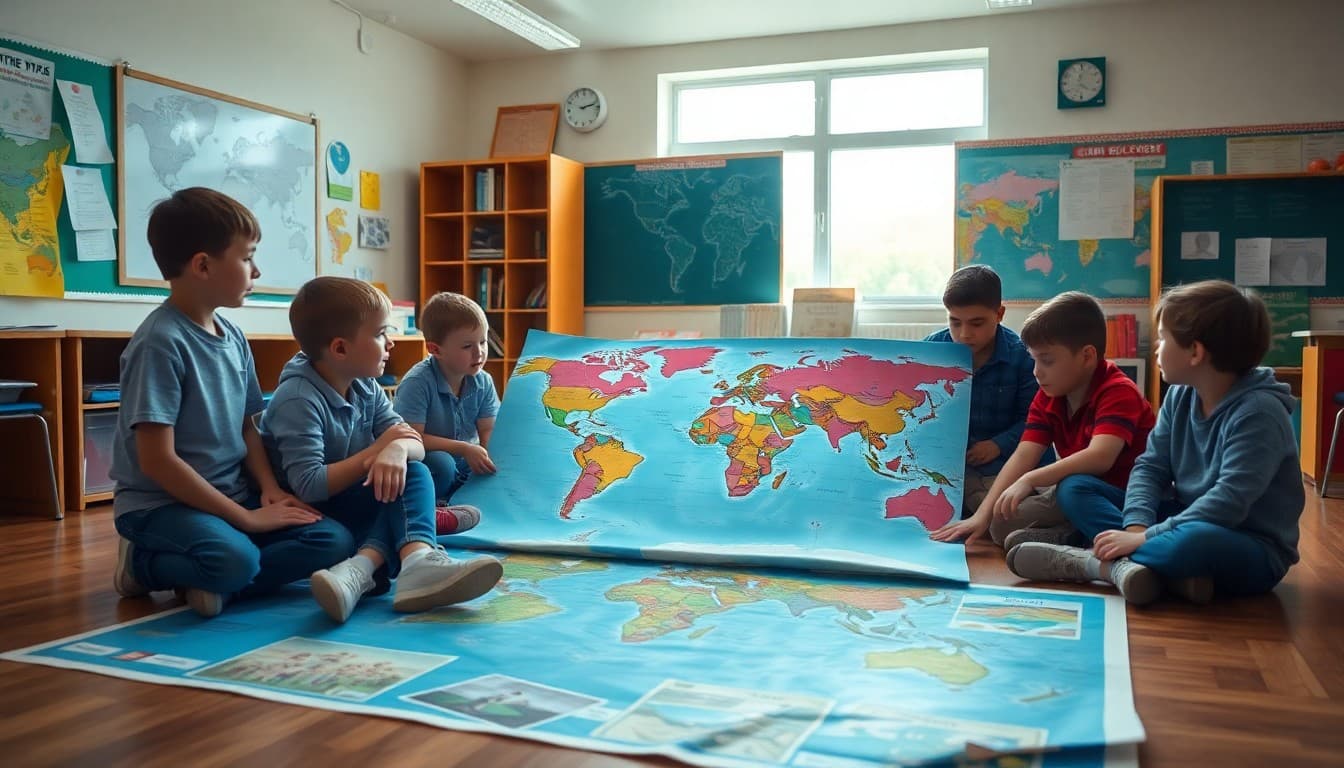
How to Write a Geography Unit Newsletter to Families
Geography units have a built-in opportunity that not enough classroom newsletters take advantage of: every family in your class has a geographic story. Where they come from, where their relatives live, where they have traveled or want to travel. A geography newsletter that surfaces this personal connection turns an academic unit into something families find personally relevant and worth exploring together.
Open with curiosity rather than content
Start with a question that makes geography feel alive. "Why do most of the world's major cities sit on rivers or coasts?" "How did the shape of a continent influence what languages are spoken there today?" "If you were building a new country from scratch, where would you place the capital and why?" A question that neither students nor families immediately know the answer to is an invitation to investigate rather than just receive information.
Describe the specific geographic skills the unit develops
Name the skills explicitly. Map reading and interpretation. Understanding latitude, longitude, and the coordinate system. Analyzing how physical features affect human settlement patterns. Comparing climate zones. Using geographic data to answer social and historical questions. These are analytical skills, not just memorization of capitals and country names. Families who see this understand that geography is a way of thinking, not a trivia category.
Connect to the family's own geography
Invite families to share their own geographic connections with their student. Where did your grandparents come from? What do you know about the geography of that place? Have you ever been somewhere with a very different climate than home? Do you have relatives in other countries? These conversations connect the academic content of geography to something deeply personal and usually surprising for students.
Suggest keeping a map at home
A world map on the wall or a globe on a shelf is one of the most effective geography learning tools available, and it requires zero curriculum alignment. When families reference the map during a news story, when a book is set in a new country, or when a geography unit is underway, the habit of looking things up visually on a map builds spatial awareness and global curiosity. Your newsletter can note this simply as a recommendation.
Describe the region or theme of the unit
Whether your unit covers a specific world region, a geographic theme like migration and settlement, or a concepts-first approach, tell families what the focus is. Give them two or three interesting facts about the region or theme that create curiosity. A parent who knows their student is studying South America and learns that the Amazon basin holds ten percent of all species on Earth has a dinner conversation starting point.
Note how geography connects to current events
Geographic thinking makes current events more comprehensible. When news stories involve places, the geographic context (terrain, climate, regional history, political geography) helps make sense of what is happening. Note in your newsletter that you will use appropriate current events as geography examples during the unit, and suggest that families look for geographic context in their own news consumption.
Share the culminating project
What will students create or demonstrate at the end of the unit? A research project on a specific country or region, a mapping activity, a geographic inquiry presentation, a travel guide. Telling families the endpoint gives them a frame for everything they see coming home during the unit.
Daystage makes it easy to send a geography unit newsletter that creates genuine family curiosity about the world their student is exploring in class. Units with strong family connections produce stronger student learning outcomes.
Get one newsletter idea every week.
Free. For teachers. No spam.
Frequently asked questions
What should a geography unit newsletter include?
The specific region or theme the unit covers, the geographic skills students will develop, any map work or research projects families should know about, how to connect geography to family trips, current events, or cultural backgrounds, and the culminating activity or assessment.
How can families support geography learning at home?
A world map or globe displayed at home is one of the most powerful geography learning tools available. Families who reference the map when news stories come up, when family heritage is discussed, or when a new country is mentioned in a book or film are building geographic literacy naturally. Low-tech and highly effective.
How do I connect geography to cultural backgrounds in my newsletter?
Note that every family in your class has a geographic story. Where grandparents or parents came from, where the family's cultural heritage originates, places visited, places dreamed of visiting. Geography is personal, not just academic, and families who see this connection engage with the unit differently.
What is the difference between political and physical geography in a classroom context?
Physical geography covers the natural features of the earth: mountains, rivers, climate zones, biomes, tectonic plates. Political geography covers human-created boundaries: countries, states, capitals, regions. Most geography units cover both and the distinction is worth explaining in your newsletter so families understand the scope.
What tool helps teachers send geography unit newsletters?
Daystage makes it easy to send a geography unit newsletter with a rich description of the content and clear home extension suggestions so families and students explore the world together throughout the unit.

Adi Ackerman
Author
Adi Ackerman is a former classroom teacher and curriculum writer with 8 years in K-8 schools. She writes about school communication, parent engagement, and what actually works in real classrooms.
More for Classroom Teachers
Ready to send your first newsletter?
3 newsletters free. No credit card. First one ready in under 5 minutes.
Get started free