

Teacher Newsletter on Global Citizenship: What Families Need to Know
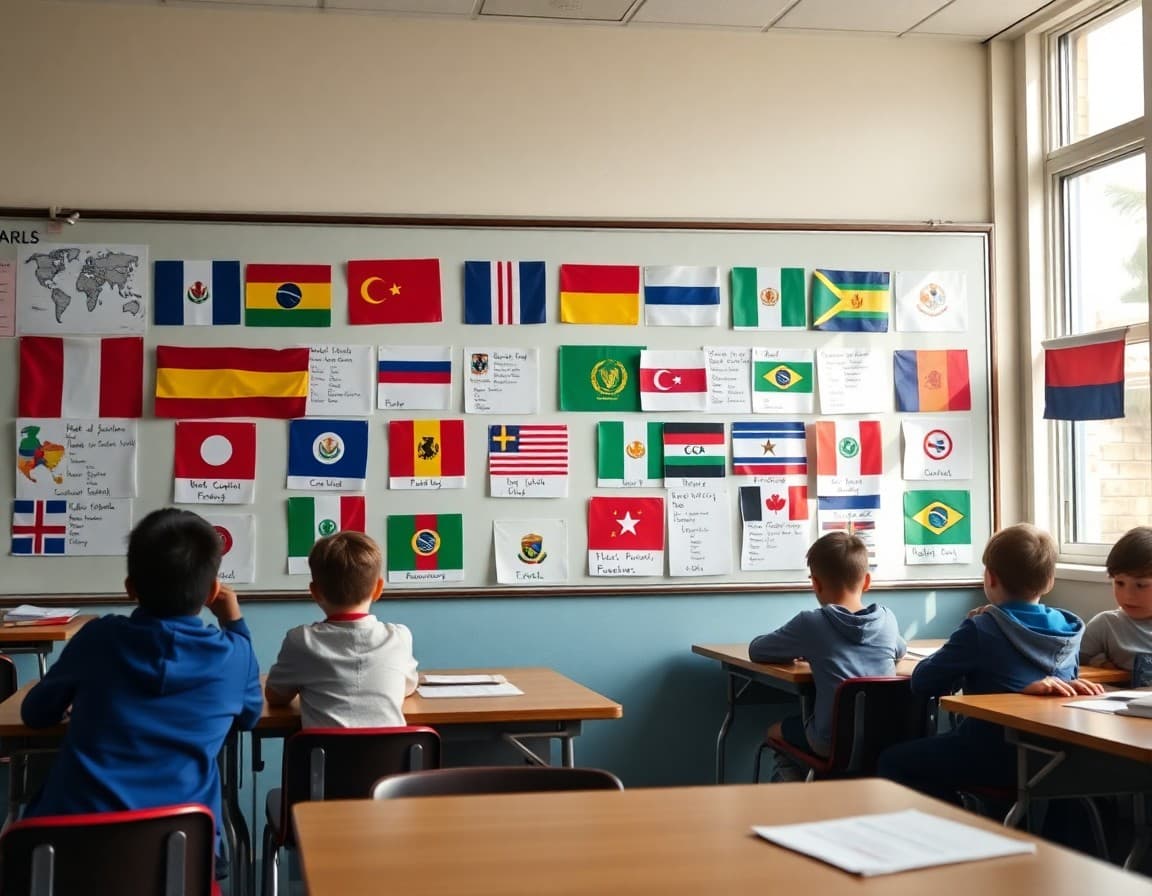
Global citizenship education asks students to think beyond their immediate experience and understand that the world they are inheriting is interconnected. It is also one of the most engaging units you can teach because students tend to be genuinely curious about people and places beyond what they know. Your newsletter helps families understand the goals and extends the learning into home conversations.
Define What Global Citizenship Means for This Age Group
Start by grounding the concept in something concrete for families. Global citizenship for a nine-year-old is not international policy. It is curiosity about how other people live, awareness that their choices affect others beyond their neighborhood, and the habit of asking "who is not in this room and what do they experience?" Give families that practical frame before describing the activities.
Explain the Unit Content and Structure
Tell families what students are actually studying. Are they researching specific countries? Analyzing global issues like access to clean water, education, or food? Examining trade routes and how goods move across borders? Studying the lives of global changemakers? The specific content matters. Families who know what their child is studying can ask about it at home.
Describe the Perspective-Taking Skills You Are Building
Tell families about the cognitive skill at the center of the unit: perspective-taking across cultural and geographic difference. "We practice asking: if I had grown up in this place, with this set of circumstances, what would my daily life look like? What would I value? What challenges would I face? That question is harder than it sounds and requires real imagination." Framing it as a skill, not just a content area, helps families see the academic value.
Give Families Easy Home Extensions
You do not need families to do a country research project. Give them small actions: look at where your clothing was made this week. Look up one piece of international news at dinner. Watch a documentary about a country you have never visited. Ask your child to teach you one thing they learned about the country they are studying. These micro-extensions are sustainable and effective at building the habit.
Address Any Concerns About Bias
Some families may worry that a global citizenship unit presents other cultures through a single lens or promotes a particular political worldview. Address this proactively: "Our goal is to present multiple perspectives on every topic, including perspectives that challenge assumptions students hold about their own country. We discuss issues with complexity, not with a predetermined conclusion."
Share What Students Have Found Surprising
Include one or two things the class discovered that were surprising or changed how students thought about a topic. This could be a statistic, a story, or a student's comment during discussion. Real moments from your classroom are more compelling than general descriptions of the unit, and they give families an immediate conversation entry point.
Connect to Current Events
If there is a relevant international story in the news right now, mention it briefly and explain how it connects to what students are studying. Families who can connect classroom learning to something they are already reading about stay more engaged with the unit. It also models the exact connection you are trying to build in students.
Get one newsletter idea every week.
Free. For teachers. No spam.
Frequently asked questions
What should a global citizenship newsletter include?
Include the definition of global citizenship you are using, the geographic or cultural content students are exploring, the civic skills the unit develops, and how families can build world awareness at home through simple everyday practices.
How do I define global citizenship for elementary families?
Use a concrete definition: 'A global citizen is someone who understands that their actions and choices affect people beyond their immediate community, cares about fairness and well-being across borders, and is willing to learn about cultures and perspectives different from their own.' That is appropriate for K-5 and does not require abstract political knowledge.
What does a global citizenship unit look like in a classroom?
Activities range from country research projects and pen-pal exchanges to analyzing global issues like clean water access, studying international changemakers, and exploring how goods are produced and traded. The goal is developing perspective-taking across geographic and cultural lines, not teaching geopolitics.
How can families build global awareness at home without traveling?
Cook one meal from a different country and research where it comes from. Watch a documentary about a country or culture unfamiliar to the family. Read a picture book or novel set in another country. Follow a news story from a non-US perspective. These practices cost little and build the cognitive habit of looking beyond your immediate frame.
Can I send a global citizenship unit update with student country research through Daystage?
Yes. Daystage lets you include student photos, country facts, and project summaries in a well-formatted newsletter. You can also add links to world maps, international news sources for kids like Newsela or Wonderopolis, and cultural resources families can explore at home.

Adi Ackerman
Author
Adi Ackerman is a former classroom teacher and curriculum writer with 8 years in K-8 schools. She writes about school communication, parent engagement, and what actually works in real classrooms.
More for Classroom Teachers
Teacher Newsletter for an Environmental Activism Unit: Family Guide
Classroom Teachers · 6 min read
Teacher Newsletter for a Cultural Exchange Unit: Family Communication
Classroom Teachers · 6 min read
Teacher Newsletter for a Service Learning Unit: Communicating With Families
Classroom Teachers · 6 min read
Ready to send your first newsletter?
3 newsletters free. No credit card. First one ready in under 5 minutes.
Get started free