

How to Write a Government Unit Newsletter to Families
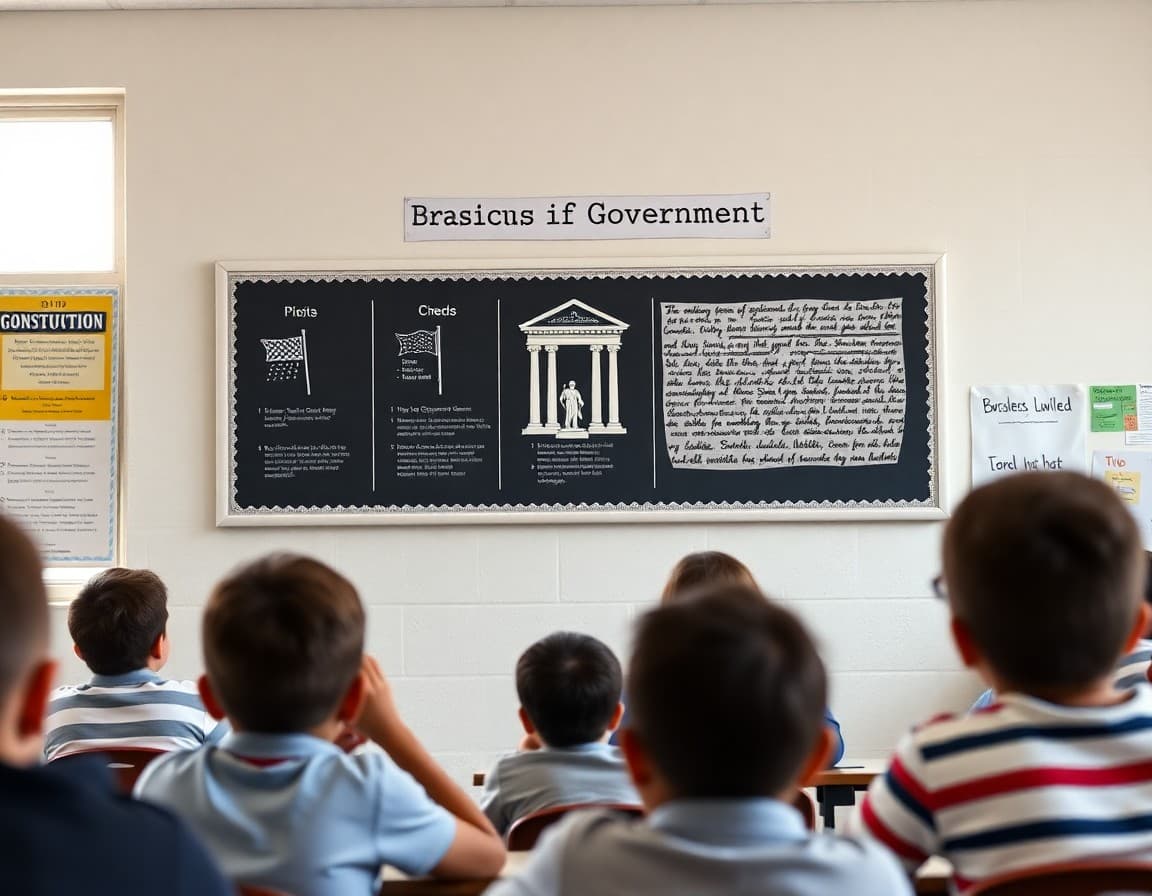
Government unit newsletters give families the vocabulary to be genuine learning partners for what is often dense, abstract content. A student who comes home saying "we learned about checks and balances today" gives their family very little to work with. A family who received a newsletter that explained checks and balances in plain terms can ask questions that deepen understanding rather than stalling at "what does that mean?"
Explain the specific concepts students will study
Tell families exactly what the unit covers. The structure of the federal government, the Constitution and its amendments, the three branches and their roles, federalism and the relationship between state and national government, the rights and responsibilities of citizens. Being specific about the content scope helps families understand what their student is learning and prevents them from assuming the unit is more political than it actually is.
Define key vocabulary in plain language
Government units involve vocabulary that students will use in discussions and assessments. Include a brief glossary in your newsletter with the three to five most important terms. "Legislature: the branch of government that writes and votes on laws" is a definition families can actually use in conversation. When families know the vocabulary, they can have substantive conversations with their student rather than being stopped by unfamiliar terms.
Connect to current events appropriately
Government units are inherently connected to current events. Note in your newsletter how you handle this connection in class. You use current events as examples of how government structures work, not as opportunities to advocate for specific political positions. This transparency helps families feel confident about the approach their student is experiencing.
Suggest accessible home connections
Government learning does not require a civics textbook to extend at home. Watching a local city council meeting on a public access channel. Reading the city newspaper and identifying which levels of government different articles involve. Looking up your current representatives at the state and federal level. Discussing a family decision using democratic process principles. These activities are low-effort and highly connected to the content students are studying.
Describe how you make abstract content accessible
Government structures are abstract concepts for many students. Tell families the strategies you use to make them concrete. Simulations, mock government activities, case studies, primary source analysis, connections to school governance structures they experience directly. Families who understand your instructional approach trust that their student is building real understanding rather than memorizing definitions.
Note the connection to local and state government
Most government curricula focus heavily on the federal level, but local and state government is where most direct civic impact happens. Note whether your unit includes study of the levels of government that are closest to students' lives. A student who knows how their city government works has a more grounded understanding of democracy than one who can only describe Washington, D.C.
Describe the culminating activity or assessment
What does the unit build toward? A government simulation, a constitutional amendment research project, a mock legislative session, an essay analyzing a current policy issue, a test on government structures. Knowing the endpoint helps families support their student's review and preparation and gives them a concrete goal for the conversations they have at home.
Daystage makes it easy to send a government unit newsletter that gives every family the vocabulary and context to be a real learning partner during one of the most curriculum-rich units of the social studies year.
Get one newsletter idea every week.
Free. For teachers. No spam.
Frequently asked questions
What should a government unit newsletter include?
The specific government concepts students will study, the connection to their grade level standards, how the content connects to current events in an age-appropriate way, discussion questions families can use at home, and a note about how you handle political discussions in the classroom.
How do I connect government unit content to current events without taking political positions?
Focus on the structures and processes rather than outcomes and positions. Discussing how a bill becomes law is civics. Discussing whether a specific law is good or bad is politics. Your newsletter can make clear that your classroom takes the process approach, which helps families understand the framework before any specific current event comes up.
How can families extend government learning at home?
Reading the local newspaper together and identifying which branch of government an article is about. Looking up your state's constitution. Visiting a local government meeting. Discussing family decisions as a kind of miniature democratic process. These activities are accessible and connect the abstract content of government study to real life.
What is the best way to explain the three branches to elementary families?
Use plain language and everyday analogies. The legislative branch makes the rules (like the class creating classroom expectations together). The executive branch enforces the rules (like the teacher making sure the expectations are followed). The judicial branch interprets the rules when there are disagreements (like a mediator in a conflict). Families who have this frame can help reinforce it at home.
What tool helps teachers send government unit newsletters?
Daystage makes it easy to send a civics unit newsletter that gives families the vocabulary and context they need to have meaningful government-learning conversations with their student throughout the unit.

Adi Ackerman
Author
Adi Ackerman is a former classroom teacher and curriculum writer with 8 years in K-8 schools. She writes about school communication, parent engagement, and what actually works in real classrooms.
More for Classroom Teachers
Ready to send your first newsletter?
3 newsletters free. No credit card. First one ready in under 5 minutes.
Get started free