
How to Write a Map Skills Unit Newsletter to Families
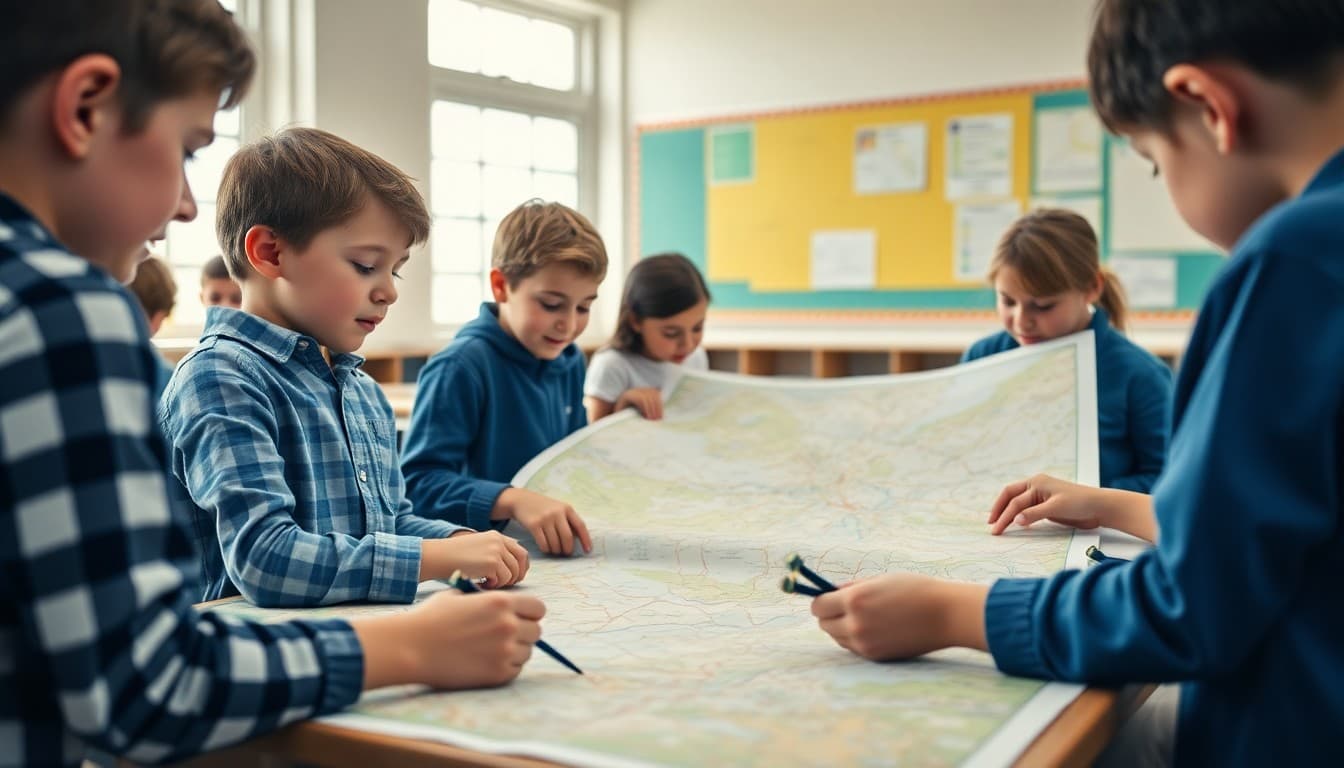
Map skills newsletters have an unusual advantage: mapping is something families interact with every day through phone navigation, weather apps, and news coverage. A newsletter that connects classroom map skills to these familiar everyday contexts makes the content immediately relevant and gives families multiple entry points for supporting their student's learning outside of class.
Explain what map skills actually include
Start by expanding families' understanding of what the unit covers. Map skills are not just memorizing where countries are on a map. They include understanding map types and their purposes, reading and using map keys, calculating scale and distance, understanding coordinate systems, interpreting physical features like elevation, and recognizing how different projections represent a round earth on a flat surface. This scope signals that the unit develops genuine analytical skills.
Connect to spatial thinking broadly
Spatial thinking is a foundational cognitive skill that supports learning in mathematics, science, engineering, and design. Students who can mentally manipulate and visualize spatial relationships have advantages across academic domains. Map skills are an accessible, engaging entry point into developing this kind of thinking. Families who understand this connection see the map skills unit as more than geography.
Describe the specific skills being taught
Name the specific map skills your unit covers. Cardinal and intermediate directions. The compass rose. Map scales and calculating real distances. Latitude and longitude. Reading contour maps. Understanding map projections. Political versus physical maps and when each is used. Specific content gives families something concrete to discuss with their student rather than a vague understanding of "they are doing maps."
Show how families can practice at home
Connect classroom map skills to the digital maps families use every day. When you open a navigation app, show your student the compass, the scale bar, and the different view options. When you look at a weather map, identify the direction weather is moving and what the color coding means. When a news story mentions a place, find it on a map together and note what is around it. These everyday moments reinforce classroom learning without requiring any additional materials.
Suggest a physical map or globe at home
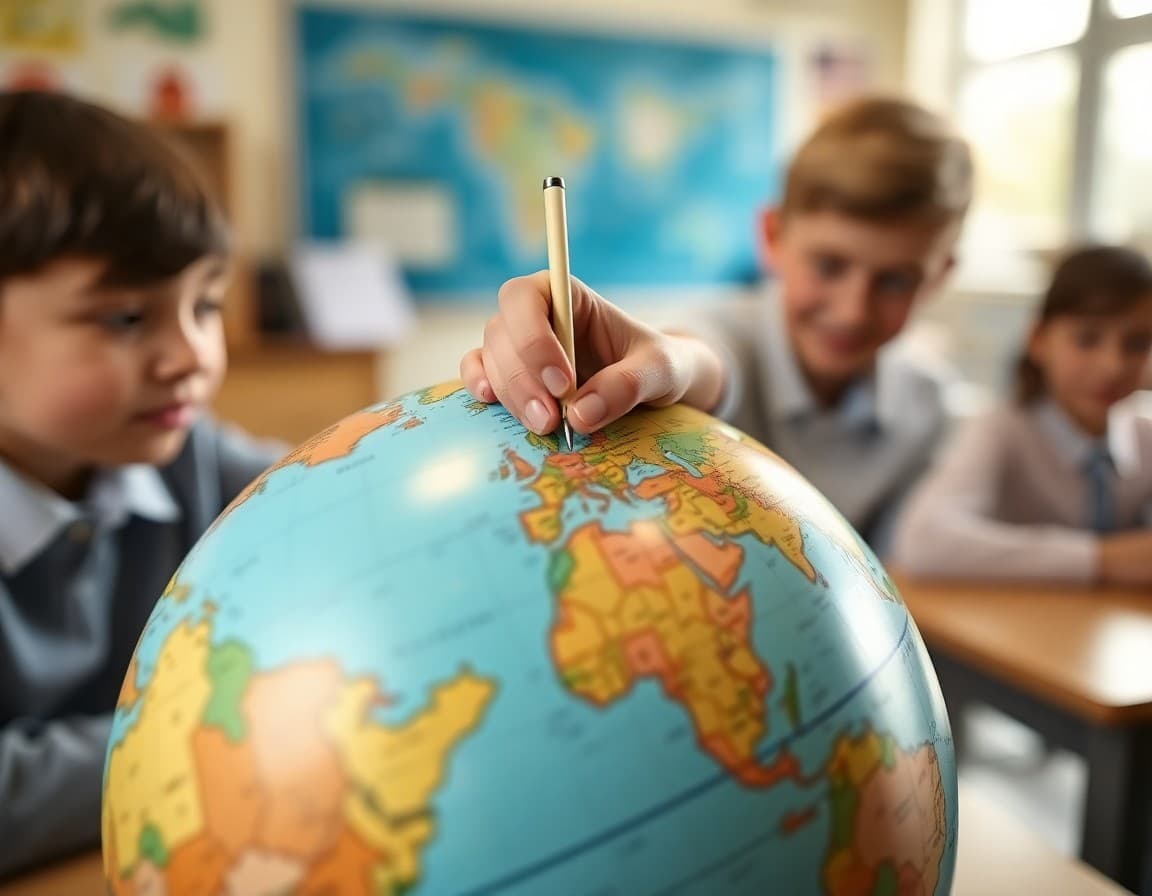
Digital maps are excellent tools but a physical map on the wall or a globe on a table teaches different things. Physical maps develop the ability to see relative size, proximity, and geographic context without the distortion that comes from always zooming in digitally. Families who have a physical map available when homework involves mapping activities give their student a significant advantage. Inexpensive versions are available at bookstores and online.
Explain the coordinate system briefly
Latitude and longitude are concepts that many parents learned but may not clearly remember. A brief, clear explanation in your newsletter gives families the shared vocabulary to help their student. Latitude lines run east-west and measure distance from the equator. Longitude lines run north-south and measure distance from the prime meridian. Together they create an address for any point on earth. A student who can explain this to their family understands it well.
Describe the culminating mapping activity
What will students create or complete by the end of the unit? A custom-made map with a key and scale. A latitude/longitude treasure hunt. A comparative analysis of different map projections. A physical-and-political map of a specific region. Knowing the endpoint helps families support the work and gives students a concrete goal.
Daystage makes it easy to send a map skills newsletter with clear content descriptions and home practice suggestions so families become active partners in developing their student's spatial thinking throughout the unit.
Get one newsletter idea every week.
Free. For teachers. No spam.
Frequently asked questions
What map skills do students typically learn in elementary and middle school?
Cardinal directions, map keys and legends, scale and distance calculation, latitude and longitude, contour lines and elevation, political versus physical maps, reading different map projections, using grid systems, and understanding how different map types are designed for different purposes.
How can families practice map skills at home?
Using a physical map or globe when discussing news stories or family geography. Using digital map apps together and pointing out features like scale, compass rose, and satellite versus street view options. Navigating with a paper map on a local trip. These everyday practices reinforce the same concepts students are learning in class.
Why is spatial thinking an important skill to develop?
Spatial thinking underpins success in mathematics, science, engineering, and design. Students who are strong spatial thinkers have advantages in geometry, data visualization, chemistry, biology (cellular structures), and physics. Map skills are the entry point for developing spatial reasoning that transfers across academic domains.
How do I explain latitude and longitude to families so they can help at home?
Latitude lines run horizontally around the earth like rungs on a ladder, measuring degrees north and south of the equator. Longitude lines run vertically from pole to pole, measuring degrees east and west of the prime meridian. Together they create a grid that can identify any point on earth. Your newsletter can use this simple explanation alongside a small diagram.
What tool helps teachers send map skills unit newsletters?
Daystage makes it easy to send a map skills newsletter with visual-friendly formatting and home practice suggestions so families have everything they need to reinforce spatial thinking at home.

Adi Ackerman
Author
Adi Ackerman is a former classroom teacher and curriculum writer with 8 years in K-8 schools. She writes about school communication, parent engagement, and what actually works in real classrooms.
More for Classroom Teachers
Ready to send your first newsletter?
3 newsletters free. No credit card. First one ready in under 5 minutes.
Get started free