
How to Write a Flexible Seating Newsletter to Families

Flexible seating newsletters often have to work against a mental image parents already have: chaos, students sitting wherever they want doing whatever they feel like, no structure. Your newsletter can replace that image with an accurate one. A well-run flexible seating classroom is actually one of the most structured learning environments a student can be in, because it requires students to make thoughtful choices and self-regulate their work posture and positioning.
Start with the research on movement and learning
Children are not built to sit still for six hours. The research on this is clear: movement breaks and access to varied postures improve attention, reduce fidgeting-as-distraction, and support better retention. Starting your newsletter with this context frames flexible seating as a research-informed practice rather than a preference or experiment. Parents respond to evidence.
Describe what is actually in your classroom
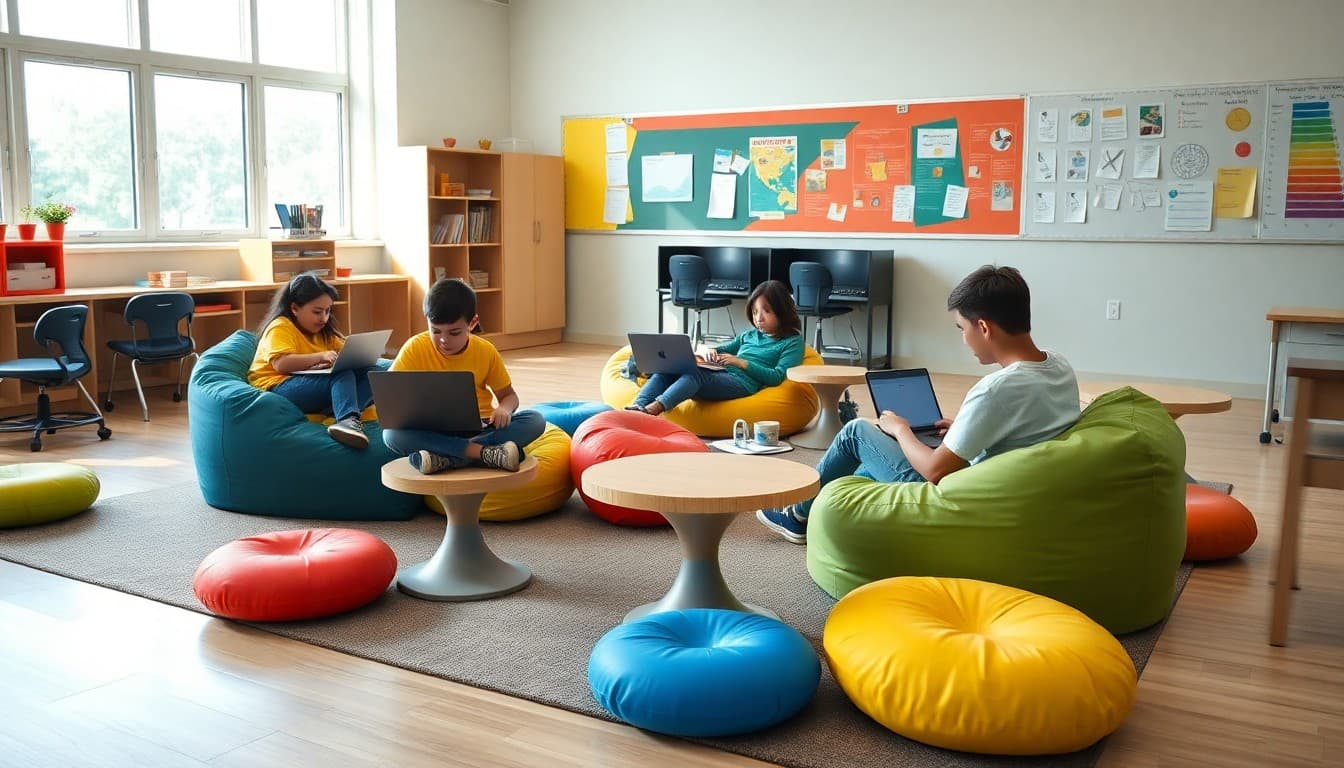
Give families a picture. Not just "flexible seating" as a phrase but the actual furniture and spaces in your room. Standing desks, wobble stools, floor cushions, bean bag chairs, low tables, traditional desks still available for students who prefer them. The more concrete the description, the more accurately families can imagine the environment and the less room there is for alarming interpretation.
Explain the choice system
Flexible seating is not a free-for-all. Walk families through how seating choices work in your classroom. Whether students choose their spot at the beginning of the day, for different subject blocks, or based on the type of work they are doing. Whether there are any limits on how many students can use certain seating options at once. How you help students develop judgment about which seating choice supports their best focus.
Describe how you teach seating expectations
This is the section that reassures skeptical parents most. Flexible seating requires explicit teaching about how to use seating options appropriately. Walk families through how you teach this. What signals that a student is using their seating well. What happens when seating is being used as a distraction rather than a support. The teaching-and-consequences framework shows families that you have thought through management.
Address individual needs and accommodations
Some students need specific seating for sensory or attention reasons. In a flexible seating classroom, these accommodations can be met more naturally than in a traditional row-and-desk setup. Let families know that students with documented needs always have those needs prioritized and that the flexible environment actually supports a wider range of student needs than a one-size desk arrangement.
Explain what families might hear at home
Students describe their classroom to families. Prepare parents for what they might hear. "Today I sat on a wobble stool" does not mean the class was unproductive. "We could sit anywhere we wanted" does not mean there were no rules. A brief heads-up about how students typically describe the environment prevents parents from being unnecessarily alarmed by an accurate but incomplete account.
Invite families to see it in action
If you host any classroom observation opportunities, invite families to come see the environment. Parents who have witnessed a focused, productive flexible seating classroom are converts. Parents who only hear about it from their child's filter sometimes are not. A brief note that families are welcome to observe during work time (when arranged in advance) goes a long way.
Daystage makes it easy to send a flexible seating newsletter that includes photos of your classroom setup so families get an actual picture of the environment alongside your explanation. Seeing changes everything.
Get one newsletter idea every week.
Free. For teachers. No spam.
Frequently asked questions
How do I explain flexible seating to skeptical parents?
Lead with the research on movement and focus. Children who have access to movement throughout the day show improved attention, reduced disruptive behavior, and better learning outcomes compared to those required to sit still for extended periods. Framing flexible seating as a focus and learning tool rather than a comfort indulgence addresses the skepticism directly.
What should a flexible seating newsletter include?
An explanation of what flexible seating is, the research basis for it, what seating options are available in your classroom, how students learn to choose appropriate seating, how you manage transitions and transitions to independent or group work, and any guidelines families should know about.
How do I manage a flexible seating classroom and how do I explain that management to families?
Explain the systems you use: seating choice protocols, expectations for movement during work time, how students learn to self-regulate their seating choices, and what consequences exist for using seating options inappropriately. Families who see a structured management approach trust the classroom more.
Do students with certain needs get priority seating in a flexible classroom?
Yes, and this is worth addressing in your newsletter. Students with IEPs or 504 plans that specify seating accommodations always have their needs met first. Flexible seating actually makes it easier to provide these accommodations naturally rather than singling out specific students with special furniture.
What tool helps teachers communicate about flexible seating?
Daystage makes it easy to send a classroom update newsletter with photos of your flexible seating setup so families can see what the environment looks like before their student describes it in ways that might sound chaotic.

Adi Ackerman
Author
Adi Ackerman is a former classroom teacher and curriculum writer with 8 years in K-8 schools. She writes about school communication, parent engagement, and what actually works in real classrooms.
More for Classroom Teachers
Ready to send your first newsletter?
3 newsletters free. No credit card. First one ready in under 5 minutes.
Get started free