

How to Share a Classroom Escape Room Activity With Families in Your Newsletter
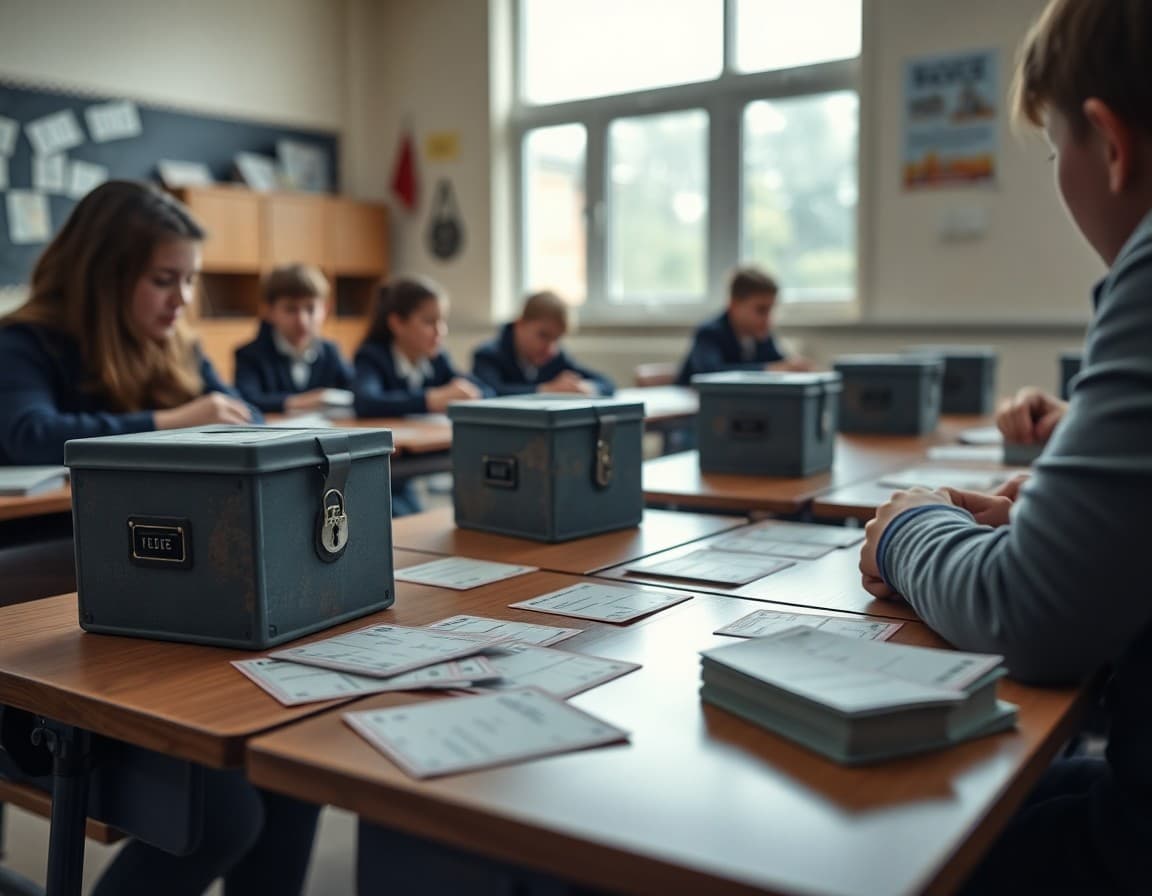
When a student comes home and tells their family "we did an escape room today," the family's reaction depends entirely on whether they have context. Without context: "Did you do any actual work today?" With context: "Oh, that sounds intense, what content were the puzzles based on?" A newsletter that explains the escape room activity in advance or after the fact gives families the context to ask the second question.
Explain the structure of a classroom escape room
Most families have a general sense of what an escape room is from popular culture. Connect the classroom version to that understanding. "A classroom escape room works on the same principle as a commercial escape room: students work in teams to solve a series of puzzles in sequence. The difference is that every puzzle in our classroom escape room is built around the content we have been studying. You cannot solve the puzzle without applying the specific knowledge from the unit." That description establishes the academic authenticity of the activity.
Name the specific content embedded in the puzzles
Families who know what content the escape room covered can engage with it at home. "Our fractions escape room required students to add, subtract, and compare fractions with unlike denominators to unlock each stage. One puzzle required solving a word problem to get a three-digit combination. Another required ordering a set of fractions from least to greatest to identify which path to take next." The specific content description transforms a "fun day" into a recognizable academic event.
Connect the activity to upcoming assessments
If the escape room was a review activity before a test, tell families. "The escape room was our final review before the fractions unit test next Thursday. Students who can solve the types of problems in the escape room are well-prepared for the test. If your student struggled with a specific puzzle, that is a useful indicator of which skill to practice this week." That connection gives families actionable information about test preparation.
Share observations about how students worked together
Collaborative problem solving is a core learning goal in most escape room activities. Sharing what you observed gives families insight into how their student works in a team context. "One thing I noticed: the teams that worked best were not the ones with the students who knew the answers first. They were the teams where someone organized the group's approach and made sure everyone had a role. That pattern is worth talking about at home."
Offer to share the activity with families who want it at home
A digital escape room can be shared with families if the content is appropriate for home review. "If your student would like to replay the escape room at home for additional practice, I have shared a link to a similar version in the online resources folder. It covers the same skills at a slightly different difficulty level."
Preview what is coming up after the review
Close the escape room newsletter note with a forward look. "After the test on Thursday we begin our geometry unit. The escape room review format worked well for this class, so we will likely use it again at the end of that unit as well."
Daystage newsletters that include photos from classroom activities like escape rooms generate some of the strongest family engagement responses of the year because families love seeing their student in action.
Get one newsletter idea every week.
Free. For teachers. No spam.
Frequently asked questions
What is a classroom escape room and how is it educational?
A classroom escape room is a collaborative puzzle activity where students work in teams to solve a series of content-based challenges. Each solved puzzle reveals the next clue or unlocks the next stage. The activity is educational because solving the puzzles requires applying the specific knowledge and skills being reviewed, not just recalling facts.
How do escape rooms connect to the curriculum?
A teacher-designed escape room embeds curriculum content in every puzzle. A math escape room might require solving equations to get a combination. A science escape room might require identifying which organisms belong to each kingdom to open the next stage. The content is the mechanism for the puzzles, not a decorative theme.
Why do students find escape rooms more engaging than traditional review activities?
Escape rooms create a game context that involves time pressure, team collaboration, and a satisfying goal. Students who are reluctant to engage with a review worksheet often work hard and focus deeply in an escape room because the same content is wrapped in a narrative challenge.
Should parents be concerned that escape rooms replace serious academic work?
No. Escape rooms are review activities, not replacements for instruction. They work best after students have learned the material and need an engaging way to consolidate and apply it. The level of academic rigor in a well-designed escape room is often higher than a traditional worksheet.
Can Daystage help teachers share escape room activity descriptions in newsletters?
Yes. A brief Daystage newsletter note with a photo from the activity and a description of the content covered is an effective way to share what happened and why it mattered educationally.

Adi Ackerman
Author
Adi Ackerman is a former classroom teacher and curriculum writer with 8 years in K-8 schools. She writes about school communication, parent engagement, and what actually works in real classrooms.
More for Classroom Teachers
How to Introduce a Classroom Simulation Activity in Your Teacher Newsletter
Classroom Teachers · 6 min read
How to Explain Kahoot Review Games to Families in Your Teacher Newsletter
Classroom Teachers · 6 min read
How to Announce a Project Based Learning Launch in Your Teacher Newsletter
Classroom Teachers · 6 min read
Ready to send your first newsletter?
3 newsletters free. No credit card. First one ready in under 5 minutes.
Get started free