

How to Explain Kahoot Review Games to Families in Your Teacher Newsletter
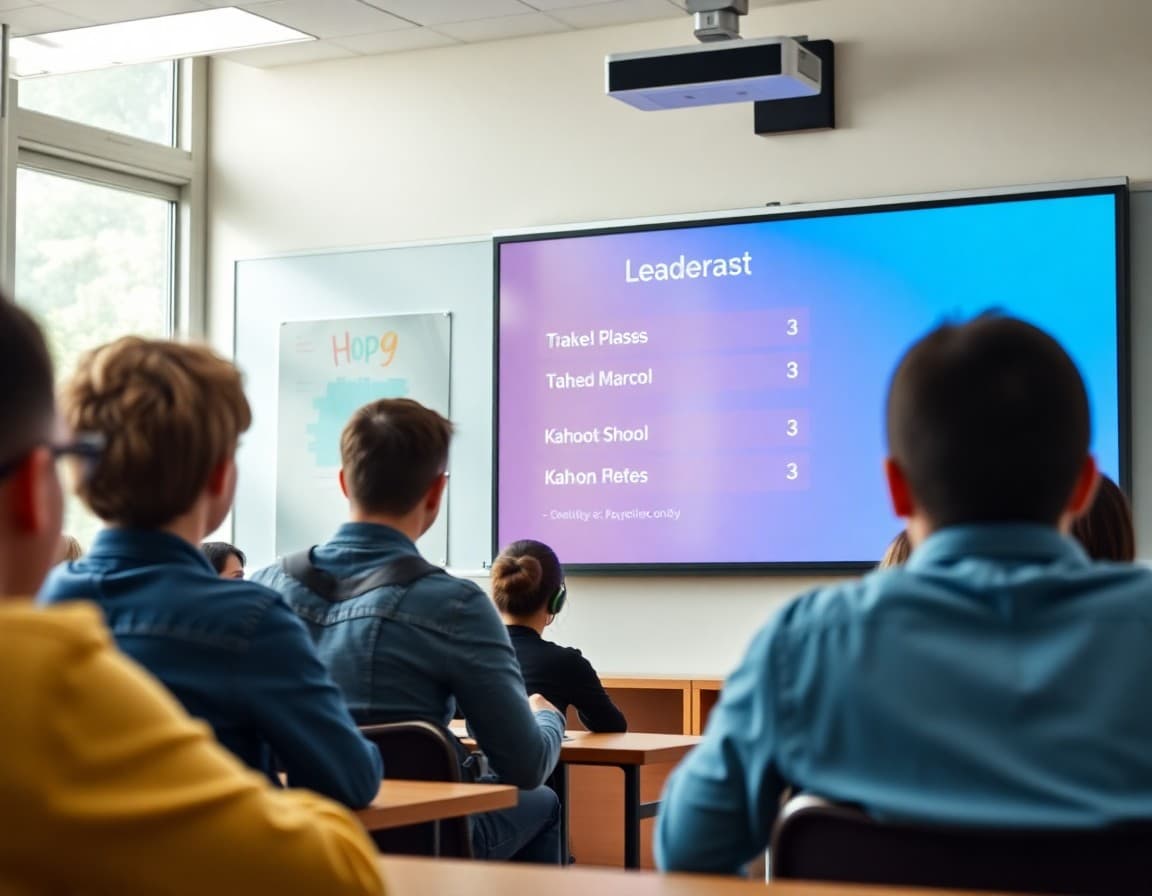
Kahoot is probably the tool students talk about most enthusiastically when they get home from school on days it is used. "We played Kahoot!" is common. What families often do not know is what the Kahoot was reviewing, what their student got right or wrong, or why the teacher chose it that day. A newsletter that explains how Kahoot fits into instruction gives families a way to follow up on the content, not just the game.
Explain what Kahoot is and how it works in class
"Kahoot is a classroom review tool where I post multiple-choice questions on the classroom screen and students answer using their devices. Each question has four colored answer tiles and a time limit, typically twenty to thirty seconds. Students earn points for correct answers and lose speed-based points for answering slowly. The leaderboard updates after every question. We use Kahoot as a review session before tests, a check-in after a new concept, or a warm-up that revisits past content."
Explain why game-based review works
"The reason Kahoot is effective as a review tool is not the points. It is the retrieval practice. Every time a student tries to recall an answer from memory under a time constraint, they strengthen the memory trace for that concept. Retrieval practice is one of the most reliable techniques for moving information from short-term to long-term memory. The game format makes students more willing to do it repeatedly than a worksheet with the same questions would."
Share what the most recent Kahoot covered
"This week's Kahoot reviewed the major events and causes of the American Revolution. The twenty questions covered the Stamp Act, the Boston Massacre, key figures including Samuel Adams and King George III, and the sequence of events from 1765 to 1776. The questions where students were slowest or most wrong tell me what to review in more depth before the test on Friday."
Note the most common errors from the session
"The questions with the most errors this week were about the difference between the Stamp Act and the Townshend Acts. Most students correctly identified what each taxed but confused the sequence. That tells me those two events need more explicit comparison in our review tomorrow. If your student also seems uncertain about the sequence, that is the specific thing to talk through at home."
Tell families how to follow up on Kahoot content at home
"Ask your student to show you the Kahoot results if they are accessible on their device. More usefully, ask them to explain the concepts the game covered without looking at their notes. 'Tell me three causes of the American Revolution and explain why each one mattered.' If they can do that confidently, they are ready for the test. If they stumble on one of them, that is the topic to spend five minutes reviewing."
Address concerns about competition and student anxiety
"Some students find the leaderboard stressful rather than motivating. I address this by occasionally switching to team Kahoot rather than individual, which spreads the pressure and adds a collaborative element. I also tell students that the goal is to beat your own previous score, not to top the leaderboard. A student in last place who got more right than they did last week has improved. That is the point."
A Daystage newsletter that explains what the Kahoot covered and what families can follow up on turns an exciting class activity into a useful home conversation about the content that actually matters.
Get one newsletter idea every week.
Free. For teachers. No spam.
Frequently asked questions
What is Kahoot and how is it used in school?
Kahoot is a game-based learning platform where teachers create multiple-choice quiz questions that appear on a shared screen. Students use phones, tablets, or computers to select their answer from four colored tiles. Points are awarded for correct answers and speed. It is primarily used for review sessions before tests or to check understanding after a new concept.
Is Kahoot educational or just a game?
Both, and the combination is the point. Research on game-based learning shows that the engagement, competition, and immediate feedback that games provide increase both attention and retention compared to passive review. The game format is the mechanism, not the purpose. The purpose is retrieval practice on the content that matters.
Does Kahoot score affect a student's grade?
Typically no. Kahoot is almost always used as a formative review tool, not a graded assessment. Some teachers track participation, but the scores visible on the leaderboard are not the same as academic grades. Speed matters in Kahoot but is not a measure of content mastery.
What should families ask about after a Kahoot session?
Ask your student what questions the Kahoot covered. Then ask which questions they got wrong or were slow to answer. Those are the concepts that need more practice before the test. The Kahoot leaderboard tells you who was fastest. The questions your student missed tell you what to study.
Can Daystage help teachers share Kahoot review activities with families in newsletters?
Yes. A Daystage newsletter that describes what the Kahoot covered, what common errors came up, and what students should review based on the results gives families the instructional context behind the game.

Adi Ackerman
Author
Adi Ackerman is a former classroom teacher and curriculum writer with 8 years in K-8 schools. She writes about school communication, parent engagement, and what actually works in real classrooms.
More for Classroom Teachers
Ready to send your first newsletter?
3 newsletters free. No credit card. First one ready in under 5 minutes.
Get started free