

How to Write an Engineering Unit Newsletter to Families
Engineering unit newsletters are an opportunity to reframe what many families think engineering means. It is not just a career path for mathematically gifted students. It is a problem-solving approach that involves creativity, persistence, collaboration, and iteration. Every student can be an engineer, and a newsletter that communicates this opens up the unit to genuine participation from students who would otherwise assume it is not for them.
Describe the engineering challenge clearly
Start with the problem students are working to solve. What is the design challenge? What does success look like? What constraints do students need to design within? A specific, concrete challenge description is more exciting than a general announcement about an engineering unit. "Students will design and build a structure that can support the weight of a textbook using only index cards and tape" is a challenge families can picture and be curious about.
Explain the engineering design process
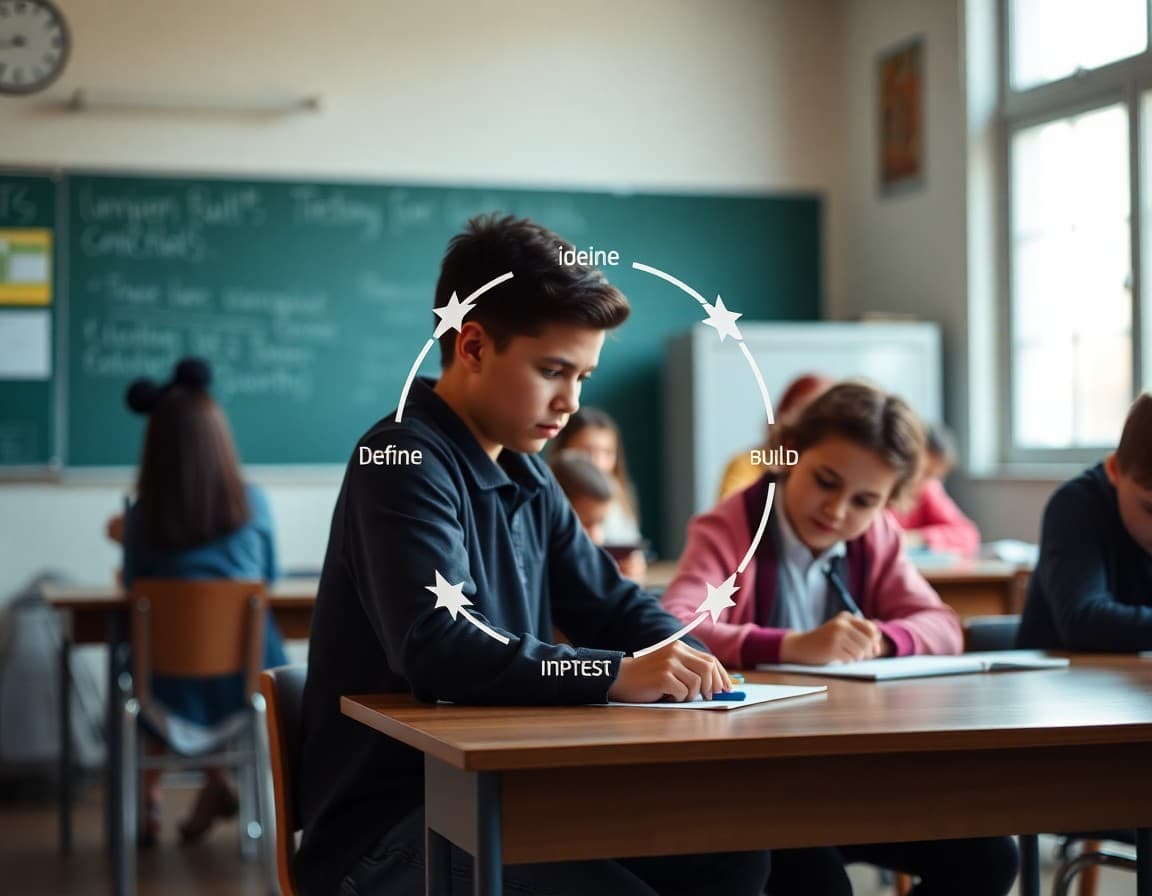
Walk families through the framework students will follow: define the problem, research and brainstorm, build a prototype, test it, and improve based on what they learned. Emphasize that failure is built into this process. A design that does not work the first time is not a failure. It is data. This reframe is important for both students and families, who sometimes experience a collapsed prototype as a sign that something went wrong when it is actually a sign that the engineering process is working exactly as intended.
Connect to academic standards
Name the science and math standards the engineering challenge addresses. Data collection during testing, measurement and calculation, force and structure, material properties, the scientific method applied to design. Families who see engineering as rigorous STEM learning rather than a crafting activity treat the unit appropriately and support it differently.
Name the skills beyond content
Engineering challenges develop skills that transfer across every subject and every future context. Persistence through failure. Creative problem-solving. Collaborative decision-making. Communication of a technical process. Iterative improvement. These skills appear on every employer's wish list and they are genuinely developed through the engineering design process. Naming them makes the unit feel significant to families who are thinking about their student's future.
Describe what families might hear at home
Students will come home talking about their engineering challenge. Prepare families for what to ask and how to engage. "Tell me about your design. What did you try? What happened when you tested it? What did you change after that?" These questions engage with the process rather than just the outcome and signal that the engineering journey is what matters.
Suggest engineering thinking at home
Families can encourage engineering thinking at home through building activities and design conversations. LEGO, cardboard, woodworking, cooking from a recipe and adjusting it, fixing something broken around the house. Any context where a problem is identified, a solution is designed and tested, and the result is evaluated is engineering thinking in practice.
Share the showcase or testing event
If your engineering unit culminates in a test or showcase, tell families when and where it happens. Students who know their design will be tested and shared with an audience take the design process more seriously. Families who can attend witness their student's problem-solving in action.
Daystage makes it easy to send an engineering unit newsletter and follow up with photos from the testing and iteration phases so families stay connected to one of the most hands-on, memorable units of the school year.
Get one newsletter idea every week.
Free. For teachers. No spam.
Frequently asked questions
What should an engineering unit newsletter include?
The engineering challenge students are tackling, the design process framework they will follow, the materials they will use, any constraints or criteria that define the problem, how families can support at home, what success looks like, and the timeline for the project.
What is the engineering design process and how do I explain it to families?
The engineering design process is a problem-solving cycle: define the problem, research and gather information, brainstorm solutions, build a prototype, test it, evaluate the results, and improve the design based on what was learned. It is explicitly iterative, meaning failure and redesign are expected parts of the process. Families who understand this do not panic when their student says their first design did not work.
How do engineering challenges connect to academic standards?
Engineering is a central component of Next Generation Science Standards (NGSS). It develops scientific thinking, mathematical problem-solving through measurement and data analysis, spatial reasoning, collaborative work, and communication of technical ideas. Engineering challenges are not just fun activities. They are rigorous STEM learning.
How can families support engineering thinking at home?
Building activities at home (LEGO, cardboard construction, blocks, woodworking) develop spatial reasoning and design thinking. Talking through everyday problems in terms of design is a practice families can adopt: 'What would you need to build to solve that problem? What materials would work best? How would you test it?' These conversations build the engineering mindset.
What tool helps teachers communicate about engineering units?
Daystage makes it easy to send an engineering unit newsletter with design challenge details and a showcase invitation so families can celebrate the problem-solving their student did throughout the project.

Adi Ackerman
Author
Adi Ackerman is a former classroom teacher and curriculum writer with 8 years in K-8 schools. She writes about school communication, parent engagement, and what actually works in real classrooms.
More for Classroom Teachers
Ready to send your first newsletter?
3 newsletters free. No credit card. First one ready in under 5 minutes.
Get started free