
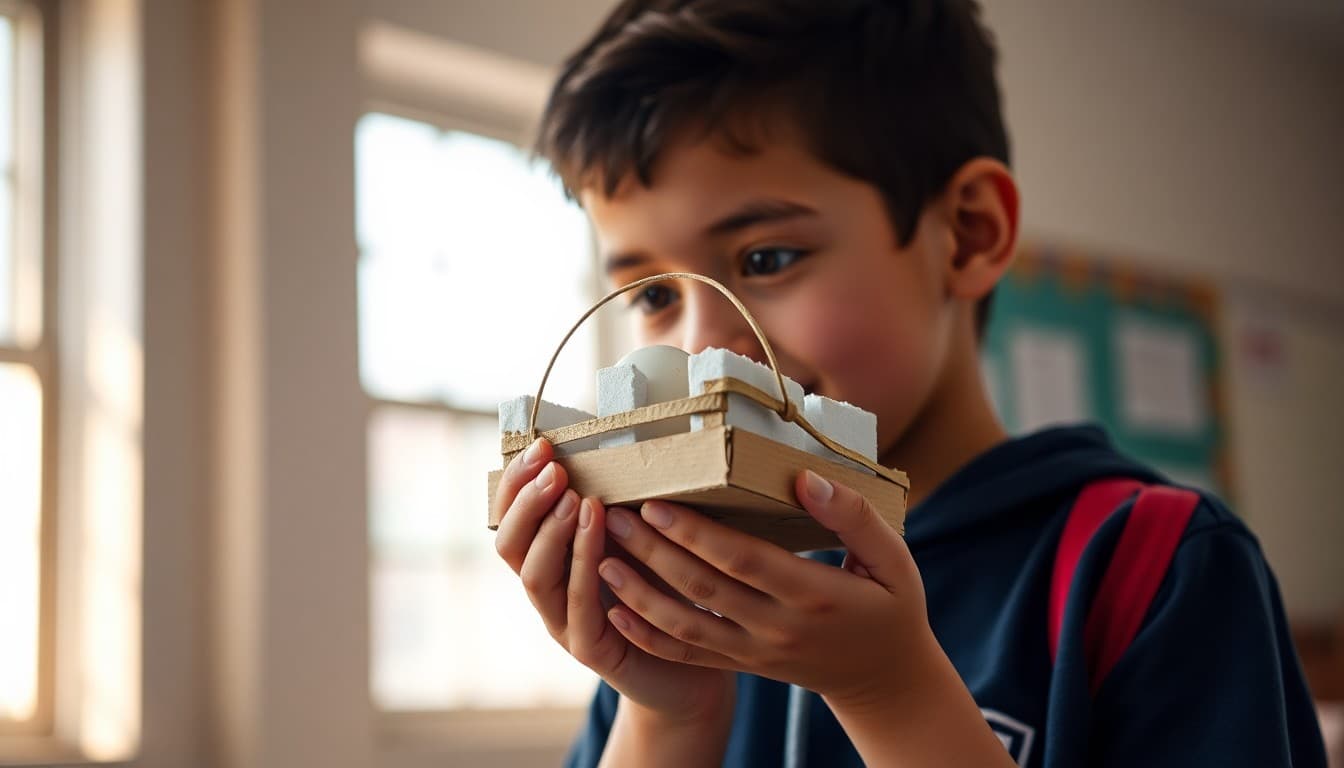
How to Write an Egg Drop Challenge Newsletter to Families
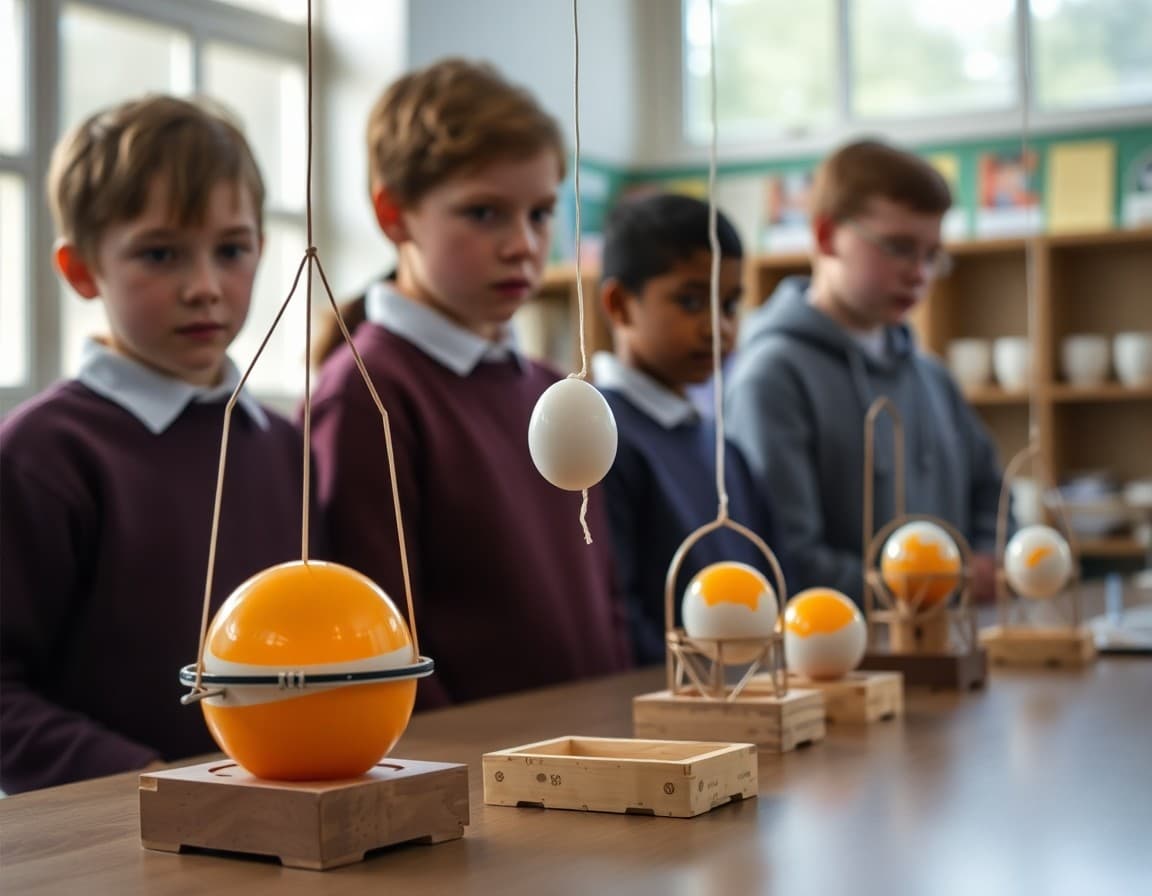
Egg drop challenge newsletters have a built-in advantage: the event is dramatic enough that families are genuinely curious. An egg falling from a height and either surviving intact or making a mess is exactly the kind of tangible, memorable outcome that makes school projects stick. A newsletter that explains the physics and engineering behind the challenge transforms the event from a fun spectacle into a learning experience families can engage with meaningfully.
Explain the physics behind the challenge
The egg drop is applied physics. When an object falls, it accelerates due to gravity and arrives at the ground with momentum that must be absorbed by whatever it hits. The engineering task is to slow that deceleration by spreading the force of impact over a longer time and larger surface area. This is why crumple zones protect car occupants and why landing on foam hurts less than landing on concrete. Families who understand this physics can have a real conversation about their student's design choices.
Describe the challenge constraints
Tell families the specifics: the drop height, the material limits (budget, list, or both), the size and weight restrictions on the device, and what counts as a successful landing. Constraints are what transform a creative activity into an engineering problem. A student who can use unlimited materials is just packing. A student working within a material budget is making real engineering decisions about which protective strategies are worth the cost.
Walk through the design process
Students begin by sketching designs and predicting which protective strategies will be most effective. They choose materials based on that reasoning, build their device, and may do low-height test drops before the official event. The engineering design cycle, defining the problem, brainstorming solutions, building, testing, and improving, is the real learning happening here. Families who understand this process support it differently than families who think the project is just about the final drop.
Prepare families for the possibility of failure
Many eggs will not survive. This is normal and expected, and a cracked egg is not a failed project. Tell families that students who designed thoughtfully and can explain why their device worked or did not work are demonstrating exactly the scientific thinking the project is meant to develop. A student who cracks an egg but can identify what force pathway was not adequately protected is doing better science than a student whose egg survives by luck.
Describe the drop day event
Give families the details of drop day: when it happens, where, how the drops will be organized, and whether family members can attend. The drop is often one of the most memorable events in the school year for students, and having family in the audience adds to the investment students bring to their design. If families cannot attend in person, mention that photos or video will be shared.
Suggest a home design conversation
Before drop day, families can engage with their student by asking about their design choices. Why did they choose those materials? What impact protection strategy did they use? What are they most worried about? These questions help students articulate their engineering reasoning, which is one of the core skills the project is developing. Students who can explain their design out loud often notice gaps in their reasoning they would not have seen otherwise.
Connect to real-world impact protection
Point families to real-world examples of the same physics their student is applying. Car crumple zones, helmet foam, packaging for fragile electronics, sports padding, and spacecraft landing systems all use the same principles. Asking their student to identify how a piece of packaging they encounter uses impact protection connects the school challenge to engineering they interact with every day.
Daystage makes it easy to send an egg drop challenge newsletter with event details and follow-up photos so families experience the physics, the design process, and the spectacular results of one of the most hands-on projects in the school year.
Get one newsletter idea every week.
Free. For teachers. No spam.
Frequently asked questions
What does an egg drop challenge teach students?
The egg drop challenge teaches physics concepts including force, impact, momentum, and energy transfer. It develops engineering design skills through the constraint-based problem of protecting a fragile object from a significant impact. Students apply scientific reasoning to material selection, test hypotheses, and learn from both failure and success in ways that carry forward across many subjects.
What materials do students typically use for egg drop projects?
Common materials include bubble wrap, foam, cotton balls, rubber bands, cardboard, plastic bags, straws, and tape. The challenge is usually constrained by material limits (a set budget or a limited list), which forces students to prioritize the most effective protective strategies rather than simply padding the egg as heavily as possible.
How is the egg drop challenge assessed?
Assessment typically includes the design document with reasoning for material choices, the construction process with documentation of decisions, the drop result (egg survived or did not), and a reflection on what worked and what would be changed. Students whose designs fail but who demonstrate strong process thinking often earn high marks because failure with analysis is the core scientific skill being assessed.
Is drop day a school event families can attend?
Many teachers hold the drop in a location where families can observe, such as a school courtyard or gymnasium balcony. If your drop day is observable, let families know the date, time, and where they can stand to watch. Students whose designs are dropped in front of an audience bring noticeably more care and intentionality to their construction.
What tool helps teachers communicate about egg drop projects?
Daystage makes it easy to send an egg drop challenge newsletter with drop day details and a post-event photo update so families can celebrate the physics thinking and engineering creativity their student applied to the project.

Adi Ackerman
Author
Adi Ackerman is a former classroom teacher and curriculum writer with 8 years in K-8 schools. She writes about school communication, parent engagement, and what actually works in real classrooms.
More for Classroom Teachers
Ready to send your first newsletter?
3 newsletters free. No credit card. First one ready in under 5 minutes.
Get started free