
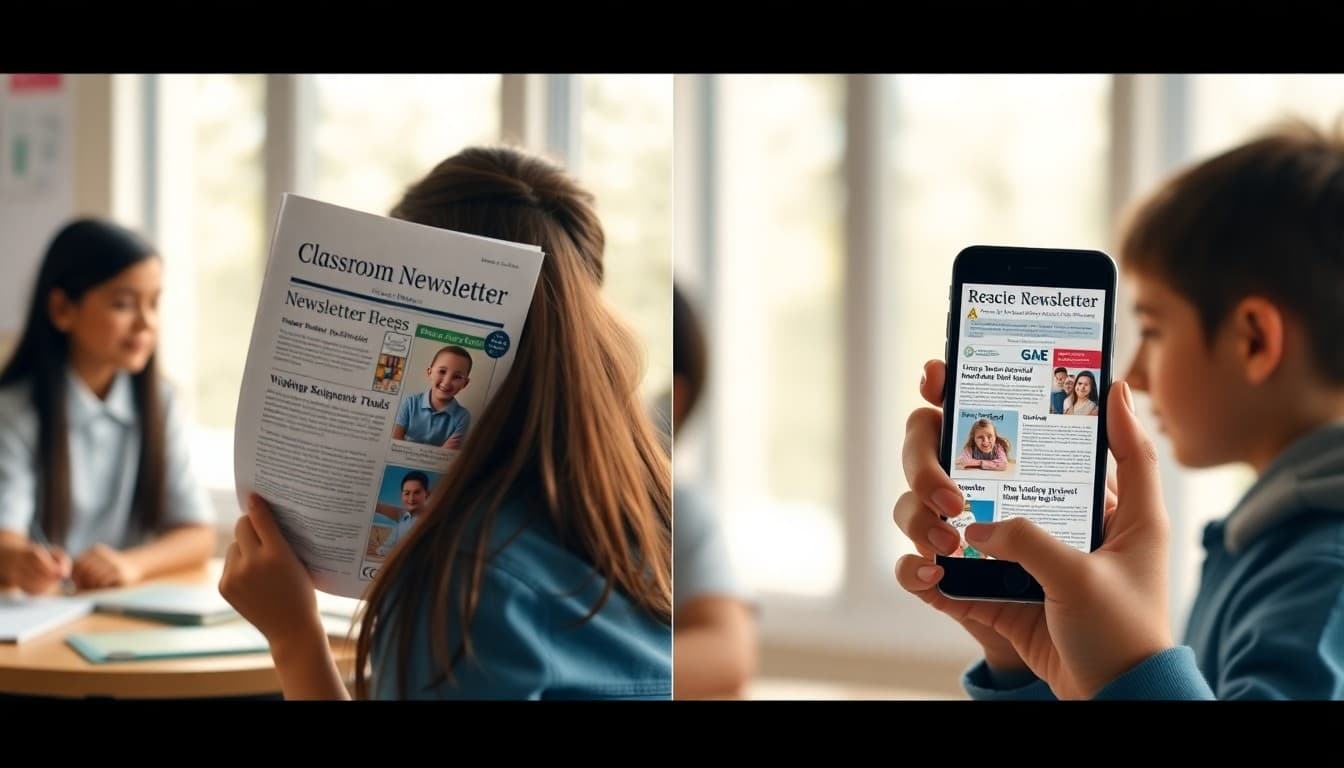
Digital vs Print Teacher Newsletter: Which One Should You Use?
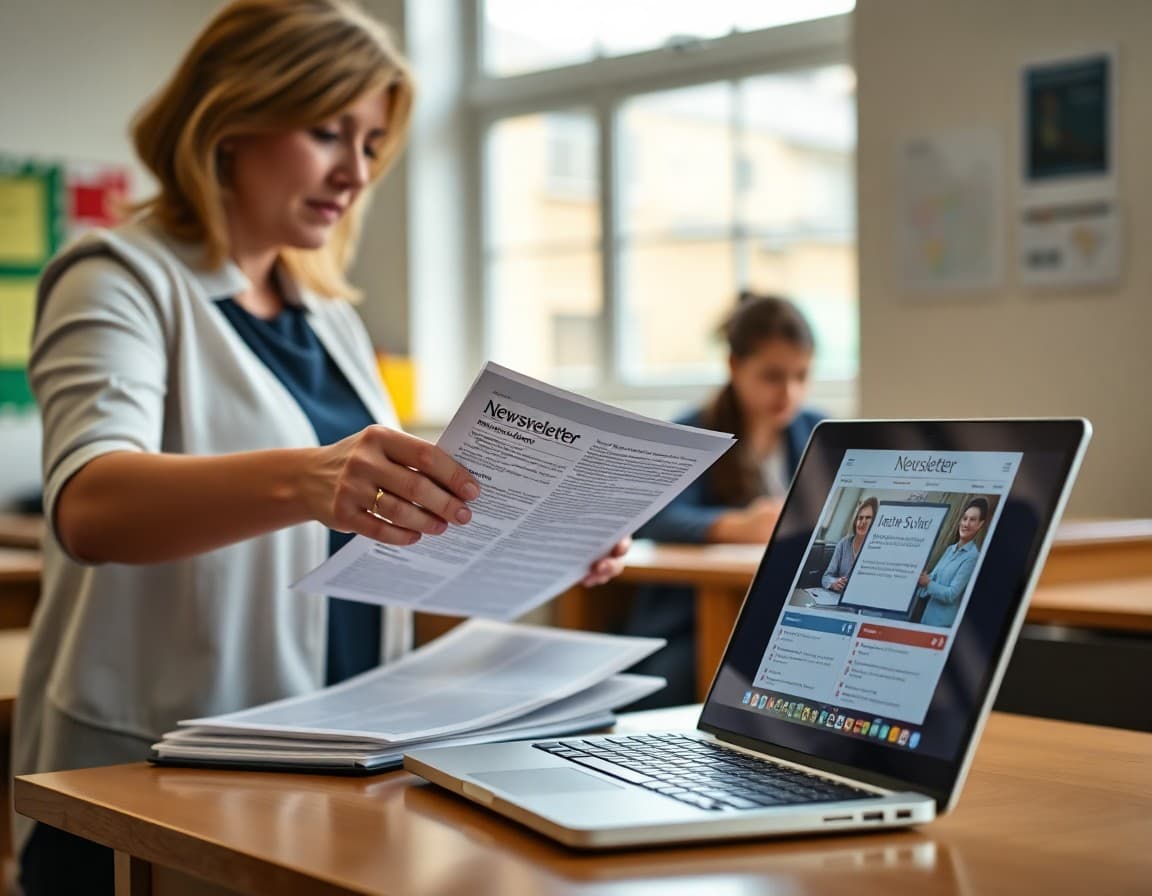
The digital versus print newsletter question comes up every year, usually at the start of school when teachers are setting up their communication routines. The honest answer is that most classrooms should use digital as the default and keep print as a backup for families who need it. Here is how to think through the decision and make it work for your specific families.
Why Digital Has Become the Default
Digital newsletters solve problems that print cannot. They arrive instantly, do not depend on a child remembering to hand something to a parent, and do not end up at the bottom of a backpack. Most families now have smartphones. Digital newsletters can include links to permission forms, reading resources, or sign-up pages. And if you use a platform that tracks opens, you know exactly who has read your newsletter and who has not. That data changes everything about how you follow up.
The Real Problems With Print
Print newsletters cost money to produce and take time to copy and collate. They can only reach families when a child successfully delivers them. They cannot be updated if something changes. They take up physical space and tend to get lost. They cannot include links, and they give you no information about whether anyone actually read them. For most modern classrooms, these are significant limitations.
When Print Still Makes Sense
Print is appropriate in specific situations. Families with limited internet access or no smartphone need a print option. Documents families need to reference over time, like a classroom schedule or supply list, work well as print handouts because families can post them on a refrigerator. Very young students' families, particularly at the kindergarten and first grade level, sometimes have lower email engagement than families of older students. And some schools have equity requirements that mandate a print version be available.
The Hybrid Approach
Many teachers land on a hybrid approach: send digital as the primary newsletter and offer print on request. You can note in your digital newsletter, once at the start of the year, that print copies are available for any family who prefers them. This covers equity concerns without printing 25 copies every week when only two families will use them.
What Digital Requires to Work
Digital newsletters only work if families actually open them. That means the email address you have on file needs to be current, your subject lines need to be specific enough that families open them, and your newsletters need to arrive on a consistent day so families expect them. A digital newsletter sent at random intervals with a vague subject line will get the same engagement as a crumpled paper at the bottom of a backpack.
Tracking Engagement Tells You What Is Working
One of the biggest advantages of digital newsletters is open-rate data. If 90% of your families open your newsletter, your current approach is working. If 40% open it, something is off with your timing, subject line, or content. Print gives you no equivalent data. You have no idea if the newsletter you spent twenty minutes copying and collating got read or went straight into the recycling. Data-informed communication is always preferable.
Making the Transition From Print to Digital
If you are switching from print to digital, tell families early and give them a reason to opt in. "Starting this September, our class newsletter will be sent by email every Friday morning. Make sure I have your current email address so you do not miss any updates." Follow up with families whose emails bounce or who do not open the first few sends. A brief phone call or note home gets most families onboarded quickly.
Get one newsletter idea every week.
Free. For teachers. No spam.
Frequently asked questions
Should teachers use digital or print newsletters?
Most teachers benefit from digital as the primary format with print available on request. Digital is faster, cheaper, trackable, and available on any device. Print makes sense for families with limited digital access or for specific documents families need to keep, like a supply list or yearly calendar.
What are the biggest advantages of digital newsletters for teachers?
Speed of sending, no printing cost, read-receipt data so you know who has opened it, the ability to include links, and the ability to update or resend if something changes. Digital newsletters also do not get crumpled in a backpack.
When is a print newsletter still worth sending?
When you have families with limited digital access, when the document is something families need to reference repeatedly like a classroom schedule, and for very young students whose parents may not check email frequently. Some schools also require a print option for accessibility reasons.
How do I know if families are reading my digital newsletter?
Newsletter platforms with open-rate tracking tell you what percentage of families opened your newsletter and when. If open rates are consistently low, that is a signal to review your subject lines, sending day, or content relevance, not just assume digital is not working.
Does Daystage track whether families open my newsletter?
Yes. Daystage shows you open and read data so you can see which families have engaged with your newsletter and follow up with those who have not. That data changes how you communicate and helps you identify families who may need a different channel.

Adi Ackerman
Author
Adi Ackerman is a former classroom teacher and curriculum writer with 8 years in K-8 schools. She writes about school communication, parent engagement, and what actually works in real classrooms.
More for Classroom Teachers
Ready to send your first newsletter?
3 newsletters free. No credit card. First one ready in under 5 minutes.
Get started free