
Teacher Newsletter for Day of the Dead: Honor the Tradition Respectfully
Día de los Muertos is one of the most visually rich and culturally meaningful holidays in the Mexican and Latin American tradition. It is also one of the most frequently misunderstood by students and families unfamiliar with it. A newsletter that introduces the holiday accurately, separates it from Halloween in families' minds, and frames the classroom learning respectfully prepares the whole community for a unit that is both academically valuable and culturally important.
Explain What Día de los Muertos Is
Día de los Muertos, or Day of the Dead, is observed on November 1 and 2 in Mexico and across Latin America and by Mexican American communities in the United States. It is a joyful celebration of family that honors those who have died. Families create ofrendas, or altars, decorated with photographs, marigold flowers, food, and objects the person loved in life. The tradition blends pre-Columbian Aztec practices with Catholic All Saints' Day and All Souls' Day observances. It is not a Mexican version of Halloween and does not share Halloween's associations with fear or horror.
Describe the Key Symbols
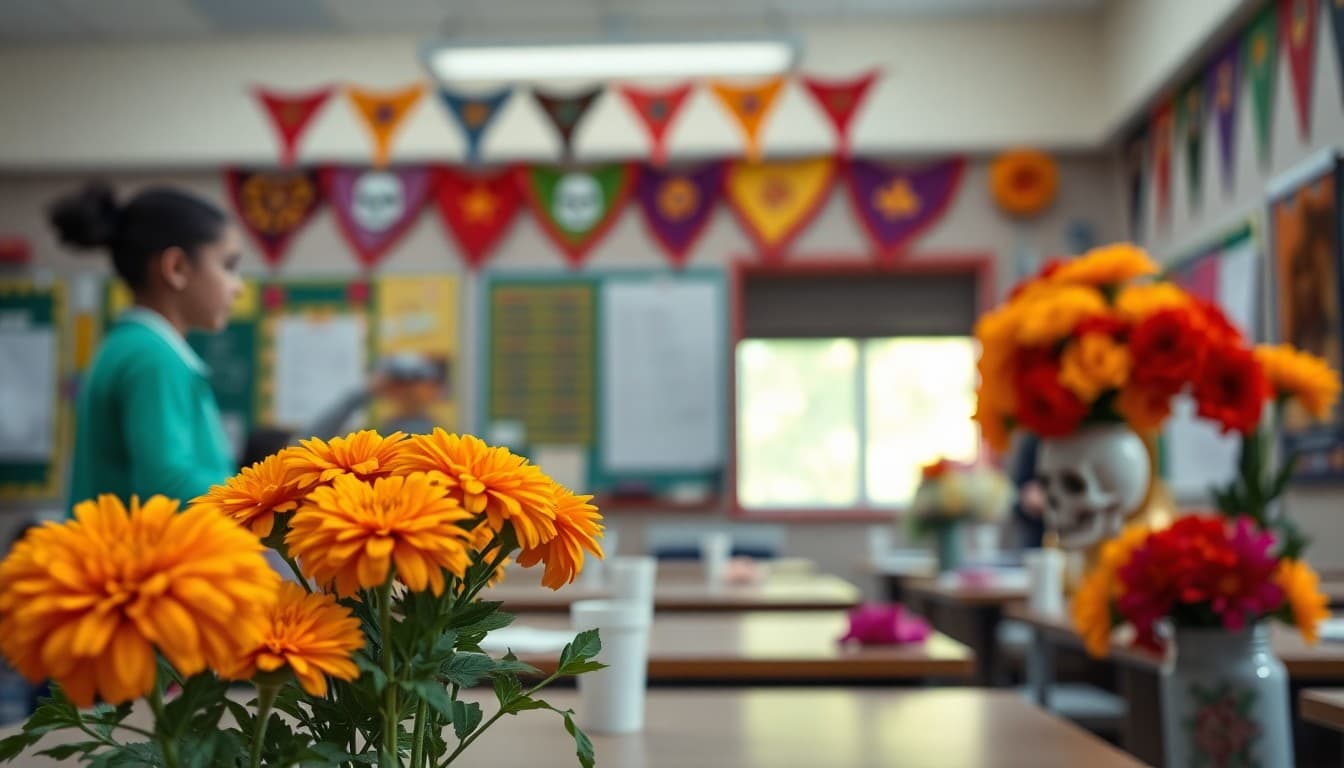
Marigolds, called cempazúchil, are used because their scent is believed to guide ancestors' spirits home. Sugar skulls are decorative, not morbid, and represent the sweetness of life. Pan de muerto, or bread of the dead, is a special food offered on the ofrenda. Candles, incense, and photographs are central to the altar. Naming these symbols gives students and families the vocabulary to understand and discuss what they see in class rather than reacting to unfamiliar imagery.
Explain What Students Will Do in Class
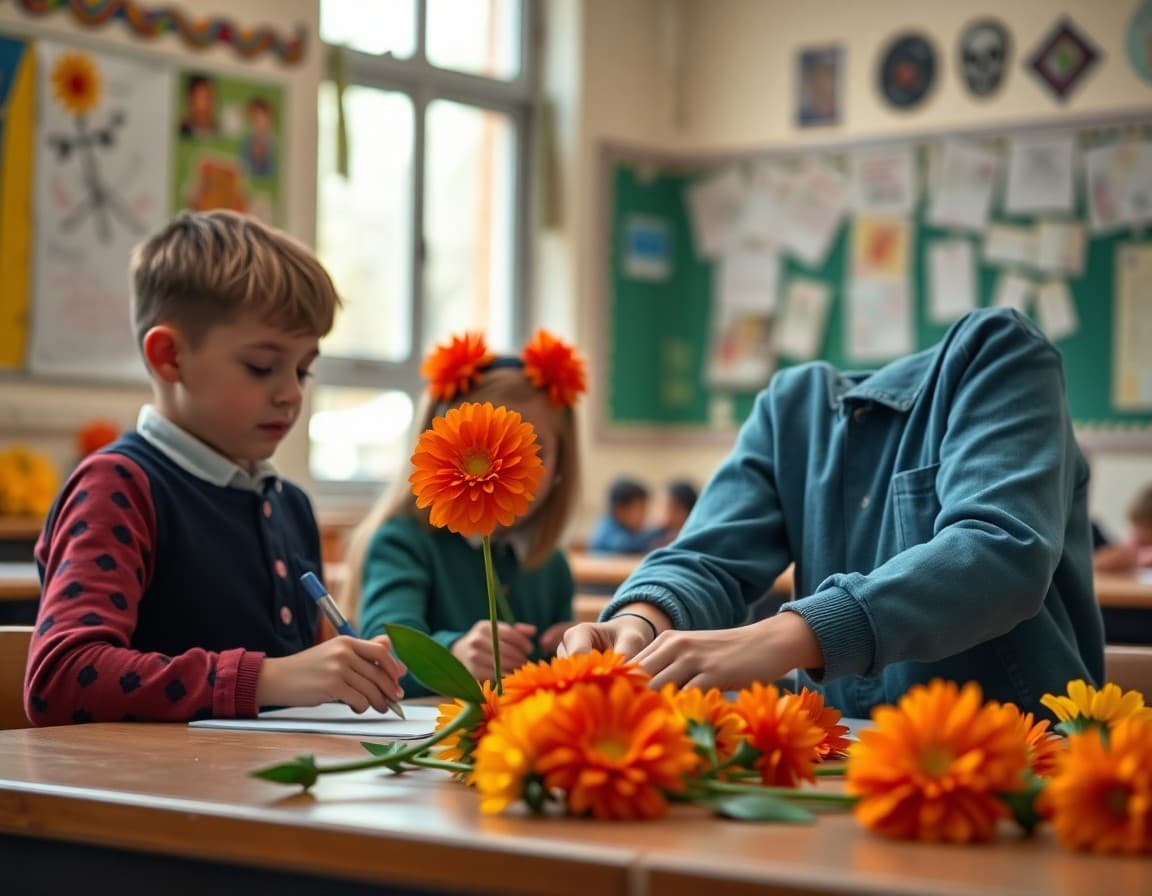
Describe the classroom activities: perhaps reading a picture book about the holiday, creating paper marigolds, learning about the ofrenda tradition, or discussing what it means to remember people we love. Frame the activities in terms of their cultural context, not just the craft element. Students who understand why they are making marigolds engage differently than students who are just completing an art project.
Invite Mexican and Latin American Families to Contribute
Families who observe Día de los Muertos may be willing to share a family story, a photo of an ofrenda, a recipe, or a book about the tradition. Extend an open invitation with no pressure: if your family celebrates Día de los Muertos and you would like to contribute anything to our classroom learning, I would love to hear from you. Community-contributed knowledge is more accurate and more powerful than any lesson plan.
Address the Death Topic Gently for Younger Students
For families of young children who may be concerned about discussing death, the newsletter can note that Día de los Muertos treats death as a natural part of life that is honored with love and celebration rather than feared. The classroom discussion focuses on memory, family, and the ways different cultures say goodbye to people they love. That framing is accessible and appropriate even for students who have not yet encountered significant loss.
Connect to Broader Cultural Learning
Día de los Muertos is a window into the ways different cultures understand family, time, and death. Using Daystage, you can close the newsletter by connecting this unit to the broader classroom theme of understanding how people around the world mark the moments that matter most, which makes the learning feel part of something larger rather than a standalone holiday craft day.
Get one newsletter idea every week.
Free. For teachers. No spam.
Frequently asked questions
What should a Day of the Dead newsletter explain to families?
Briefly describe what Día de los Muertos is and how it is observed, clarify that it is not related to Halloween despite the timing, explain what students will do in class, invite Latino and Mexican American families to contribute if they choose, and connect the learning to broader themes of family and remembrance.
Is Day of the Dead related to Halloween?
No. Día de los Muertos is a Mexican and Latin American tradition rooted in pre-Columbian Aztec practices and Catholic All Saints' Day and All Souls' Day observances. It is a celebration of family and a joyful remembrance of ancestors, not a holiday associated with fear or horror. The newsletter should clarify this distinction explicitly.
How do I teach Day of the Dead without appropriating it?
Center the teaching on accurate cultural information and invite families with Mexican or Latin American heritage to contribute. Avoid treating the holiday as a craft project divorced from its cultural context. Use books and resources by Mexican and Latin American authors. The distinction between appreciation and appropriation is largely about accuracy, respect, and who leads the learning.
What if some families have concerns about discussing death with young students?
Día de los Muertos approaches death as a natural part of life and something to be honored rather than feared. The newsletter can note this directly and explain that the classroom handles the topic with age-appropriate care, focusing on celebration, memory, and family love rather than loss or fear.
What tool helps teachers send newsletters efficiently?
Daystage makes Day of the Dead newsletters visually engaging with the color and warmth the holiday deserves and delivers the cultural context families need before classroom learning begins.

Adi Ackerman
Author
Adi Ackerman is a former classroom teacher and curriculum writer with 8 years in K-8 schools. She writes about school communication, parent engagement, and what actually works in real classrooms.
More for Classroom Teachers
Teacher Newsletter for Cultural Holidays: Celebrate Diversity in the Classroom
Classroom Teachers · 6 min read
Teacher Newsletter for Indigenous Peoples Day: Teach History Honestly
Classroom Teachers · 6 min read
Teacher Newsletter for Cinco de Mayo: Teach the Real History
Classroom Teachers · 6 min read
Ready to send your first newsletter?
3 newsletters free. No credit card. First one ready in under 5 minutes.
Get started free