
Newsletter for Your Photosynthesis Unit: Helping Parents Support Science Learning
Photosynthesis is one of those science topics that sounds complicated but is actually deeply intuitive once students grasp the core idea: plants make their own food using sunlight. A newsletter that frames it that way, provides the vocabulary, and gives families a simple observation to try at home turns a classroom unit into a household conversation.
The Core Concept in Plain Language
Plants are producers. Unlike animals, they do not need to eat other organisms to get energy. They make energy themselves using three things: sunlight, water, and carbon dioxide from the air. Inside the green parts of the plant, chlorophyll captures sunlight and uses that energy to convert water and carbon dioxide into glucose (the plant's food) and oxygen. The oxygen is released into the air. That is what photosynthesis is.
Key Vocabulary for the Unit
Give families the terms they need to understand homework and have useful conversations. Photosynthesis: the process plants use to make food from light. Chlorophyll: the green pigment in plant cells that captures light energy. Chloroplast: the structure inside plant cells where photosynthesis happens. Glucose: the sugar plants produce as food. Carbon dioxide: the gas plants take in from the air. Oxygen: the gas plants release as a byproduct. Producer: an organism that makes its own food. These seven terms cover the full unit.
What You Are Doing in Class
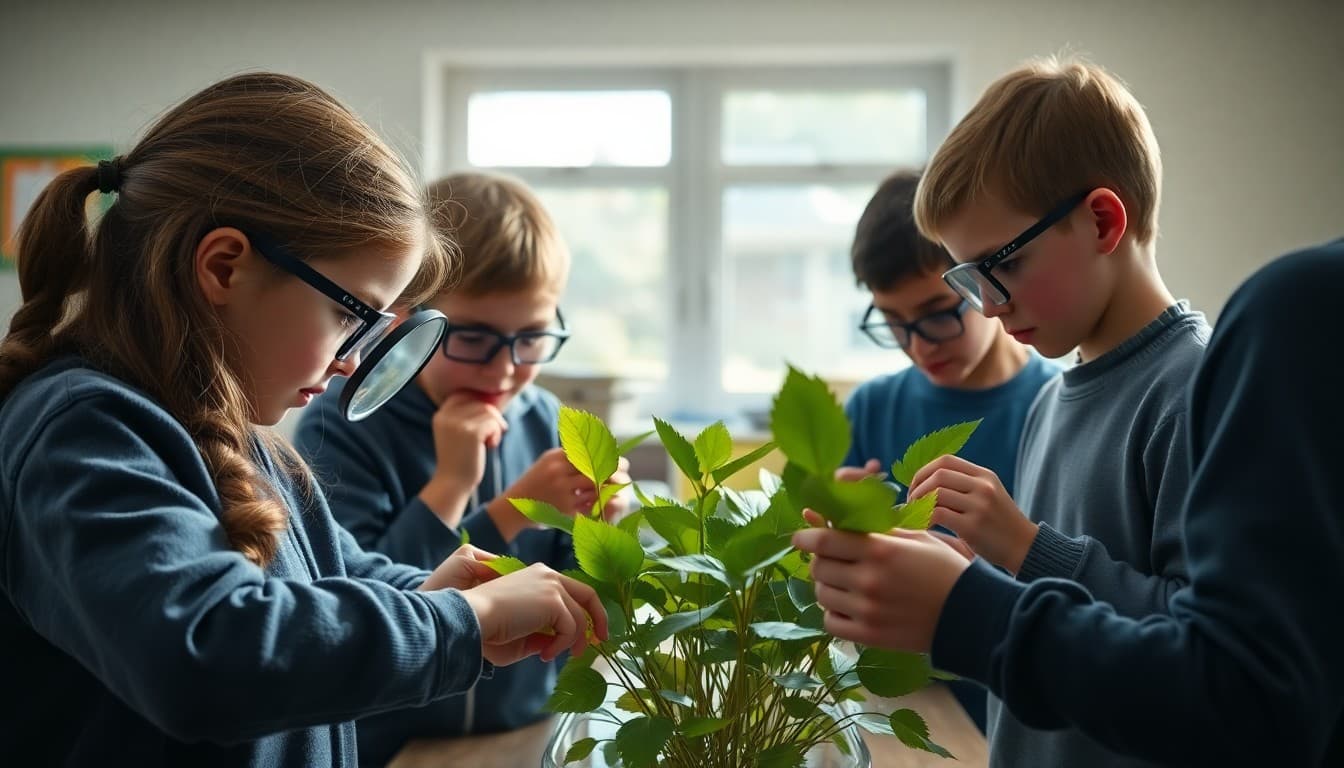
Tell families whether students are growing plants, observing leaf color changes, doing a laboratory exercise, or modeling the process with diagrams. Families who know what is happening in class can ask specific questions: "What did you observe in the experiment today?" is more useful than "What did you do in science?" That specific question leads to better recall and deeper processing of the concept.
Simple Observations Families Can Try
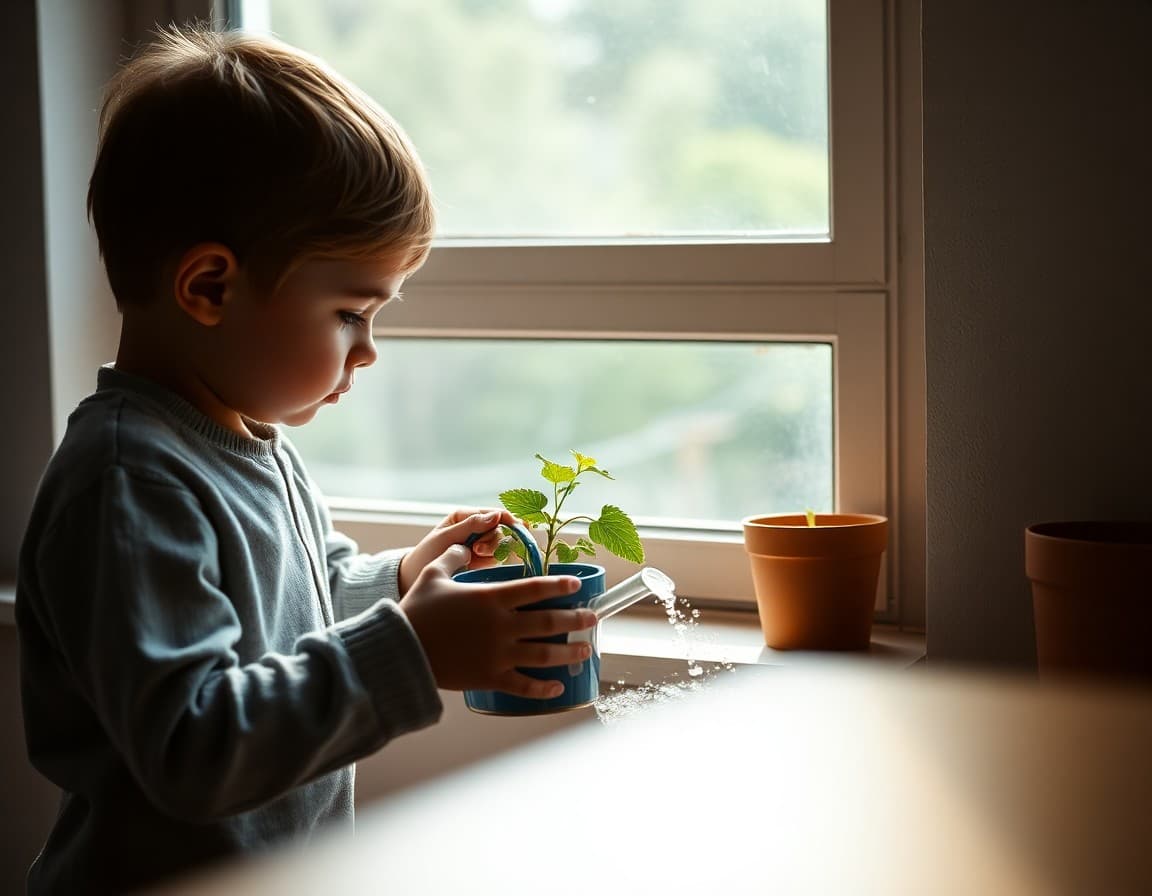
Suggest one easy activity. Put a healthy leafy plant in a sunny window. Cover one leaf with a piece of black construction paper taped over it. After a week, uncover the leaf and compare it to uncovered leaves. The covered leaf will show yellowing because it could not photosynthesize without light. That simple experiment illustrates the role of light in a way students remember. It requires nothing more than a plant and some paper.
Connecting Photosynthesis to the Food Web
Plants are the foundation of every food web. Animals eat plants (or eat animals that eat plants). When families understand this, they see photosynthesis not as an isolated topic but as the process that makes all other life possible on Earth. A line in your newsletter about this connection raises the stakes: "Without photosynthesis, there would be no food for any animal, including us. That's why producers are at the base of every food chain."
Sample Newsletter Excerpt
Here is language you can adapt: "This month we are studying photosynthesis. Plants make their own food using sunlight, water, and carbon dioxide from the air. The process happens in the green parts of the plant, where a pigment called chlorophyll captures light and uses it to build glucose. At home, try this: put two small plants in different spots, one in a sunny window and one in a dark corner. Check both plants after a week and ask your child to explain the difference using what they learned in class."
Why Plants Are Green
Chlorophyll absorbs red and blue light from sunlight to power photosynthesis. It reflects green light, which is why we see plants as green. This is a fascinating fact that connects science to everyday observation. Mentioning it in your newsletter gives students and families something to notice and discuss: every green plant they see is full of the molecule that makes photosynthesis possible.
Sending the Science Newsletter Efficiently
Daystage lets you add a photo of your class experiment or a diagram of the photosynthesis process to your newsletter, then send it to all families at once. A visual makes the concept clearer than a text description alone. Write your unit update, add an image, and send. Families get a clean, readable science update that helps them understand what their child is exploring in class.
Get one newsletter idea every week.
Free. For teachers. No spam.
Frequently asked questions
What should a photosynthesis unit newsletter include?
Explain what photosynthesis is in plain language, the key vocabulary students will learn, what experiments or observations you will do in class, and simple activities families can try at home with a plant or even just a sunny windowsill.
How do I explain photosynthesis to parents simply?
Plants make their own food using sunlight, water, and carbon dioxide. The chlorophyll in their leaves captures sunlight and uses its energy to turn carbon dioxide and water into glucose and oxygen. The plant keeps the glucose for energy and releases the oxygen. That is the core.
What vocabulary should the photosynthesis newsletter include?
Photosynthesis, chlorophyll, chloroplast, glucose, carbon dioxide, oxygen, producer, and reactant are the key terms. At upper grades, add the word equation or chemical equation for the process. Brief one-sentence definitions are enough for a newsletter.
What hands-on activities can families do at home to reinforce photosynthesis?
Observe a leaf in sunlight versus shade over several days. Grow two plants: one in a sunny spot and one in a dark closet. Compare the results. Put a leaf in a glass of water in sunlight and watch for oxygen bubbles. These activities take minimal setup and directly illustrate the concept.
What tool helps teachers send science unit newsletters to families?
Daystage makes it easy to send formatted unit newsletters with photos and activity suggestions. Teachers use it to share science unit updates so families can reinforce learning at home without needing specialized knowledge of the curriculum.

Adi Ackerman
Author
Adi Ackerman is a former classroom teacher and curriculum writer with 8 years in K-8 schools. She writes about school communication, parent engagement, and what actually works in real classrooms.
More for Classroom Teachers
Ready to send your first newsletter?
3 newsletters free. No credit card. First one ready in under 5 minutes.
Get started free