

Newsletter for Your Cell Biology Unit: What Families Need to Know
Cell biology is the unit where students get their first real glimpse of the invisible machinery that makes all life work. Microscopes, organelle diagrams, and the discovery that every living thing is built from the same fundamental structure: it is genuinely exciting science. A newsletter that shares that excitement with families and gives them ways to support the unit makes the experience richer for students.
What Cell Biology Covers at This Grade Level
Name the specific content your unit includes. Middle school cell biology typically covers cell theory, the parts of plant and animal cells, the function of major organelles, the difference between prokaryotic and eukaryotic cells (if applicable), and cell division basics. Upper elementary biology might cover plant vs. animal cells only. Tell families exactly what scope to expect so they know what homework will look like.
The Core Idea: Cell Theory
Cell theory has three central statements: all living things are made of cells, the cell is the basic unit of life, and all cells come from pre-existing cells. These ideas were established through the work of scientists like Robert Hooke, Matthias Schleiden, Theodor Schwann, and Rudolf Virchow. Knowing this history helps students understand why cell theory is a theory in the scientific sense (well-supported and accepted) rather than a guess.
Plant vs. Animal Cells: The Key Differences
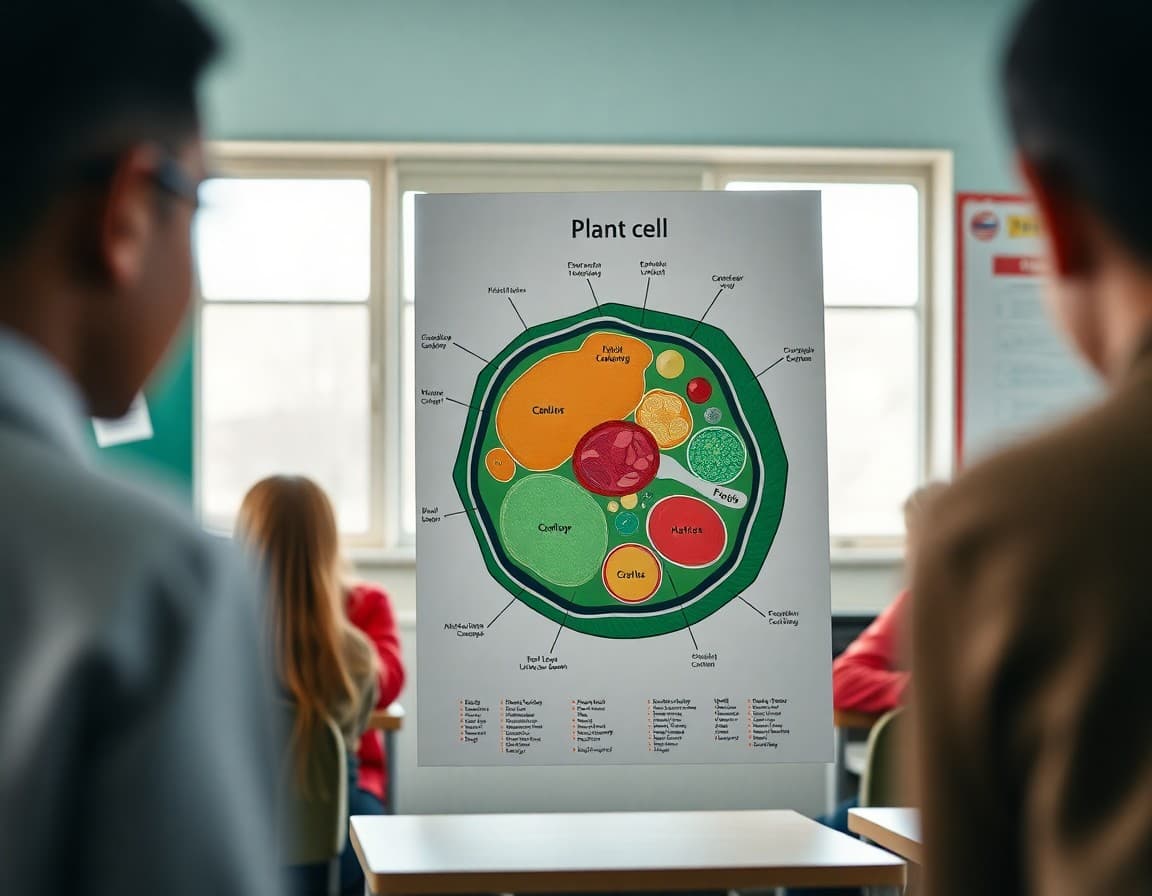
Both plant and animal cells have a nucleus, mitochondria, cell membrane, cytoplasm, and ribosomes. Plant cells also have a cell wall (rigid structure outside the membrane), chloroplasts (for photosynthesis), and a large central vacuole (for storage). Animal cells have centrioles, which plant cells do not. Give families this comparison clearly; it is one of the most common homework topics in the unit.
Organelle Vocabulary and Functions
The vocabulary load in this unit is real. Give families the core list with one-sentence function descriptions. Nucleus: the control center, holds DNA. Mitochondria: produces energy for the cell (the powerhouse). Cell membrane: controls what enters and exits the cell. Cell wall: provides structural support in plant cells. Chloroplast: site of photosynthesis in plant cells. Vacuole: stores water and materials. Cytoplasm: the gel-like fluid filling the cell. These eight terms are what students need most.
The Cell Model Project
If your unit includes a cell model project, announce it early. Many teachers ask students to create a 3D model of a plant or animal cell using edible materials (gelatin, candy, fruit) or craft materials (foam, clay). Tell families which materials work well, what organelles must be included, and when the project is due. Advance notice prevents the last-minute scramble and gives students time to plan a model they are proud of.
Microscope Work in Class
If students will use microscopes, tell families. Many students have never looked through a microscope and will come home excited about what they saw. Share what specimens you plan to examine: onion cells, cheek cells, elodea (a water plant). Families who know what to ask about will get much better answers and conversations than families who ask "what did you do today?"
Sample Newsletter Excerpt
Try this: "This month we are starting our cell biology unit. Students will learn about the parts of plant and animal cells, look at real cells through microscopes, and build a cell model. At home, the best support you can give is to ask your child to explain one organelle to you each night: what it is called, where it is in the cell, and what it does. Teaching you is one of the best ways for them to solidify what they learned that day."
Sending the Newsletter Before Projects Begin
Daystage makes it easy to send your cell biology newsletter with a diagram of a cell, the organelle vocabulary list, and project materials information all in one place. Send it before the unit starts so families have time to gather materials and start asking the right questions. That early communication prevents confusion and sets students up for success.
Get one newsletter idea every week.
Free. For teachers. No spam.
Frequently asked questions
What should a cell biology unit newsletter cover?
Explain the cell theory, the difference between plant and animal cells, the key organelles students will learn about, and what activities students will do (microscope work, cell models, diagrams). Include vocabulary and a suggestion for how families can support the unit at home.
How do I explain cells to parents in plain language?
Cells are the smallest unit of life. Every living organism is made of cells. Some organisms are made of just one cell; others (like humans) are made of trillions of cells, each doing a specific job. The cell is to a living body what a brick is to a building: a building block.
What vocabulary should the cell biology newsletter include?
Cell, cell membrane, cell wall, nucleus, mitochondria, chloroplast, vacuole, cytoplasm, organelle, and cell theory are the key terms for a standard middle school cell unit. Brief definitions for each make a big difference when families are trying to help with homework.
What project or assessment should I tell families to expect?
Cell models are common in this unit. If students will build a 3D model using household materials, tell families early so they have time to gather supplies. Name the materials you recommend (gelatin, small candies, foam balls, or clay) and the organelles the model must include.
What tool helps teachers send cell biology unit newsletters?
Daystage lets teachers include a diagram or photo of a cell model in their newsletter and send it to all families at once. Teachers use it for unit newsletters throughout the science year to give families context before projects and assessments begin.

Adi Ackerman
Author
Adi Ackerman is a former classroom teacher and curriculum writer with 8 years in K-8 schools. She writes about school communication, parent engagement, and what actually works in real classrooms.
More for Classroom Teachers
Ready to send your first newsletter?
3 newsletters free. No credit card. First one ready in under 5 minutes.
Get started free