
Newsletter for Your Human Body Unit: What Families Should Know

The human body unit is one of the most personally relevant science units students encounter. Every concept connects directly to a system inside their own body. A newsletter that helps families make those connections, and gives them one or two activities to observe their own body at home, makes the unit memorable in a way that abstract diagrams alone cannot.
What Systems Your Unit Covers
Start by naming the systems. If your unit covers the skeletal, muscular, digestive, circulatory, and respiratory systems, say so. If you add the nervous or endocrine system at your grade level, include those. Families who know the scope understand what homework will cover, what vocabulary to practice, and what kind of projects or assessments to expect. That clarity reduces homework stress.
How the Systems Connect
One of the most important ideas in the human body unit is that no system works in isolation. The circulatory system carries oxygen from the lungs (respiratory) to the muscles (muscular) and removes carbon dioxide. The digestive system breaks food into nutrients that the circulatory system delivers to cells throughout the body. The nervous system coordinates all of it. Your newsletter can introduce this integration: "We are learning that the body works as a team, not as separate parts."
Vocabulary for the Unit
Organ, tissue, cell, system, and function are the meta-level terms. Then system-specific: skeleton, joint, muscle, tendon, ligament (skeletal/muscular); heart, artery, vein, capillary, blood (circulatory); lungs, trachea, bronchi, alveoli, diaphragm (respiratory); stomach, small intestine, large intestine, esophagus (digestive). Give families the terms for the systems you are currently teaching, not all at once. A focused vocabulary list is more useful than an overwhelming one.
Home Activities Using Their Own Bodies
The best human body activities require no equipment. Take a pulse before sitting still for two minutes, then run in place for one minute, then take the pulse again. Ask: why did it change? That is the circulatory and respiratory systems responding to the muscular system's demand for more oxygen. After a meal, ask what is happening to the food right now. That conversation reinforces the digestive system in a way that connects to their real experience.
The Circulatory System in Action
Finding a pulse is a hands-on entry point into the circulatory system. Place two fingers on the inside of the wrist or on the neck beside the throat. Count the beats in 30 seconds and multiply by two. That is the heart rate in beats per minute. At rest, most students will find 60-100 beats per minute. After exercise, it climbs. Ask: why does the heart beat faster when we exercise? Because muscles need more oxygen, so the heart pumps blood faster to deliver it. That is the circulatory system at work.
A Sample Newsletter Excerpt
Here is language you can use: "This month we are studying the human body. We are starting with the skeletal and muscular systems and moving into the digestive and circulatory systems. At home, try this: have your child find their pulse on the inside of their wrist. Count the beats for 30 seconds and multiply by 2. That's their resting heart rate. Then have them run in place for one minute and find the pulse again. Ask them why the number changed. That question connects directly to what we are learning about how the body's systems work together."
Handling Sensitive Topics
The human body unit sometimes touches on topics families want to be informed about in advance. If your unit includes any discussion of the reproductive system, growth, or puberty, mention it in the newsletter so families are not surprised. Brief, factual notice is better than a student coming home with information parents did not expect. Keep the language neutral and clinical, consistent with how you address it in class.
Sending the Unit Newsletter
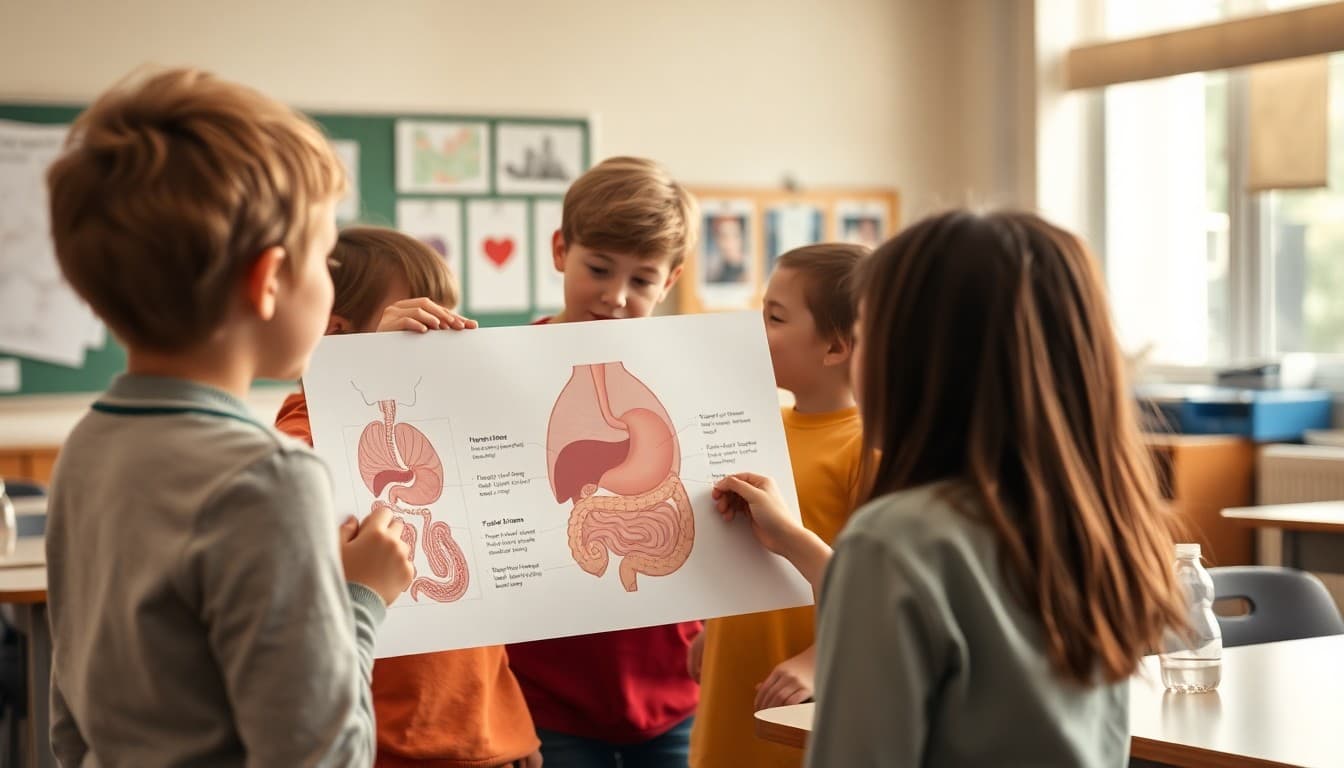
Daystage lets you include a diagram of a body system, a vocabulary list, and a home activity in a single newsletter that goes to every family at once. Teachers who send the newsletter before each system unit give families the context to support the right content at the right time. Write the update, add an image from class, and send. Families appreciate knowing what is coming.
Get one newsletter idea every week.
Free. For teachers. No spam.
Frequently asked questions
What should a human body unit newsletter cover?
Name the specific body systems your unit addresses, explain what each system does, share vocabulary, and give families one or two activities students can try at home to observe their own body systems in action.
What body systems are taught at different grade levels?
Lower elementary typically covers organs and basic systems: heart, lungs, skeleton. Upper elementary and middle school cover the skeletal, muscular, digestive, respiratory, circulatory, nervous, and sometimes reproductive systems in more detail. Name the systems in your unit so families know what to expect.
What vocabulary should the human body newsletter include?
Organ, system, tissue, cell, skeletal system, muscular system, digestive system, circulatory system, respiratory system, nervous system, and function are the most common terms. Brief definitions help families follow homework discussions.
What home activities connect to the human body unit?
Taking a pulse before and after exercise demonstrates the circulatory and respiratory systems. Holding one's breath briefly (safely) to feel the urge to breathe demonstrates the respiratory system. Watching food move through digestion after a meal is another discussion starter. These body experiences connect directly to what is taught in class.
What tool helps teachers send human body unit newsletters?
Daystage is a classroom newsletter platform used by science teachers to share unit newsletters with families. It supports formatted text, vocabulary sections, photos of classroom activities, and sends to all families at once.

Adi Ackerman
Author
Adi Ackerman is a former classroom teacher and curriculum writer with 8 years in K-8 schools. She writes about school communication, parent engagement, and what actually works in real classrooms.
More for Classroom Teachers
Ready to send your first newsletter?
3 newsletters free. No credit card. First one ready in under 5 minutes.
Get started free