

Spanish-English School Newsletter: Bilingual Communication Guide
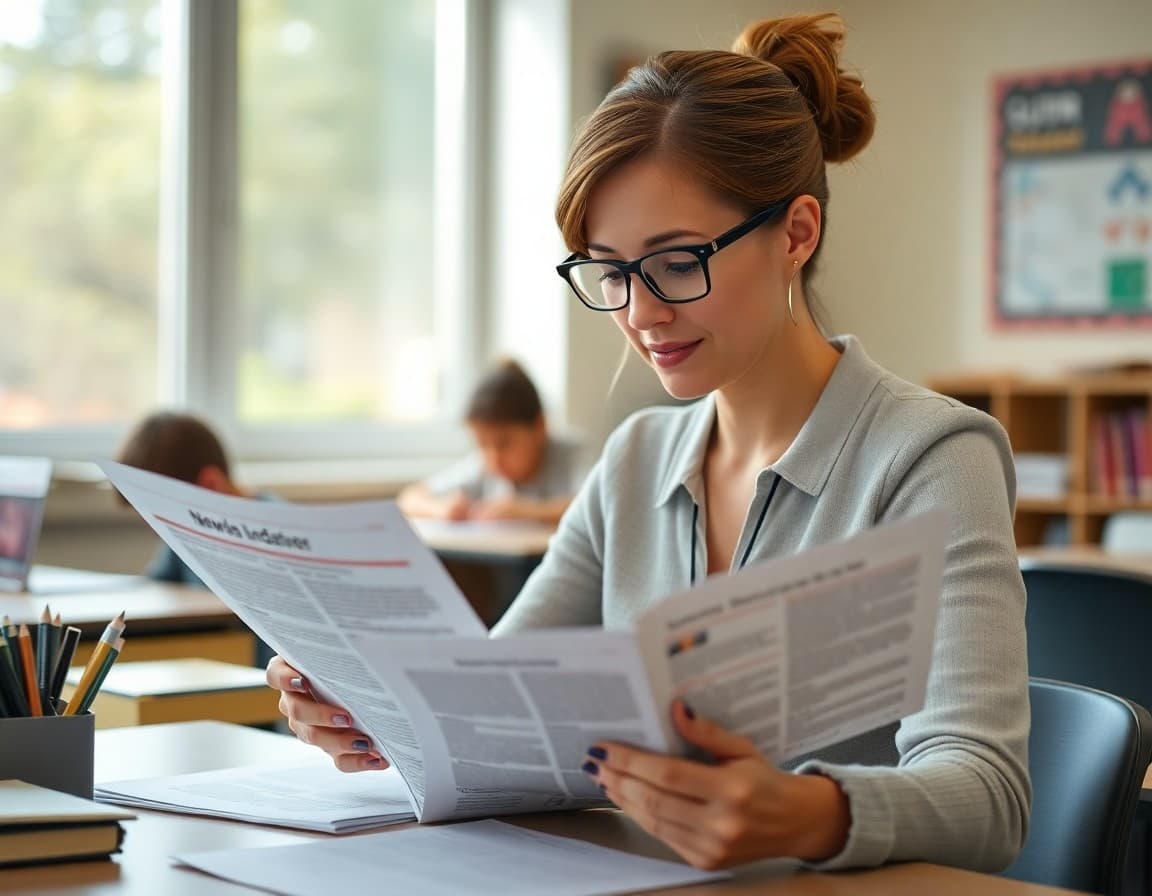
Spanish is the most spoken non-English language in US schools, with more than 5 million English learner students whose home language is Spanish. If your school serves Spanish-speaking families, sending newsletters only in English means a significant portion of your community is receiving information that looks like it is for them but is not actually accessible to them. A Spanish-English newsletter is not an accommodation for a small group. For many US schools, it is the basic standard of inclusive communication.
Spanish First: Why It Matters
Lead with Spanish. This is not a small formatting decision. It signals to Spanish-speaking families that the newsletter was written for them, not translated for them as an afterthought. Schools that put English first and Spanish below communicate a hierarchy even when they do not intend to. Spanish-speaking families notice. Families who feel seen in the first paragraph of a newsletter are more likely to read it, more likely to respond to calls to action, and more likely to feel that the school values their participation. The formatting choice has relational consequences.
A Tested Two-Section Template
Here is a template structure that works well across elementary and middle schools:
Noticias de la Clase - [Mes] / Class News - [Month]
[Spanish content section: 3-4 paragraphs covering the month's highlights, vocabulary, and events]
---
Class News - [Month]
[English content section: exact equivalent of the Spanish section above]
The horizontal rule between sections should be styled clearly in your email platform. In Daystage, you can use a colored divider block that makes the language transition visually obvious even when families are scrolling quickly.
Common Translation Errors to Avoid
Several translation pitfalls appear regularly in school Spanish-English newsletters. The word "excited" almost always gets translated as "excitado," which actually means sexually aroused in Spanish. The correct translation is "emocionado" or "muy contento." The phrase "make sure to" often becomes an awkward direct translation. Instead, use "por favor" followed by a direct request. The word "challenge" in an educational context often becomes "reto" when "desafio" or a direct phrase like "esta tarea dificil" might be more natural depending on context. Run your translation past a native speaker who works with school-age children. They will catch these in minutes.
Tone Consistency Between Versions
Check that the tone of your Spanish version matches the tone of your English version. Some teachers unconsciously write the Spanish version more formally or more briefly, which families notice. If your English version is warm and direct, the Spanish version should be warm and direct. If your English version has a specific sentence about a field trip that includes the departure time, the bus number, and what students need to pack, the Spanish version should have all three of those details in the same order. Information parity is not just about translation quality. It is about demonstrating equal respect for both communities.
Handling School Calendar Items Bilingually
Dates and calendar items are the section families most need to read. Format them identically in both versions. Use numerals for dates rather than spelled-out words: November 15 is clearer than the fifteenth of November, which is clearer than November 15th in terms of cross-language recognition. For times, use 12-hour format with AM and PM spelled out, not military time or abbreviations that look different in Spanish. "3:00 PM" communicates the same in both versions without requiring translation. Clarity in dates saves every family from misunderstanding regardless of language.
When Families Speak Neither Spanish Nor English
A Spanish-English newsletter leaves out families who speak Haitian Creole, Vietnamese, Arabic, Somali, Tagalog, or any other language. For schools with significant populations in other languages, the Spanish-English newsletter is a floor, not a ceiling. Consider which additional language serves the largest underserved group at your school and add that version to your regular communication. Many districts contract with translation services that can turn around a newsletter translation in 24 to 48 hours for a reasonable per-word cost. The expense is smaller than the cost of losing family engagement from linguistic exclusion.
Get one newsletter idea every week.
Free. For teachers. No spam.
Frequently asked questions
How do I format a Spanish-English school newsletter for email?
For email, use a stacked format with Spanish first and English below a clear visual divider. Avoid side-by-side columns because they render poorly on mobile phones, where most parents read email. Use a consistent color or line to mark the language transition so parents can scroll directly to their language without reading the other. Keep the structure identical in both languages so parents from both groups receive exactly the same information.
Should the Spanish version be a direct translation of the English?
Start with a direct translation, then review it with a native or near-native Spanish speaker for naturalness. Direct translations often produce technically correct but awkward Spanish that reads like a translated document rather than communication written for Spanish-speaking families. A 10-minute review by a fluent speaker catches phrasing that works in English but sounds formal or unusual in Spanish. The goal is two versions that each feel natural, not one version translated.
What reading level should the Spanish version be written at?
Write for a sixth to eighth grade reading level in both languages. This is accessible for families across the education spectrum without being condescending to anyone. Avoid jargon in both languages. Educational terms that are common in English-speaking school culture may not translate to the same meaning in Spanish-speaking education contexts. Test this by asking whether a family member who did not attend US schools would understand each sentence.
How do I handle names and titles that do not translate?
Keep proper names, program titles, and school names in their original form in both language versions. Do not translate 'Lincoln Elementary School' into 'La Escuela Primaria Lincoln.' Spanish-speaking families who interact with the school in English for logistical purposes know the English names of school programs and buildings. Creating Spanish translations of proper names can actually create confusion when families try to reference them in English-language contexts.
Can Daystage automate Spanish-English newsletter delivery to the right families?
Yes. Daystage supports sending targeted versions to different family groups. You can build a list of Spanish-dominant families and a list of English-dominant families and deliver each group the newsletter version most relevant to them. For schools with large bilingual populations where many families read both, sending a combined bilingual version to everyone is also straightforward. The platform tracks open rates in both segments so you can see engagement across both language communities.

Adi Ackerman
Author
Adi Ackerman is a former classroom teacher and curriculum writer with 8 years in K-8 schools. She writes about school communication, parent engagement, and what actually works in real classrooms.
More for Bilingual
Bilingual Classroom Newsletter Tips: What Actually Works for Multilingual Families
Bilingual · 5 min read
Multilingual School Newsletter Guide: Reaching Every Family
Bilingual · 6 min read
Bilingual Community Outreach Newsletter: Reaching Multilingual Families Beyond the School Building
Bilingual · 6 min read
Ready to send your first newsletter?
3 newsletters free. No credit card. First one ready in under 5 minutes.
Get started free