
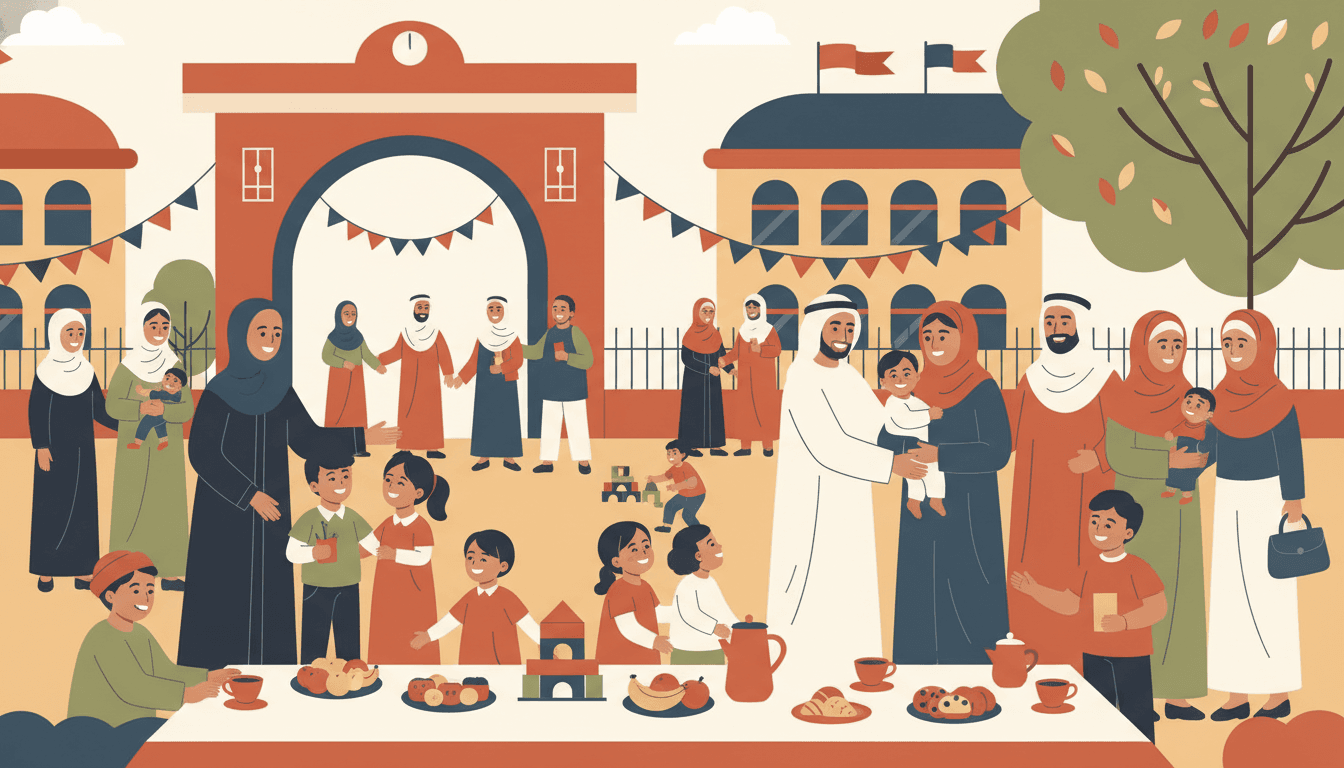
Bilingual Community Outreach Newsletter: Reaching Multilingual Families Beyond the School Building
Every school's multilingual family community includes some families who are relatively easy to reach and some who are not. The families who attend parent nights, who open school emails, and who come to pick up their children on time are visible to the school. The families who have not provided an email address, who move frequently, who distrust institutional contact, or who work night shifts and cannot be reached during school hours are less visible but still present. Community outreach brings the school to where these families are, rather than waiting for them to come to the school.
Mapping the Hard-to-Reach Population
Effective community outreach starts with a realistic assessment of which families in the school's multilingual community are not being reached by standard communication channels. Schools can identify these families by looking at which families have incomplete contact information, which families have never attended a school event, and which families respond to no communications.
Understanding why these families are hard to reach determines the right strategy. Families with no internet access need different outreach than families who have internet access but have never provided their contact information because they distrust the school. The tactics are different even if the goal is the same.
Community Spaces as Distribution Points
Multilingual families who do not receive or do not read school newsletters may encounter them at the community health clinic, at the local church, at the library, or at the neighborhood store. Building relationships with organizations that serve your school's language communities and distributing print and digital newsletters through those channels extends the school's reach into spaces where families already have trust.
A single newsletter left at a doctor's office waiting room may reach ten families who have not seen school communication in months. Scaling this kind of distribution through partnerships with community organizations is one of the most cost-effective outreach strategies available.
Community Liaisons as Relationship Builders
Community liaisons who are trusted members of the multilingual community are the most effective investment a school can make in reaching hard-to-reach families. A community liaison who attends mosque services, who shops at the same grocery stores, who speaks the community's language as a native speaker, and who has relationships with families before they have relationships with the school can introduce the school into trust networks that no institutional communication can access directly.
Newsletter Content for Community Outreach
Community outreach newsletters should lead with what the school offers families, not with what the school requires of them. Families who are hard to reach are often the families who have the most difficult relationship with institutions. A newsletter that opens with free resources, with services, with supports available to the family, builds a different foundation than one that opens with attendance policies and enrollment deadlines.
Daystage supports producing multilingual newsletters in any language for this kind of community distribution, making it straightforward to bring the school's communication to the spaces where multilingual families already gather.
Get one newsletter idea every week.
Free. For teachers. No spam.
Frequently asked questions
Which multilingual families are hardest to reach through standard school communication?
Families who are hardest to reach include those with limited or no internet access, those with limited literacy in any language, undocumented families who are wary of institutional contact, families who have moved frequently and have not updated contact information, families who work night shifts or multiple jobs and are rarely available during school hours, and families in cultural communities with low trust in government institutions. Each of these groups requires different outreach strategies.
What community spaces are most effective for bilingual school outreach?
Religious institutions, community health centers, public libraries, community-based organizations, laundromats, grocery stores, and neighborhood community centers are all spaces where multilingual families gather and where school newsletters and information can be distributed. Partnerships with community health workers and social service agencies who already serve these families provide warm introductions that school staff alone cannot achieve.
How do community liaisons support bilingual school outreach?
Community liaisons who are trusted members of the language community serve as bridges between the school and hard-to-reach families. They can distribute newsletters in community spaces, explain school communications in community language, answer questions that families are reluctant to bring to school staff, and identify families who have fallen off the school's contact list. The return on investment for a skilled community liaison is among the highest in any school outreach strategy.
What content belongs in a community outreach newsletter that is different from the standard school newsletter?
Community outreach materials should lead with what the school can offer families, not with what the school needs from families. Focus on family resources: free meal programs, healthcare access through the school, social services connections, adult English classes, and community events. These resources build a relationship with families who see the school as a source of support rather than just an institution making demands.
Does Daystage support multilingual community outreach newsletter production?
Yes. Daystage supports building newsletters in any language, which makes it practical to produce community outreach materials that can be distributed both digitally to families the school can reach electronically and in print at community locations for those who are harder to reach.

Adi Ackerman
Author
Adi Ackerman is a former classroom teacher and curriculum writer with 8 years in K-8 schools. She writes about school communication, parent engagement, and what actually works in real classrooms.
More for Bilingual
Ready to send your first newsletter?
3 newsletters free. No credit card. First one ready in under 5 minutes.
Get started free