
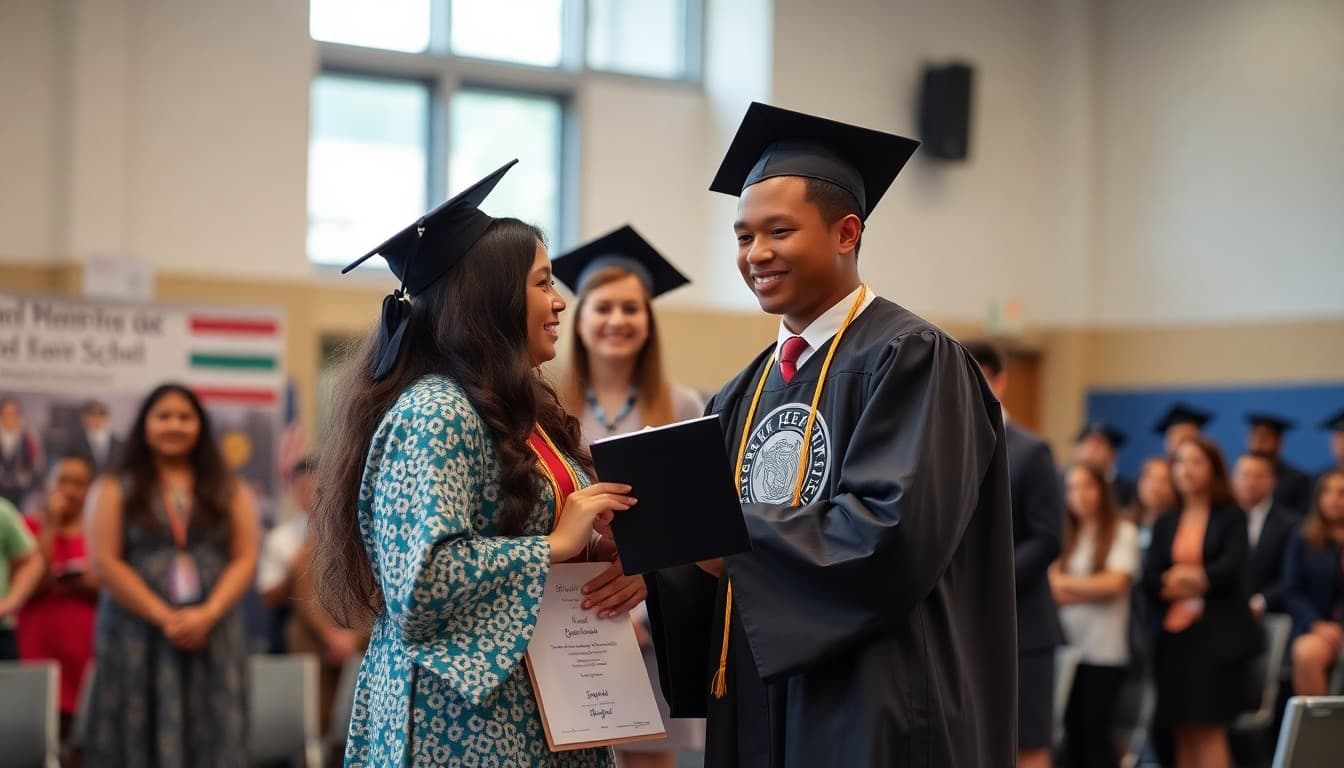
Seal of Biliteracy Newsletter: Celebrating Bilingual Achievement

The Seal of Biliteracy is one of the most concrete and valuable things a bilingual student can earn in high school. It appears on their official transcript, signals genuine language proficiency to colleges and employers, and in many states now generates scholarship eligibility and admissions recognition. Despite all of this, many students graduate eligible but without the Seal simply because nobody told them about it in time. A Seal of Biliteracy newsletter program, running consistently from ninth through twelfth grade, is how you change that outcome at scale.
What the Seal Actually Signals to the World
Language courses on a transcript say a student studied a language. The Seal of Biliteracy says they can actually use it. More than 1,400 colleges and universities in the US have formal policies recognizing the Seal, ranging from admissions preference to college credit to scholarship eligibility. The University of California system, California State University, and dozens of state university systems have explicit Seal recognition policies. When a student walks across the graduation stage with the Seal on their diploma, they have a credential that a hiring manager, admissions officer, or scholarship committee can evaluate objectively. That is different from a grade in Spanish III.
The Requirements, Simplified
Most states require three things. First, students must demonstrate English proficiency, typically through the state's standardized assessment or graduation requirement. Second, they must demonstrate proficiency in a second language at a threshold defined by the state, typically equivalent to an Intermediate High or Advanced Low on the ACTFL scale. Third, they must apply through the school's Seal coordinator, usually the world languages department chair or counseling office. The specific assessments accepted vary, but in most states AP language exam scores of 3 or higher, STAMP4S scores in the appropriate range, or IB language B certification all qualify.
The Heritage Speaker Pathway Most Families Miss
Many heritage speaker students are already at or above the proficiency threshold needed for the Seal but have never taken a formal language course. Most state Seal programs have a heritage speaker pathway that allows these students to demonstrate proficiency through an approved oral or written assessment without formal coursework. If you have students in your bilingual program who speak Arabic, Mandarin, Tagalog, Hindi, or any other language at home, they may qualify for the Seal through this pathway without a single language credit. This is one of the most underutilized opportunities in bilingual education, and your newsletter is exactly where to explain it.
A Sample Freshman Introduction Block
Here is an introduction block for a freshman-year Seal of Biliteracy newsletter:
You Have Four Years. Start Now.
The Seal of Biliteracy is a graduation credential that appears on your official transcript and diploma. It tells colleges and employers that you are genuinely proficient in English and at least one other language. More than 1,400 US colleges recognize it. Some award scholarship money for it. To earn it, you need to stay in your language pathway and pass a proficiency assessment in your senior year. Here is your four-year plan: take language courses in both 9th and 10th grade, maintain or develop your heritage language at home, register for the Seal assessment in your junior year to see where you stand, and complete the official application by March of senior year.
Celebrating This Year's Seal Earners
Your end-of-year newsletter should name every student who earned the Seal. List their name, the language or languages they achieved proficiency in, and any particular pathway they followed (heritage speaker, AP exam, dual enrollment, etc.). Include a brief quote from two or three students about what earning the Seal means to them. This serves several purposes: it honors the students who put in the work, it makes the Seal visible and aspirational for younger students reading the newsletter, and it demonstrates to your community that bilingual education produces measurable, documented outcomes.
Connecting the Seal to Scholarship Opportunities
Several state scholarship programs explicitly reward Seal earners. Some college financial aid offices grant merit aid based on Seal completion. The California College Promise Grant, the Oregon Promise, and similar state programs have Seal-adjacent eligibility considerations. Research what is available in your state and include it in the newsletter. When families see that the Seal translates to actual dollars on the financial aid award letter, they treat it as the priority it deserves to be rather than an optional achievement.
Supporting Underrepresented Languages
The Seal is most commonly associated with Spanish because Spanish is the most widely taught language in US schools. But the Seal is language-agnostic. A student who demonstrates proficiency in Somali, Haitian Creole, Vietnamese, or Hmong qualifies just as surely as a student who took four years of high school Spanish. Your newsletter should make this explicit. Heritage speaker families from less commonly taught language communities often assume the Seal is not for their child. A single paragraph clarifying that any language qualifies can increase your Seal applications from these communities significantly.
Get one newsletter idea every week.
Free. For teachers. No spam.
Frequently asked questions
What is the Seal of Biliteracy and which states offer it?
The Seal of Biliteracy is a credential awarded to high school graduates who have demonstrated proficiency in English and at least one other language. As of 2024, more than 40 states plus the District of Columbia offer the Seal, and dozens of colleges recognize it in admissions. The credential appears on the student's official transcript and diploma and signals to colleges and employers that the student has meaningful bilingual skills, not just language study on a course list.
What are the typical requirements to earn the Seal of Biliteracy?
Requirements vary by state, but most require a student to demonstrate English proficiency through state standardized testing and meet a proficiency threshold in the second language through an approved assessment. Common accepted assessments include AP language exams, IB language courses, STAMP4S, AAPPL, and ACTFL oral proficiency interviews. Some states also accept native speaker demonstration portfolios or heritage speaker rubrics. Check your specific state's requirements because the details vary significantly.
When should a school start communicating about the Seal of Biliteracy?
Freshman year is not too early to introduce the credential. A Seal of Biliteracy newsletter sent in ninth grade can guide students to take the right language courses and maintain their heritage language so they are eligible by senior year. If students only learn about the Seal in 11th or 12th grade, they may have already dropped a language course or missed an assessment window. Early and consistent communication produces far more Seal earners than last-minute announcements.
How can heritage language speakers earn the Seal without formal coursework?
Many states allow heritage speakers to demonstrate proficiency through approved assessments without having taken the language as a formal course. The AAPPL assessment and ACTFL oral proficiency interview are accepted by most states as portfolio-based pathways. Heritage speaker students who speak and read their home language at an advanced level may be eligible without ever having been in a formal language class. Your newsletter should explain this pathway specifically because many heritage speaker families do not know it exists.
Can Daystage help schools communicate the Seal of Biliteracy program to families over four years?
Yes. Daystage is well-suited for a multi-year communication sequence. You can create a Seal of Biliteracy newsletter series that goes to incoming freshmen each fall, a mid-year reminder to sophomores and juniors about assessment preparation, and a celebration newsletter for seniors who earned the Seal. Set the sequence up once and it runs annually. Consistent communication over four years produces dramatically higher Seal completion rates than a single senior-year announcement.

Adi Ackerman
Author
Adi Ackerman is a former classroom teacher and curriculum writer with 8 years in K-8 schools. She writes about school communication, parent engagement, and what actually works in real classrooms.
More for Bilingual
Ready to send your first newsletter?
3 newsletters free. No credit card. First one ready in under 5 minutes.
Get started free