
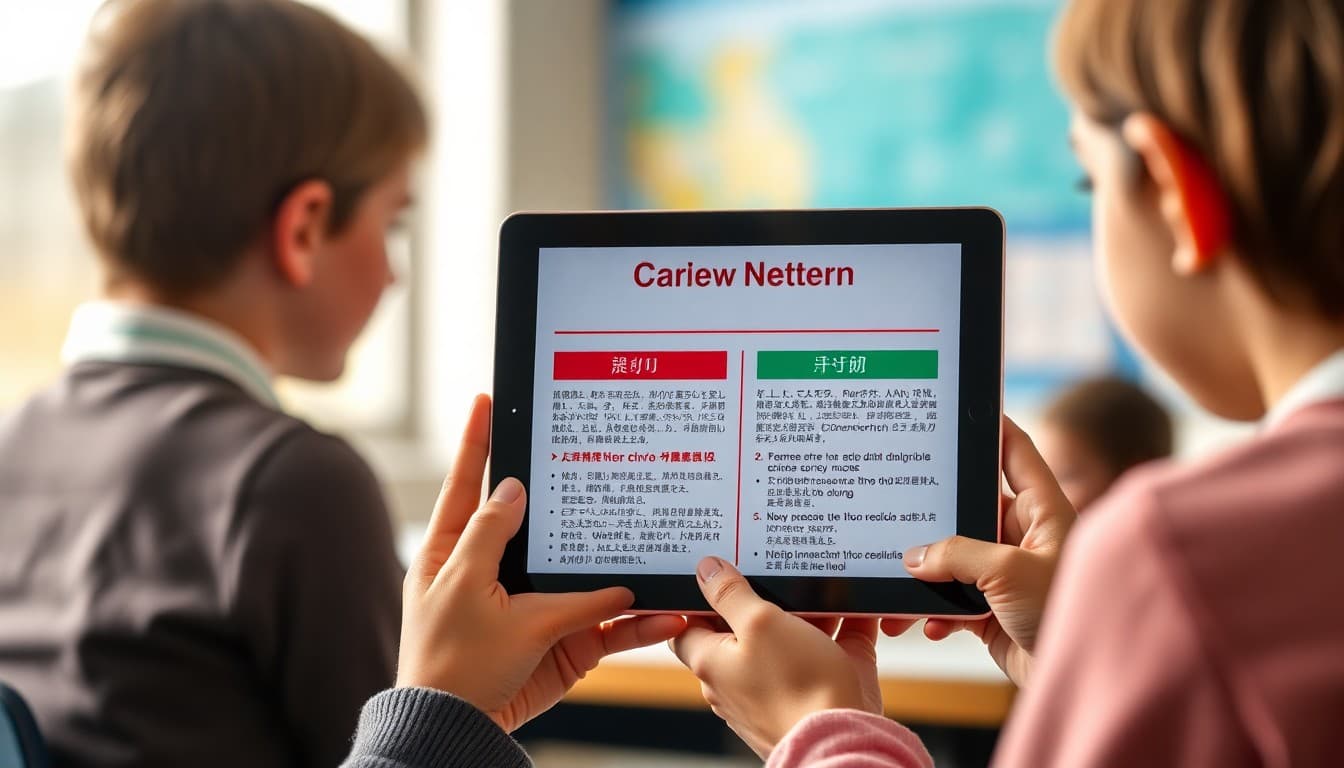
How to Create a Bilingual School Newsletter Edition
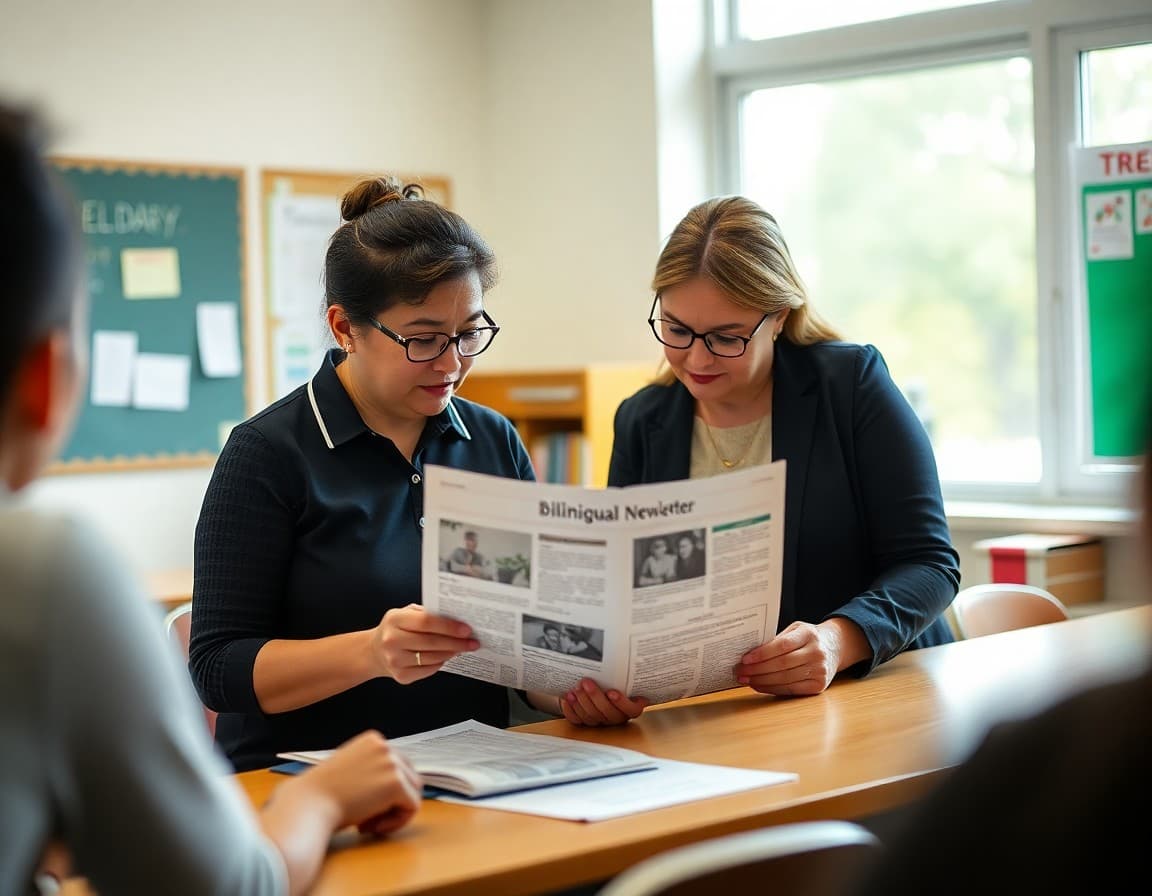
A bilingual school newsletter edition is not simply a translation project. It is a community decision: which families are fully included in the school's communication, and which are receiving the information in a language they can only partially access. Schools that create genuine bilingual editions tell their multilingual communities that they are full members of the school, not guests who are accommodated when it is convenient. This guide covers how to build a bilingual edition that is both practical and genuinely useful.
Choose your layout approach intentionally
There is no universally correct layout for a bilingual newsletter, but there are tradeoffs worth considering. Side-by-side columns work well in digital formats where screen real estate is flexible and allow readers to easily find their language. Full separate sections, the complete newsletter in English followed by the complete newsletter in Spanish, are easier to produce but require readers to navigate to their section. Separate editions per language allow for targeted distribution but double the production effort. Choose the approach that matches your capacity and your community's needs.
Build translation into the production schedule
The most common reason bilingual newsletter editions fail is that translation is treated as an afterthought. When the English edition is finished and someone realizes it should also be translated, the deadline is already past. A production workflow that includes a translation step as a scheduled part of the process, with a clear deadline and a clear responsible party, produces consistent results. Plan for translation from the beginning, not at the end.
Prioritize high-stakes content for translation
If full translation is not possible in a given edition, translate in priority order. Safety information, enrollment deadlines, event dates and locations, and program changes are the items families most need to understand fully. Community stories and cultural content are valuable but lower stakes. A partial bilingual edition that fully translates the most important items is more useful than one that evenly distributes translation across all content and leaves critical items partially translated.

Use machine translation as a draft, not a final product
Machine translation tools have improved significantly and produce useful drafts for informational content. For routine newsletter content, machine translation reviewed by a bilingual staff member or community volunteer is a practical approach when professional translation is not available. Machine translation is not appropriate as a final product for sensitive communications, legal notices, or medical information. For most newsletter content, reviewed machine translation is far better than no translation.
Maintain consistent visual design across languages
A bilingual newsletter in which the English section is polished and the translated section looks like a plain text afterthought communicates exactly the hierarchy the school says it does not intend. Both language sections should receive the same visual attention: consistent fonts, consistent use of images, and consistent formatting. Visual equity is part of language equity.
Promote the bilingual edition explicitly
Families who have learned to expect English-only communications may not initially notice or look for a bilingual section. When launching a bilingual edition for the first time, or returning to bilingual format after a gap, announce it explicitly in a way that reaches multilingual families. A direct note at the top of the newsletter, in both languages, that says this newsletter includes a full section in Spanish directs readers to the content that serves them.
Get one newsletter idea every week.
Free. For teachers. No spam.
Frequently asked questions
What are the main approaches to creating a bilingual school newsletter edition?
Side-by-side columns with each language in a parallel column, separate sections with the full newsletter in English followed by the full newsletter in the second language, alternating articles in each language, or two distinct editions of the same newsletter, one per language. Each approach has tradeoffs. Side-by-side is visually clear but space-intensive. Separate editions allow more targeted distribution but require more production effort.
Which newsletter content should be prioritized for translation in a bilingual edition?
Lead with the highest-stakes content: safety information, deadline reminders, event invitations, enrollment information, and program changes. These are the items families most need to understand fully. General cultural content, awards, and community stories can be translated as capacity allows. If full translation is not possible, translate the most critical items first.
How do schools manage the translation workflow for bilingual newsletters?
By building translation into the production schedule rather than treating it as an add-on. A workflow that includes a translation step with a deadline, assigns responsibility to a bilingual staff member or community volunteer, uses machine translation as a draft for review, and has a review step before publication produces consistent results. Translation that is planned in advance is more reliable than translation that is rushed after the English edition is finalized.
What are the benefits of a bilingual newsletter edition beyond legal compliance?
Higher readership among non-English-speaking families, increased family participation in school events, stronger trust between the school and multilingual communities, better outcomes for ELL students when their families are informed and engaged, and a visible signal that the school values all of its language communities equally.
How does Daystage support bilingual and multilingual newsletter editions?
Daystage makes it easy to build newsletters that include content in multiple languages and to send targeted newsletters to specific family groups. Schools that use Daystage can send Spanish-language editions specifically to Spanish-speaking families, or bilingual editions to all families, with the same design quality as their English-only communications. Consistent bilingual communication is what builds trust with multilingual communities.

Adi Ackerman
Author
Adi Ackerman is a former classroom teacher and curriculum writer with 8 years in K-8 schools. She writes about school communication, parent engagement, and what actually works in real classrooms.
More for Bilingual
Ready to send your first newsletter?
3 newsletters free. No credit card. First one ready in under 5 minutes.
Get started free