
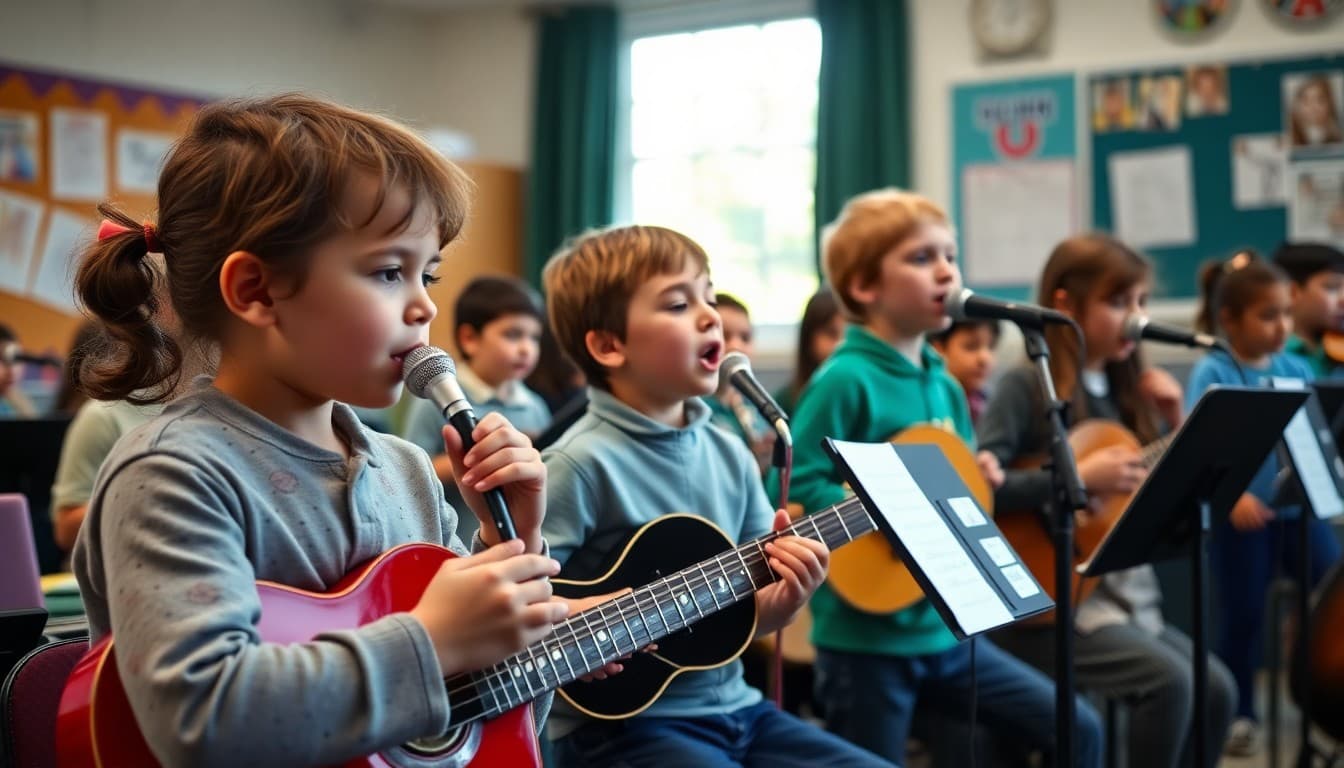
School Newsletter for National Music in Our Schools Month: Ideas and Template
March is National Music in Our Schools Month, and for music teachers it is also the busiest stretch of the year -- spring concerts are six to eight weeks out, students are in final performance preparation, and the pressure of delivering a polished public performance builds week by week. A newsletter in March serves both as performance logistics communication and as advocacy for a program that is perpetually at risk in budget conversations.
What Music Education Does for Student Brains
The case for music education is stronger than most families realize. Learning to read music requires simultaneous processing of rhythm, pitch, notation, and finger position -- a level of multi-track cognitive activity that strengthens neural pathways in ways that benefit reading and mathematics. Students who study music for four or more years score on average 100 points higher on the SAT verbal and math sections than non-music students, according to College Board data. Reading skills, working memory, and auditory processing are all measurably stronger in students with consistent music training. Share one of these facts in the newsletter -- not as a defensive justification for the program, but as a genuine celebration of what your students are building.
What Students Are Learning Right Now
Give families a specific picture of the current music curriculum. For band or orchestra: "This month we are finalizing our spring concert repertoire. The band is preparing three pieces: a Sousa march, a jazz arrangement of 'In the Mood,' and an original composition by one of our eighth-grade students." For chorus: "Our choir has been working on two-part harmony for the past month. We will perform four pieces at the spring concert, including one in Spanish." For general music: "This month we are exploring rhythm and composition -- students are writing their own 8-bar melodies using a digital composition tool called GarageBand." Specific details transform a generic music update into a genuine program showcase.
Spring Concert Preview and Logistics
The spring concert is the flagship event of the music year. Use the March newsletter to give families every detail they need. Date, time, location. What students should wear. Call time for performers. Whether tickets are needed and how to get them. Run time so families know when to expect the event to end. Whether recordings are allowed. Where to park. A concert preview that answers every logistical question before families have to ask is a contribution to the event's success -- parents who arrive informed and prepared are in a better emotional state to enjoy the performance.
Template Section: Spring Concert Announcement
Here is a spring concert announcement that covers all the essential information:
"Spring Concert -- Thursday, May 6, 7:00 PM, School Gymnasium: Our band, orchestra, and choir will perform a 75-minute concert. Performers should arrive at 6:30 PM in concert black (black pants, black top, black shoes). No tickets needed -- seating is first come, first served. Doors open at 6:45 PM. Recording for personal use is welcome. Light refreshments will be available starting at 6:45 PM. We will be performing three new pieces learned this semester, including a student composition by [student name, with permission]. We cannot wait to share this concert with you."
Family Music Activity for March
Give families one specific music activity for the month. Option for families with instrument-playing students: listen to a professional recording of one piece the student is preparing and ask them to point out specific moments they find interesting. Option for families with general music students: choose a piece of music together from a playlist of different world music traditions -- reggae, flamenco, Indian classical, West African drumming -- and discuss what instruments they hear and what mood the music creates. Option for all families: create a family playlist of meaningful songs -- each person contributes two or three -- and discuss why each person chose theirs. Music as a conversation starter requires no musical ability at all.
Music Education Advocacy: What Parents Can Do
If your school's music program is facing budget pressure -- reduced class time, cut positions, or threatened elimination -- the March newsletter is an appropriate place to alert families and suggest action. "Our music program serves 340 students across all grades. If you believe this program is valuable for your student, attending the spring concert is one visible way to show support. Letters to the school board from parents are also powerful." Do not be alarmist -- describe the situation accurately and give families concrete, actionable steps. Mobilized parent support has saved music programs in hundreds of districts across the country.
Get one newsletter idea every week.
Free. For teachers. No spam.
Frequently asked questions
When is National Music in Our Schools Month?
March is National Music in Our Schools Month (MIOSM), designated by the National Association for Music Education (NAfME). It is the ideal time for music newsletters because spring concerts and performances are typically six to eight weeks away, giving families advance notice to save the date while building anticipation for the event.
What should a National Music in Our Schools Month newsletter include?
Cover what students are learning in music class, preview the spring concert (date, time, repertoire if appropriate to share), highlight any instruments students are learning or pieces they are preparing, include one fact about the cognitive benefits of music education, and suggest one family music activity for March. The newsletter should feel like a backstage pass to the school music program.
What are the academic benefits of music education worth sharing with families?
Research published in multiple peer-reviewed journals finds that students who participate in music education outperform non-participants in reading and mathematics, have better working memory, score higher on SAT verbal and math sections, and show higher graduation rates. The mechanism appears to be that music training strengthens neural pathways for auditory processing and pattern recognition that benefit academic learning generally.
How do I advocate for music education in the newsletter without sounding defensive?
Lead with what students are doing and what families can observe at the spring concert. Then share one specific research finding as context. Position music education as something the school is proud of, not something it needs to defend. Defensive advocacy usually indicates the program is already under threat -- confident advocacy communicates strength.
Can Daystage help music teachers send their own newsletters with concert reminders and ticket information?
Yes. Music teachers use Daystage to send concert reminders, program updates, and spring performance logistics to families without routing everything through the homeroom teacher. A direct newsletter from the music teacher to music families is more relevant and more likely to be saved than a buried concert notice in the homeroom newsletter.

Adi Ackerman
Author
Adi Ackerman is a former classroom teacher and curriculum writer with 8 years in K-8 schools. She writes about school communication, parent engagement, and what actually works in real classrooms.
More for Arts & Music
Art Portfolio Newsletter: Communicating Portfolio Development to Families
Arts & Music · 6 min read
Art Teacher Newsletter Guide: Communicating with Families About Visual Arts
Arts & Music · 6 min read
Music Teacher Newsletter Guide: Keeping Families Connected to the Music Program
Subject Teachers · 7 min read
Ready to send your first newsletter?
3 newsletters free. No credit card. First one ready in under 5 minutes.
Get started free