
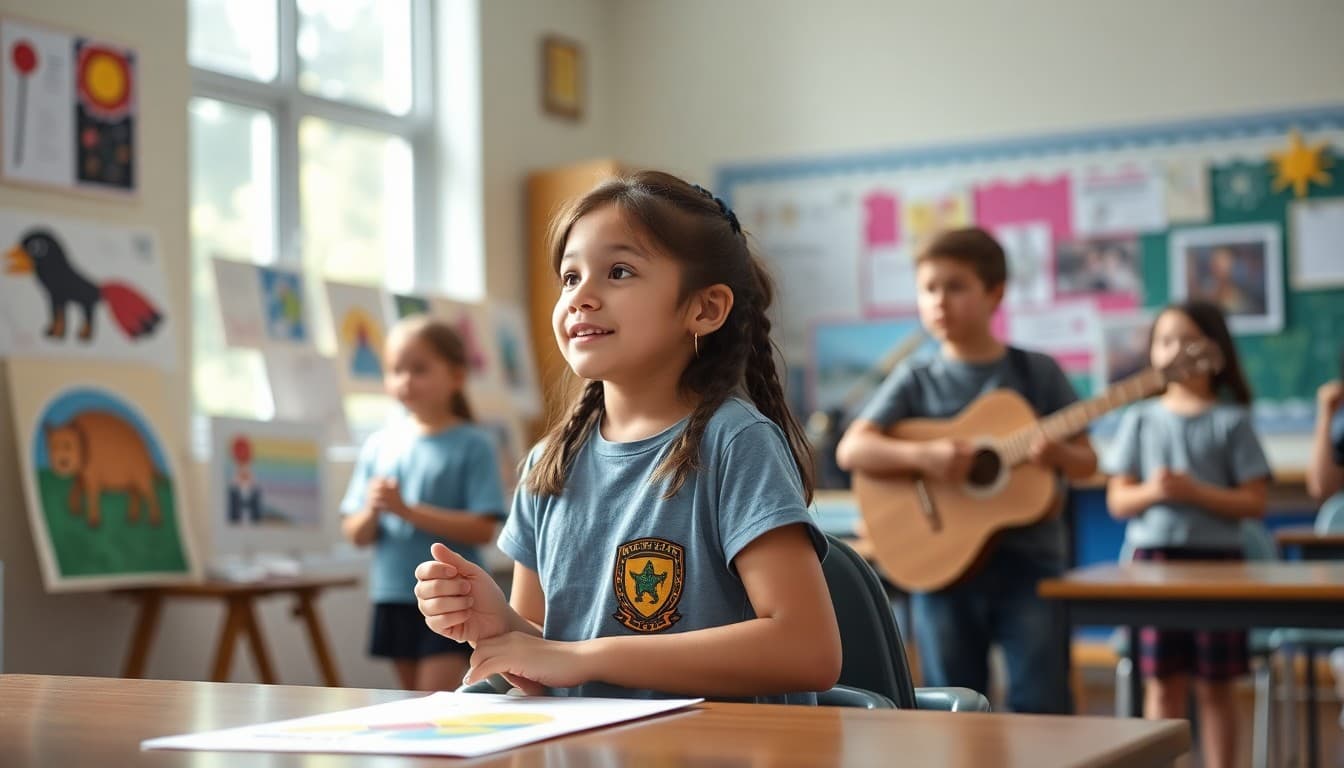
School Newsletter for National Arts Month: Ideas and Template
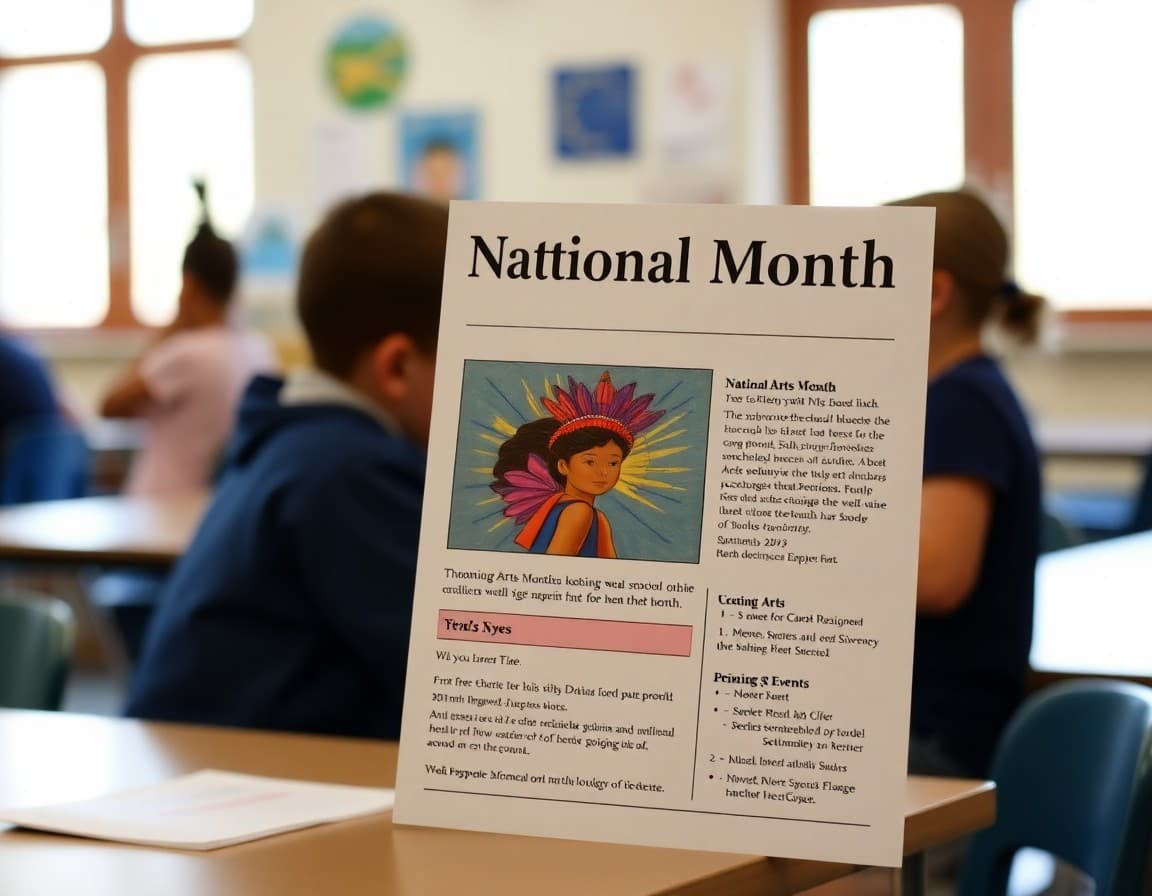
April is National Arts Month, and in most schools it is also the busiest arts month of the year -- spring concerts, drama productions, art shows, and gallery walks all cluster in April and May. A National Arts Month newsletter that previews these events, celebrates student creative work, and makes the case for arts education serves both practical and advocacy functions at the same time.
Making the Case for Arts Education
Arts programs are frequently the first target when school budgets face cuts. A newsletter that articulates the educational value of arts education is advocacy that teachers and administrators can point to when funding conversations arise. Specific research is more persuasive than general claims. Students who participate in arts education have graduation rates approximately 10 percentage points higher than non-participants in some studies. Arts education is associated with stronger academic motivation, better attendance, and improved performance on literacy assessments. The skills taught in arts -- sustained attention, self-critique, revision, and creative problem-solving -- transfer directly to academic work in every subject.
What Students Are Creating This Month
Tell families specifically what their students are working on in the arts this month. For visual art: "This month our fourth graders are creating self-portrait paintings in the style of Frida Kahlo. We studied her life and technique for two weeks before students began their own compositions. The finished paintings will be displayed in the main hallway during the May Art Walk." For music: "Our fifth-grade choir has been preparing Handel's Hallelujah Chorus for the spring concert on May 14. Students are working on two-part harmony for the first time." Specific descriptions give families something to look for and ask their student about.
Upcoming Arts Events Calendar
A complete spring arts events calendar belongs in the April newsletter. Include: spring concert (date, time, what to wear, when students should arrive), art show or gallery walk (date, time, whether refreshments are served), drama production (dates, ticket information if applicable, run time), any student performances at community events or festivals. Families who receive this calendar in early April can put all the events in their schedules before they fill up with competing commitments.
Template Section: Spring Arts Events
Here is a spring arts calendar section:
"Spring Arts at Our School -- April and May: Spring Art Walk, May 1, 5:00-7:00 PM: All grades display original artwork in the main hallway and gymnasium. Light refreshments served. Students lead their families through their work. Spring Music Concert, May 14, 6:30 PM: Choir and band perform in the gymnasium. Call time for performers: 6:00 PM. Drama Production, May 21-22, 7:00 PM: Fifth-grade cast presents 'The Wizard of Oz.' Tickets available at the main office starting May 1: $5 adults, $3 students."
Featuring Student Artwork
Include a photo of student artwork in the newsletter with student permission. Families respond to student artwork at a visceral level that descriptions alone cannot replicate. A photo of a student's self-portrait, a ceramics piece, or a photograph from the drama rehearsal gives the newsletter visual life and makes the arts program feel real rather than abstract. Ask the art teacher and the student's family for permission before including any identifiable student work.
Family Arts Activities for April
Give families three options at different effort levels. Low effort: find a piece of music your student is learning to perform and listen to a professional recording together -- ask them what they notice about the performance. Medium effort: visit a local museum or gallery and spend 30 minutes looking at two or three pieces in depth, asking "what do you see?" before reading the label. Higher effort: take a free online drawing or watercolor class together on a weekend afternoon using a YouTube tutorial. Framing these as explorations rather than assignments makes families more likely to try them.
Arts Education and College and Career Readiness
For high school families, the newsletter can explicitly connect arts education to college applications and career pathways. Arts activities are among the most valued extracurriculars in college admissions because they demonstrate sustained commitment, creative capacity, and collaboration. Architecture, graphic design, film, animation, game design, urban planning, and industrial design are all fields that connect directly to school arts programs. A student who takes four years of visual art in high school is building a portfolio that can accompany college applications in ways that make their application distinctive.
Get one newsletter idea every week.
Free. For teachers. No spam.
Frequently asked questions
When is National Arts Month?
April is National Arts Month, designated by Americans for the Arts. It coincides with National Poetry Month and Shakespeare's birthday on April 23, making it a rich month for arts-integrated curriculum. An arts newsletter in early April can preview spring arts events including concerts, art shows, drama productions, and gallery walks that typically cluster in April and May.
What should a National Arts Month newsletter include?
Cover the current visual art, music, drama, or dance units students are engaged in. Preview any upcoming arts performances or exhibitions. Share a piece of student artwork with permission. Note any arts career connections or guest artist visits. Include one family arts activity -- a museum visit, a home drawing prompt, or a music listening guide. The newsletter should feel like an invitation into the creative life of the school.
How do I make arts education feel academically legitimate to families who prioritize STEM?
Reference specific research: participation in arts education is associated with higher graduation rates, stronger academic motivation, and improved performance on standardized assessments. Arts education teaches skills -- sustained attention, revision and self-critique, collaboration, and creative problem-solving -- that transfer directly to academic and professional performance. A newsletter that makes these connections explicit changes how families perceive arts programming.
What are good family arts activities to recommend in the newsletter?
Free or low-cost options: visit a local museum or gallery (many offer free admission on certain days), watch a documentary about a famous artist, try a simple drawing tutorial on YouTube together, attend a school or community concert, or read a biography of a musician or artist. For families with students in the arts program, attend their next performance or critique and ask one specific question about the work rather than generic praise.
Can Daystage help art and music teachers send their own newsletters separate from homeroom teachers?
Yes. Art, music, and drama teachers use Daystage to send subject-specific newsletters that keep families informed about performance dates, project timelines, and arts programming. A dedicated arts newsletter from the arts faculty member is more effective than buried arts updates in the homeroom newsletter.

Adi Ackerman
Author
Adi Ackerman is a former classroom teacher and curriculum writer with 8 years in K-8 schools. She writes about school communication, parent engagement, and what actually works in real classrooms.
More for Arts & Music
Art Portfolio Newsletter: Communicating Portfolio Development to Families
Arts & Music · 6 min read
Art Teacher Newsletter Guide: Communicating with Families About Visual Arts
Arts & Music · 6 min read
Music Teacher Newsletter Guide: Keeping Families Connected to the Music Program
Subject Teachers · 7 min read
Ready to send your first newsletter?
3 newsletters free. No credit card. First one ready in under 5 minutes.
Get started free