
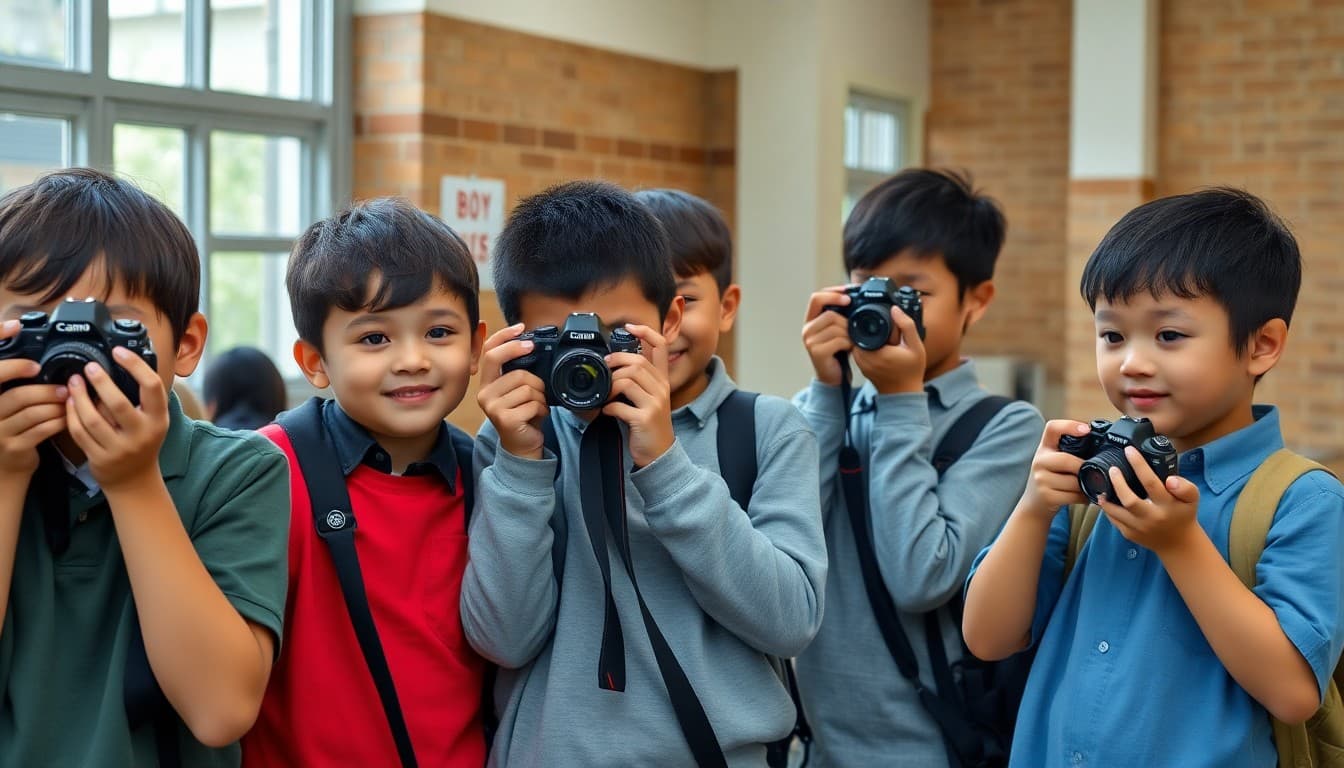
Photography Class Newsletter: Projects and Exhibition Updates
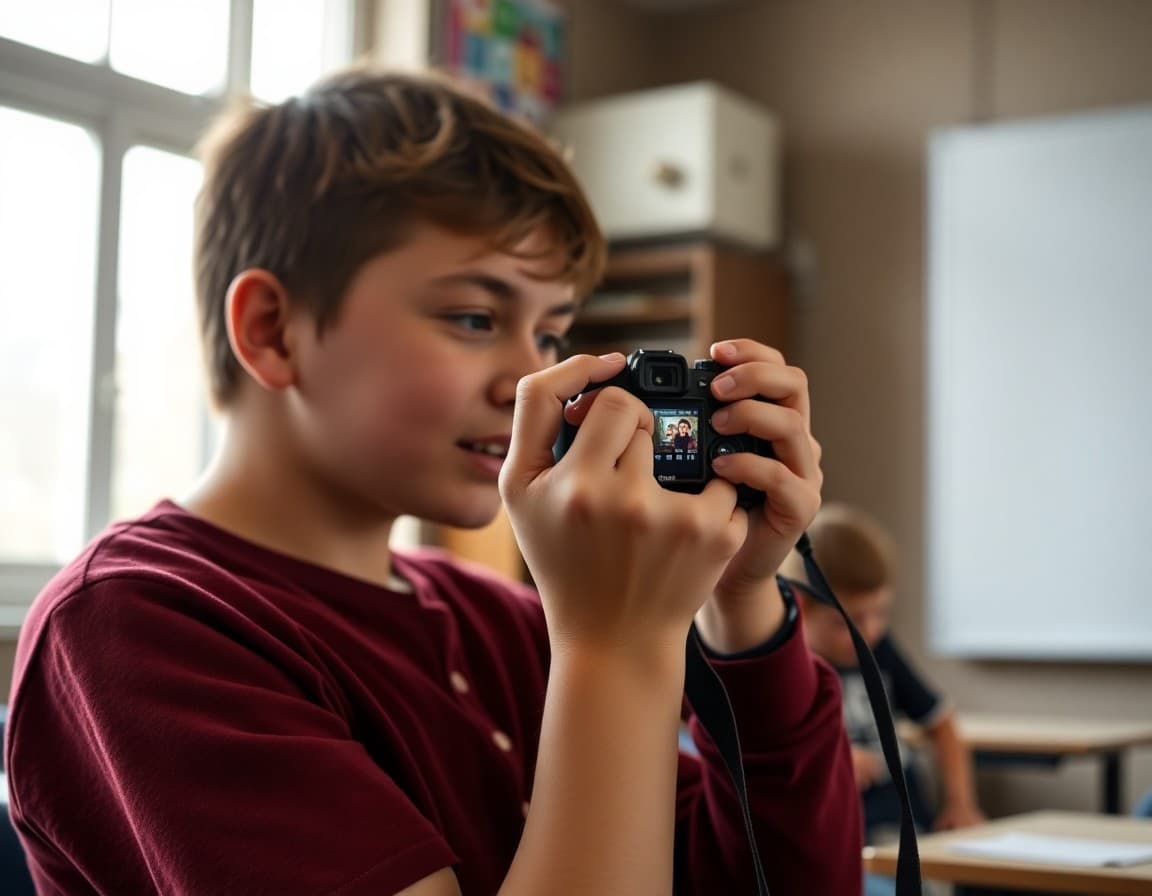
Photography newsletters can show rather than tell in a way that most school communication cannot. Your newsletter can include actual student photos alongside the explanation of what the student was practicing. Use that advantage in every issue.
Introduce the exposure triangle early in the year
The relationship between aperture, shutter speed, and ISO is the technical foundation of photography. Families who understand it can have much more specific conversations with their child about what is happening in class. Write it once, clearly, and return to it when specific assignments connect to each control.
"Before students can use our cameras in manual mode, they learn the exposure triangle: aperture controls depth of field and light volume, shutter speed controls motion and light duration, ISO controls sensor sensitivity and noise. All three affect how bright the image is, but each one changes something else too. Understanding all three together is what separates intentional photography from point-and-shoot luck."
Describe the current assignment with what students are specifically practicing
Photography assignments are often theme-based (portraits, architecture, light and shadow) but the real learning target is a specific technical or compositional skill. Name both the theme and the target skill in the newsletter so families understand what their child is working toward.
"This week's assignment is portrait photography, but the specific skill being practiced is selective focus using aperture control. Students are learning to set a wide aperture to blur the background behind their subject, separating the person from the environment. The challenge is maintaining the focus precisely on the subject's eyes while throwing everything else out of focus. Students who get this right have an image that looks professional. Students who get it wrong have a sharply focused ear next to a blurry eye."
Share two or three student images with brief context
A newsletter that includes actual student photographs, with permission of course, is more effective than any amount of description. Include two or three images from the week's work with a sentence explaining what the student was working on in each image.
"Here are three images from this week's low-light assignment. The first shows successful use of a slower shutter speed to capture motion blur in a moving subject. The second demonstrates high-ISO noise reduction in a dimly lit interior. The third is a long-exposure shot where the student used a tripod to keep the background sharp while capturing motion trails from passing cars."
Prepare families for the portfolio review or exhibition
Photography exhibitions and portfolio reviews give students the experience of presenting their visual work publicly, which is an important professional skill. Families who understand the format and criteria of the review or exhibition can help their child prepare and choose which images to submit.
"The midterm portfolio review is November 3rd. Each student submits ten images in a digital portfolio. The review criteria are: technical accuracy (exposure, focus, composition), evidence of intentional decision-making (the choices were deliberate, not accidental), range across different subjects and lighting conditions, and growth from the first assignment to the most recent. Students will present their portfolio to the class and explain two images in detail."
Sample newsletter template excerpt
Photography class update for October:
We finished the motion study unit this week. Students photographed the same moving subject in three different ways: frozen at a fast shutter speed (1/1000 second or faster), motion-blurred at a slow shutter speed (1/30 second or slower), and panned at a medium speed to freeze the subject against a blurred background.
The panning technique was the hardest. It requires following the subject with the camera while shooting, keeping the camera moving at exactly the same speed as the subject. Students needed an average of twelve attempts to get one successful pan shot. Their frustration was real and their satisfaction when it worked was also real.
Connect photography to visual media literacy
Students who understand how photographs are made look at photographs differently: they notice cropping, lighting, and composition choices in news images, advertising, and social media. That visual literacy is one of the most practically useful skills photography class develops. Name this connection in your newsletter because families value media literacy even if they are uncertain about fine art photography.
Give families something to look for or try at home
Families who try the same assignment with their phone camera understand the challenge their child is facing at a visceral level. A newsletter that ends with "try taking a portrait with your phone and see if you can blur the background" invites families into the learning experience rather than observing it from outside.
Get one newsletter idea every week.
Free. For teachers. No spam.
Frequently asked questions
What do students learn in a school photography class beyond how to take pictures?
School photography teaches visual composition: how to arrange elements in a frame to create a specific effect. It teaches the physics of light through exposure controls: shutter speed, aperture, and ISO and how each one affects the image differently. Students learn post-processing through software like Adobe Lightroom or Photoshop, which builds both technical skills and visual judgment. Photography also teaches critical looking, the ability to analyze an image for what is working and what is not. These skills transfer to film, design, advertising, and any field that involves visual communication.
How do you explain aperture, shutter speed, and ISO to families in simple terms?
Aperture is the size of the opening that lets light into the camera, like the pupil of an eye. Shutter speed is how long the camera's eye stays open. ISO is how sensitive the camera is to the light that comes in. All three controls affect how bright or dark the image is, but each one also has a secondary effect: aperture controls how much of the scene is in sharp focus, shutter speed controls whether motion is frozen or blurred, and ISO controls how much digital noise appears in the image. Understanding all three together is called the exposure triangle.
What photography assignments work well at the K-12 level?
Effective photography assignments at the K-12 level include rule of thirds composition practice (photographing the same subject in centered versus off-centered compositions), light study assignments (photographing the same object in direct sunlight, shade, backlight, and indoor light), motion study (frozen versus motion blur using shutter speed control), portraiture with emphasis on directing subjects, documentary projects following a theme or story over a period of time, and photo essay assignments that require a sequence of images to tell a story. The best assignments have constraints that force deliberate decision-making.
How do photography exhibitions work in a school setting?
School photography exhibitions typically display printed photographs mounted on mat board or framed, arranged by theme or student. Some exhibitions include the student's written artist statement alongside each image. Digital exhibitions displayed on screens or published on a school website are increasingly common. Physical exhibitions require lead time for printing and mounting. Families should receive at least two weeks notice of the exhibition opening date so they can plan to attend.
How does Daystage help photography teachers communicate with families?
Daystage lets photography teachers share student images directly in the newsletter, turning each update into a mini-gallery of the class's current work. When families receive a Daystage newsletter showing their child's best composition from the week alongside a brief explanation of the technique being practiced, the abstract concept of 'photography class' becomes a visible, specific set of skills that families can track and celebrate.

Adi Ackerman
Author
Adi Ackerman is a former classroom teacher and curriculum writer with 8 years in K-8 schools. She writes about school communication, parent engagement, and what actually works in real classrooms.
More for Arts & Music
Ready to send your first newsletter?
3 newsletters free. No credit card. First one ready in under 5 minutes.
Get started free