
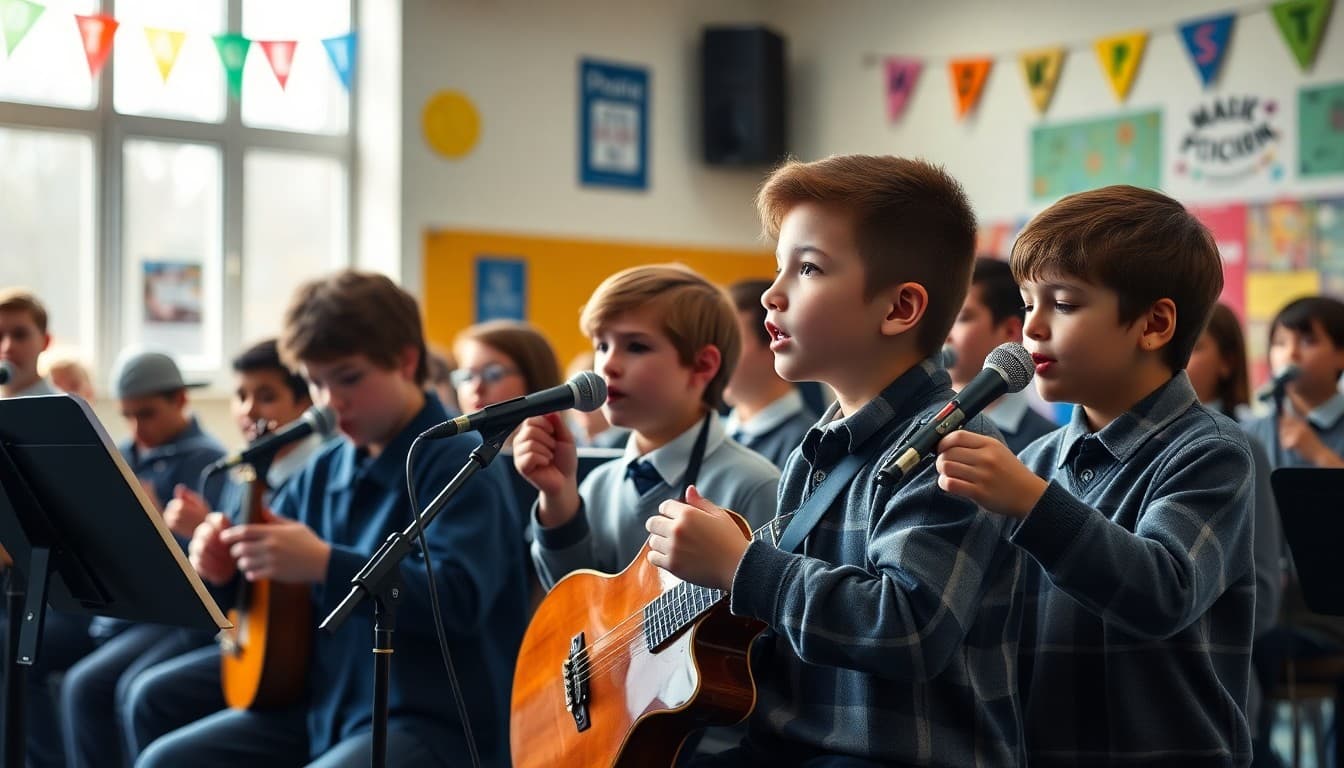
Music Appreciation Week Newsletter: Celebrating Sound and Rhythm

Music Appreciation Week is one of the few moments in the school year when the broader culture is already paying attention to music education. A well-written newsletter during this week does not just announce events. It tells the story of your program, names what students have built, and gives families a reason to care about what happens in your classroom every other week of the year.
Open with what your students have actually built this year
Resist the temptation to open with a general statement about the importance of music. Families already believe music matters. What they want to read is what their child has specifically been doing and what that child can now do that they could not do in September.
"Since August, the fifth-grade band has learned to read rhythms in compound meter, matched pitch across the full instrument range, and performed two pieces from memory. That is not a small thing. It represents real effort from real students, and Music Appreciation Week is a good moment to name it."
Describe the special activities you have planned
Your newsletter should give families a clear schedule of anything happening during the week: open rehearsals, listening sessions, student showcases, or classroom concerts. Include times, locations, and whether families are welcome to attend.
The more specific you are about what families will experience, the more likely they are to show up. "We are doing something special" is not a reason to rearrange a schedule. "Your child will perform three pieces for parents in the music room at 2:30 PM on Thursday" is.
Connect the classroom work to larger musical culture
Music Appreciation Week is an opportunity to help families see the connection between what happens in your room and the wider world of music. Share a piece of music you have been studying, a composer whose background is relevant to your students, or a musical tradition your ensemble has been exploring.
A short paragraph explaining why you chose a particular piece or style this year transforms the newsletter from a schedule into a window into your teaching philosophy.
Share a student voice
A single quote from a student, written in their own words, changes the tone of the entire newsletter. Ask two or three students what music class means to them this year and use the most honest, specific answer you get.
"Maya said: 'I used to think I wasn't a music person. Now I can play a song my grandma recognizes.' That quote belongs in your Music Appreciation Week newsletter. It says more about the value of your program than any statistic."
Sample newsletter template excerpt
Dear Music Families,
This week we are celebrating Music Appreciation Week with three special events. On Tuesday, I'm hosting an open rehearsal at 3:15 PM where you can hear what we have been working on since September. On Thursday, students will give a short classroom concert at 2:30 PM. On Friday, the whole school will participate in a music-themed listening assembly.
This year the ensemble has been focused on expressiveness, not just technical accuracy. You will hear the difference when they play.
Ask families for something specific
Music Appreciation Week is one of the best moments to recruit volunteers, gather instrument donations, or ask families to share their own musical backgrounds with the class. A specific, low-barrier ask gets results. "Would anyone be willing to bring in an instrument from home and talk about it for five minutes?" is an invitation that many families will respond to.
Close by naming what comes next
A strong closing gives families something to look forward to. Name the next major milestone: the winter concert, an upcoming competition, or the next big repertoire shift. Families who know what is coming stay engaged between newsletters.
Daystage makes it easy to send this kind of newsletter in a format families can save, share, and return to when they want to check the performance schedule.
Get one newsletter idea every week.
Free. For teachers. No spam.
Frequently asked questions
When is Music Appreciation Week and how should music teachers prepare for it?
Music Appreciation Week is recognized in the first full week of October each year, though many schools tie their celebrations to May, which is Music in Our Schools Month. Teachers who plan ahead can send a newsletter two weeks before the event to build family awareness, invite participation, and describe any special activities. A newsletter that arrives early enough for families to clear their calendars for a performance or open rehearsal will see significantly higher attendance than one sent the week of the event.
What content should a Music Appreciation Week newsletter include?
The most effective newsletters describe what the program has been working on since the start of the year, name specific skills or repertoire students have developed, and connect those skills to the broader value of music education. Include a schedule of any special activities, performance times, and how families can participate. A brief note about what families will hear or see gives them a frame for appreciating the work. Generic celebration language is much less effective than specific details about what your students have been doing.
How do you use Music Appreciation Week to build family support for the program?
Music Appreciation Week is one of the best moments to share data and stories about the music program. Families respond to specifics: how many students are enrolled, what ensembles exist, what students have accomplished this year, and what the program needs to continue thriving. A newsletter that shares this information during a week when music education is already in the cultural conversation makes a stronger case than one sent at a neutral moment in the year.
How do you write a Music Appreciation Week newsletter that does not feel generic?
Avoid phrases like 'music enriches our lives' without connecting them to specific students and specific work. Name the pieces your ensemble is rehearsing. Quote a student about what they have learned. Share a challenge the program faced and how students overcame it. Specificity is what separates a meaningful newsletter from a form letter. Families who read something that feels written for them, not copied from a template, will share it and respond to it.
How does Daystage help music teachers communicate during Music Appreciation Week?
Daystage lets music teachers build a Music Appreciation Week newsletter with photos from rehearsals, embedded performance schedule, and a direct message to families all in one place. Instead of sending multiple emails and hoping families see them all, a single polished Daystage newsletter can carry everything families need to know and celebrate the program in a format that looks professional and feels personal.

Adi Ackerman
Author
Adi Ackerman is a former classroom teacher and curriculum writer with 8 years in K-8 schools. She writes about school communication, parent engagement, and what actually works in real classrooms.
More for Arts & Music
Ready to send your first newsletter?
3 newsletters free. No credit card. First one ready in under 5 minutes.
Get started free