
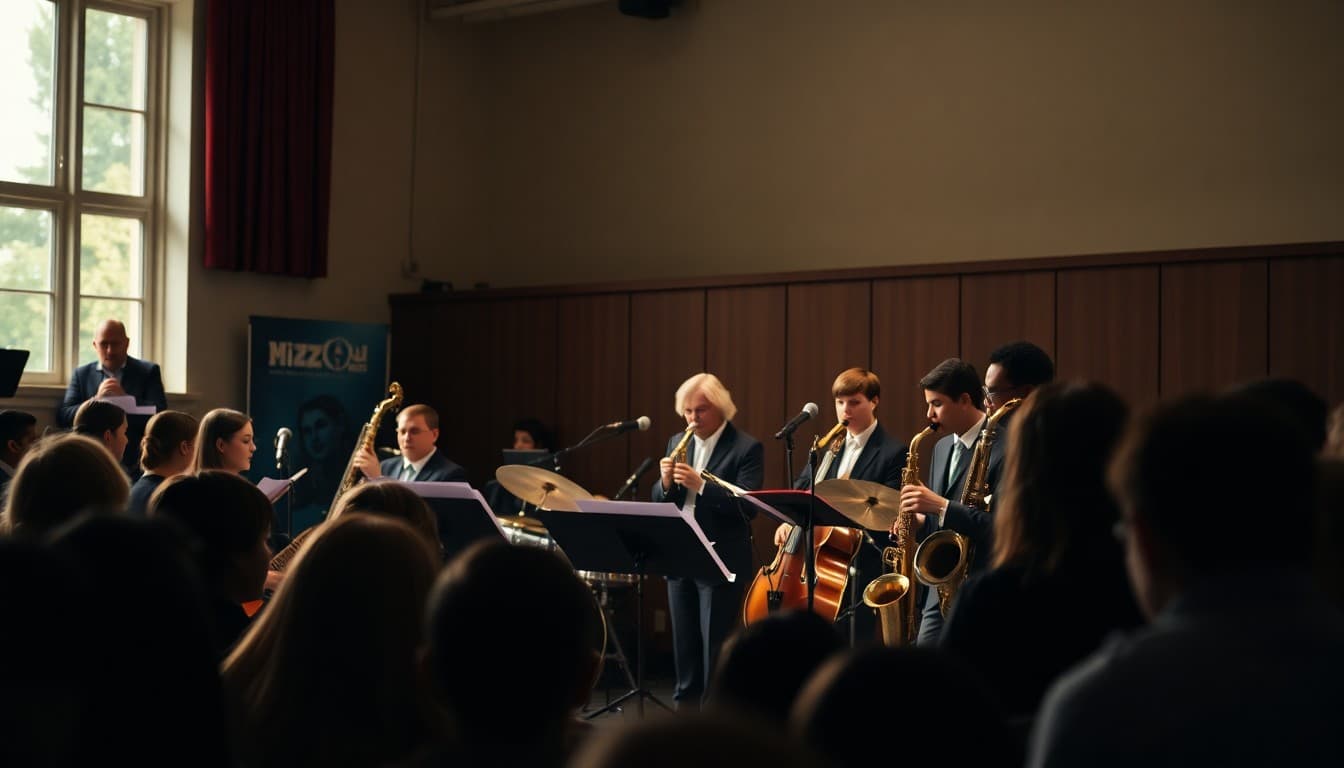
School Jazz Band Newsletter: Performance Season Communication
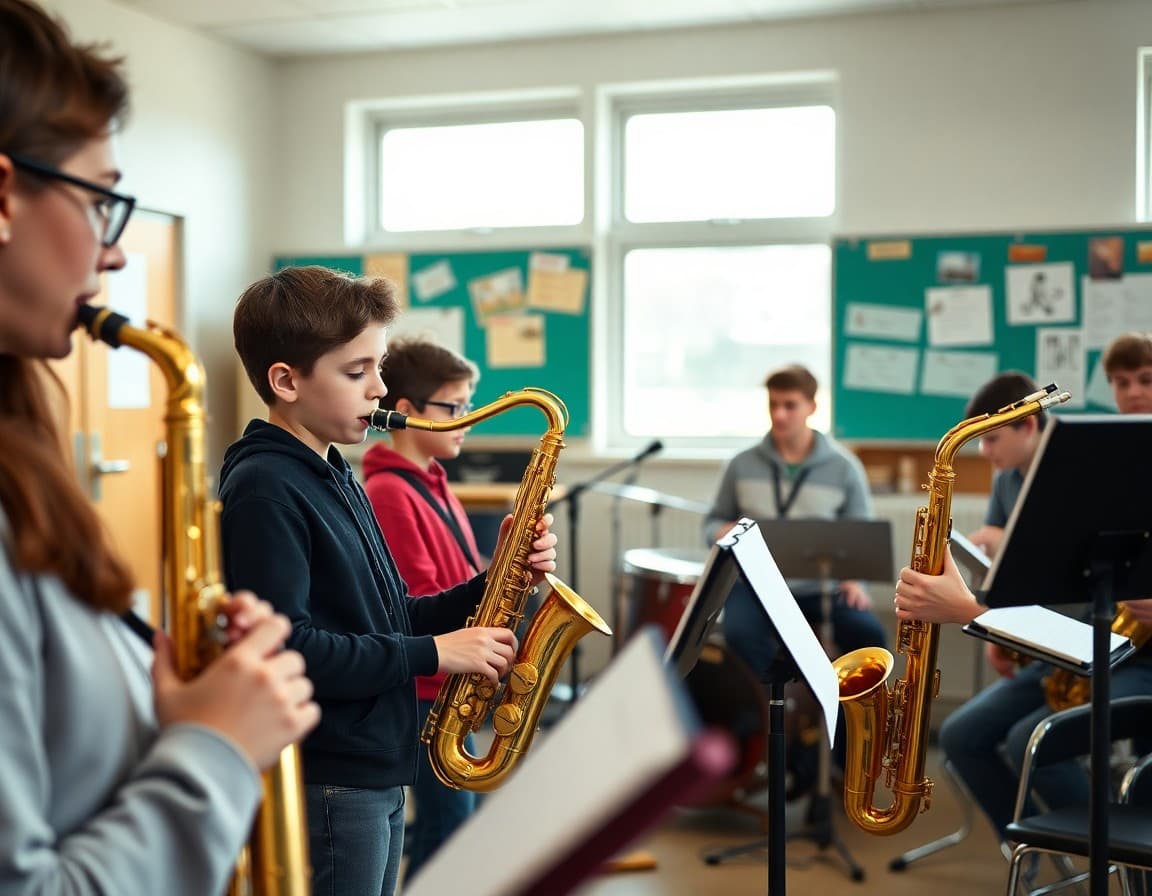
A jazz band newsletter has a built-in explanation challenge: jazz is a distinct musical language, and many families at a school concert have never listened to it closely. Your newsletter can change that by giving families a way into the music before they sit down in the auditorium.
Explain improvisation before families hear it
Improvisation is the defining characteristic of jazz and the thing families are least prepared for in a school concert setting. A few sentences in the newsletter explaining what improvisation is and what to listen for transforms the audience experience.
"Every performance at our concert will include improvised solos. When you see a student stand up and play something that sounds different from the rest of the band, that is a live composition happening in real time. The student is inventing music on the spot, guided by the chord progression of the piece and everything they have learned about jazz vocabulary. At this concert, watch for Marcus on tenor sax and Yolanda on trumpet. They have been working on their solo voices all semester."
Describe the repertoire with reference recording links
Jazz standards have been recorded hundreds of times by different artists. Recommending a specific recording for families to listen to before the concert gives them a reference point and builds anticipation. Do not assume families know the piece.
"We are playing 'Fly Me to the Moon,' which most families know from the Frank Sinatra version. Our arrangement is for big band in the style of Count Basie: brassy and driving with a full rhythm section. Listen to the Basie version before Friday and you will hear exactly what your child's band is aiming for."
Cover the performance schedule with all logistical details
Jazz bands often perform in more varied settings than concert bands: school concerts, jazz competitions, restaurant gigs, community events, and festivals. Each venue has different logistics. A newsletter that covers all scheduled performances with times, locations, dress codes, and travel requirements gives families the complete picture early.
"This semester we have four performances: the main school concert on November 14th (formal black), the district jazz festival on December 3rd (travel to Jefferson High, bus leaves at 4 PM, returns by 10 PM, semi-formal), and the community winter showcase on December 18th (casual, family-friendly, outdoor). All performances are mandatory for ensemble members."
Describe the rehearsal culture and what students are working on
Jazz band rehearsals are different from concert band rehearsals in important ways. Students are learning not just their written parts but also how to listen deeply to the ensemble, respond to other musicians, and develop a personal voice. Families who understand this broader goal appreciate the rehearsal investment differently.
"This week in rehearsal we spent 30 minutes on listening exercises: students took turns playing a phrase and the next student had to respond with something that connected to what was just played. This is not on any written music. It is ear training, call and response, and musical conversation. It is how jazz musicians learn to listen."
Sample newsletter template excerpt
Jazz Band concert update: the fall showcase is November 14th, 7 PM, in the main auditorium. Here is what you will hear:
Birdland by Joe Zawinul: the opening piece. High energy, tight ensemble writing, no improvisation. This is where you will hear how well the band plays together.
Autumn Leaves: the standard that every jazz musician learns first. Three students will solo. This is where you will hear individual voices for the first time.
Blues in the Night: big band blues. The rhythm section will stretch out. If you do not know what a swing groove feels like in your body, you will know after this piece.
Recognize individual students by name
Jazz is a soloists' music. When a student earns a solo, it is a recognition of their development and their trust within the ensemble. Name the students who are soloing at each concert and what that recognition represents.
Connect jazz history to what students are performing
One sentence of jazz history per piece makes the music feel connected to something larger. "Birdland was named after the New York jazz club where Charlie Parker played in the 1940s and 1950s. Your child's band is playing the same song those musicians heard when they walked through that door 75 years ago." That kind of context makes school music feel like cultural inheritance rather than just an after-school activity.
Get one newsletter idea every week.
Free. For teachers. No spam.
Frequently asked questions
How do you explain jazz to families who are not familiar with the genre?
The most effective jazz explanation for families focuses on what makes it different from classical music: improvisation. In classical music, every note is written down and the performer's job is to play the notes accurately. In jazz, some sections are written down (the head) and other sections are improvised in real time by individual musicians responding to each other. Telling families this before a concert, with a note like 'when you see the saxophone player close their eyes and play something that is not in the written music, that is live improvisation happening in front of you,' transforms the listening experience.
What repertoire is appropriate for a high school jazz band?
High school jazz bands typically perform a mix of jazz standards from the Great American Songbook (Autumn Leaves, Blue Bossa, All the Things You Are), classic big band charts from Count Basie and Duke Ellington, arrangements of contemporary pop and R&B songs in jazz style, and original compositions or arrangements written by students or the director. The balance between accessible and challenging repertoire depends on the ensemble's level. Newsletters that describe each piece on the program help families understand the range and give them reference recordings to listen to before the concert.
How does a school jazz band differ from a concert band or orchestra?
A jazz band typically uses a smaller ensemble than concert band: a rhythm section of piano, bass, drums, and guitar, plus a horn section of saxophones, trumpets, and trombones. The musical language is different: jazz uses seventh chords, extended harmonies, swing rhythms, and improvisation that are rarely present in concert band music. Jazz musicians read chord charts and lead sheets in addition to written parts. The performance relationship with the audience is more interactive and often more casual than a formal concert setting.
What improvisation skills can families expect a jazz band student to develop?
Jazz improvisation develops gradually. Early-stage students learn to improvise over simple blues and pentatonic scales. Intermediate students learn to navigate chord changes, outline harmony in their solos, and respond to what other musicians are playing. Advanced students develop their own personal vocabulary, phrase structure, and musical personality through years of listening and playing. A newsletter can track this development by describing what level of improvisation students are working on and what families will hear when they attend a concert.
How does Daystage help jazz band directors communicate with families?
Daystage lets jazz band directors send performance schedule newsletters with links to reference recordings of the pieces students are performing, so families can listen before the concert. When a family has heard 'Autumn Leaves' twice before the concert and knows their child will be soloing on the bridge, they listen to the performance with completely different ears. That preparation transforms audience engagement, and Daystage makes it easy to build that preparation into every concert communication.

Adi Ackerman
Author
Adi Ackerman is a former classroom teacher and curriculum writer with 8 years in K-8 schools. She writes about school communication, parent engagement, and what actually works in real classrooms.
More for Arts & Music
Ready to send your first newsletter?
3 newsletters free. No credit card. First one ready in under 5 minutes.
Get started free