
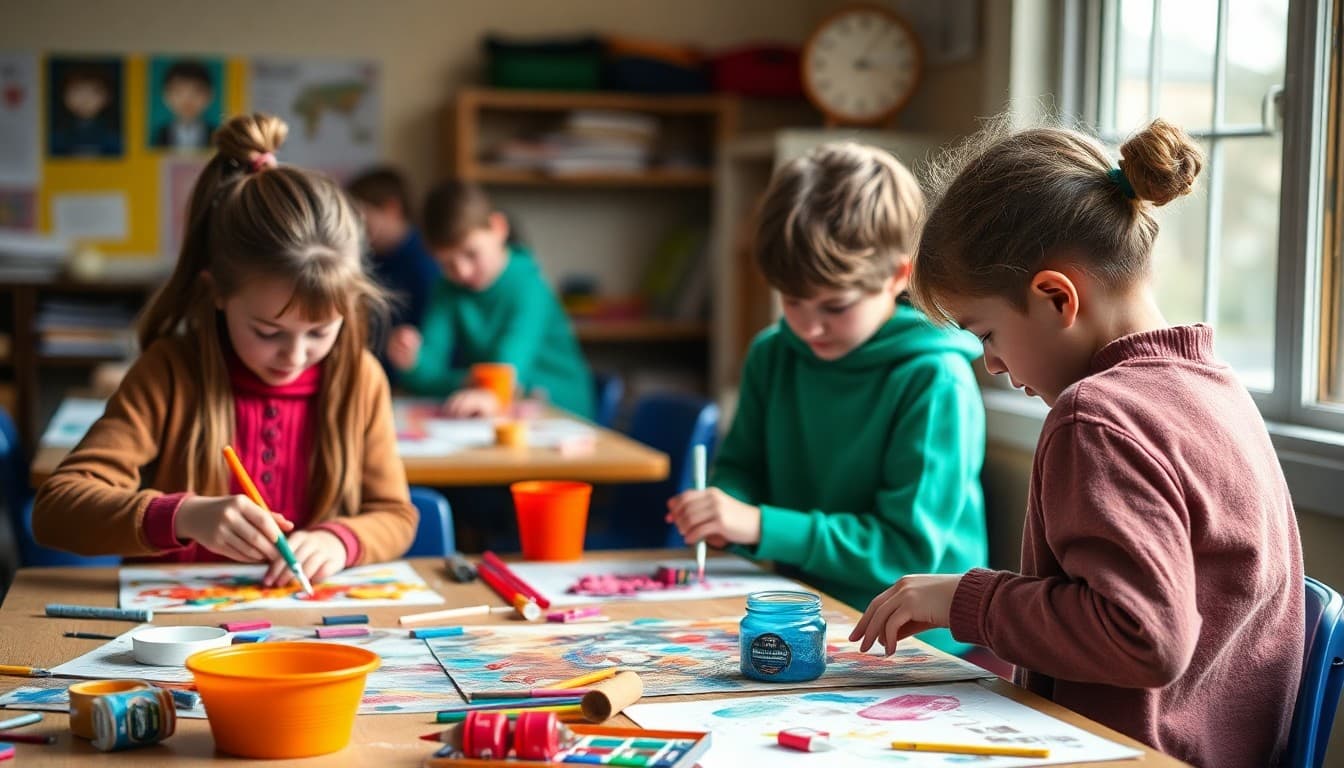
February Art Class Newsletter: What We Are Learning
February sits in the middle of the school year, which makes it a natural moment to look back at how far students have come and forward at what remains to be done. A February art class newsletter that does both clearly gives families a real mid-year picture of the program rather than a routine monthly update.
Mark the mid-year point explicitly
Name the fact that you are at mid-year. Families do not always track the school calendar the way teachers do. A newsletter that says "we are halfway through the year" gives context to the curriculum summary and growth report that follows.
Show specific mid-year growth
Describe what students can do in February that they could not do in September. Be specific about the skill. Not "students have grown so much" but "students who could not control a brush stroke in October are now making deliberate, varied marks in both directions." That specificity is what makes the growth feel real to families.
Describe the current unit in depth
February is a good month for a deeper description of what is happening in class. Tell families not just what medium students are working in, but what questions the unit asks them to answer. What problem are they solving? What is the decision they are making in this project that they have not had to make before?
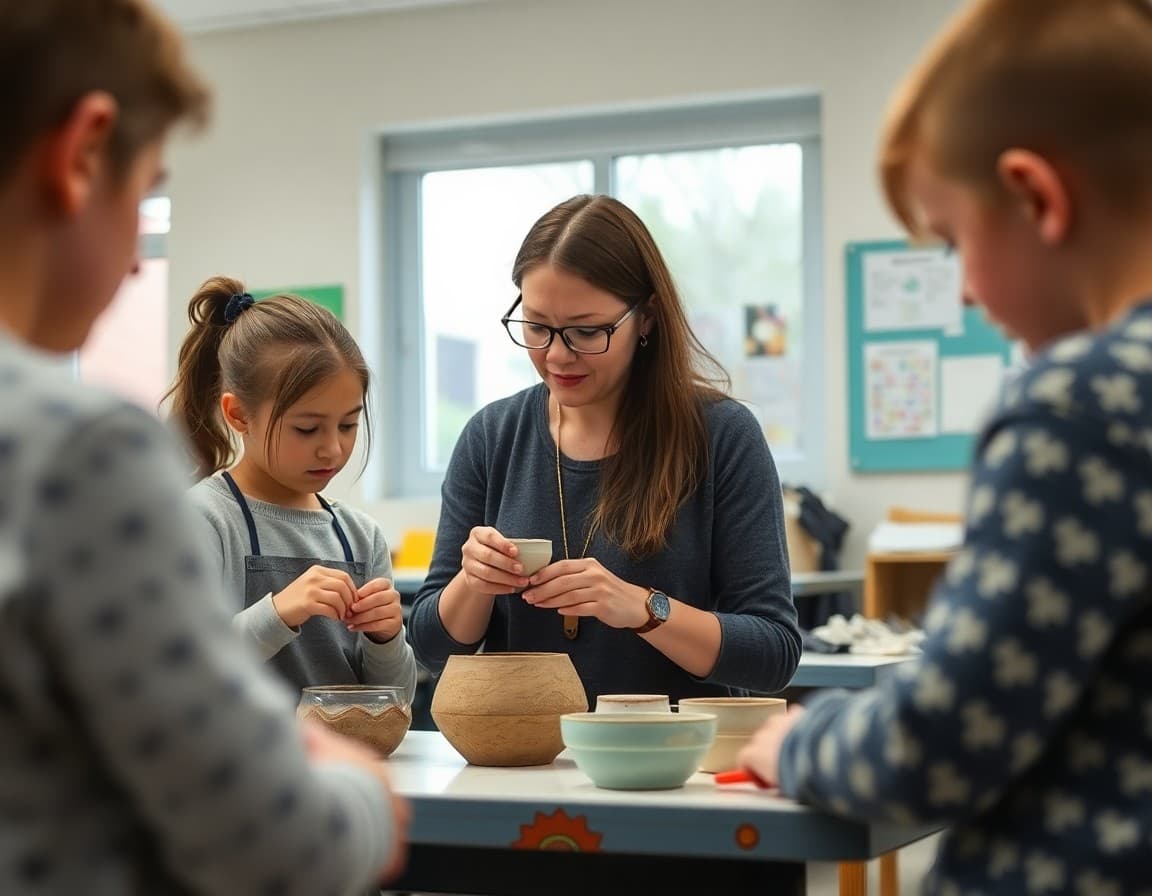
"This month's ceramics project asks students to make a functional object, a bowl, a cup, a small vessel, that also communicates something about who they are. It is the first assignment this year where the content of the work is entirely up to them. That freedom is harder than it sounds, and navigating it is part of the lesson."
Share student work visually if possible
A photo of current student work does more to communicate the quality and direction of your program than any written description. If you can include photos, choose two or three that show different students and different approaches to the same project. Families of students whose work is shown feel recognized; families of other students get a real window into what the class is doing.
Sample newsletter template excerpt
Dear Art Families,
We are at the midpoint of the year and the work students are making in February looks nothing like September. The ceramics unit is going well. Students finished their pinch-pot bowls last week and are starting slab construction this week.
Work from the fall drawing unit is being compiled into a mid-year portfolio review next week. Students will select their three strongest pieces and write a short reflection on each. Portfolios come home the week of February 22nd.
Note any upcoming events or deadlines
If there is a spring art show, a portfolio review, or a guest artist visit coming in the next two months, mention it now. Families who have advance notice plan around events rather than discovering them at the last minute. The more lead time you give for events that require family attendance, the better your turnout.
Close with what excites you about the second half of the year
Name one thing you are looking forward to watching students do before June. That forward-looking energy in the newsletter close carries families through the mid-year plateau and keeps them invested in the program through spring.
Get one newsletter idea every week.
Free. For teachers. No spam.
Frequently asked questions
What is February's role in the art class year?
February is mid-year in most school calendars. Students have been in class long enough to show real skill development, and families are at a natural mid-year check-in point. A February newsletter that highlights the growth visible since September, shares the current unit in detail, and previews the final stretch of the year gives families a meaningful mid-year picture of the program rather than just a monthly routine update.
How do you show mid-year growth in an art newsletter?
The most effective approach is to describe a specific skill or observable change in student work. 'If you look at the drawings students made in September compared to what they are making now, the confidence in line work is completely different. Students who were drawing hesitantly are now making deliberate, committed marks.' If you have photos you can share, a before-and-after comparison image in a Daystage newsletter is more powerful than any description.
Should a February newsletter mention Valentine's Day projects?
If you are doing Valentine's Day-adjacent work, mention the artistic purpose rather than just the holiday. 'We are making handmade cards this week as an introduction to letterpress-style design. Students are learning about typography, composition, and the relationship between text and image.' Connecting seasonal projects to real artistic skills shows families that the curriculum is thoughtful even when it is also fun.
How do you handle a February art show or student display in the newsletter?
If student work is on display in February, tell families exactly where it is, how long it will be up, and what the work demonstrates. Give families enough context to look at the work meaningfully rather than just admiring it generally. 'The ceramic pieces in the main hallway case were each student's first experience with pinch-pot construction. Notice how the walls vary in thickness. That variation is what every student is working to control.'
How does Daystage help with February art class communication?
Daystage lets art teachers quickly build a mid-year newsletter that includes photos, curriculum updates, and family engagement prompts in a format that looks polished without requiring design time. February is often a low-energy month in terms of family engagement; a well-crafted Daystage newsletter that shares genuine student work and progress can re-energize families who have become passive recipients of school communication.

Adi Ackerman
Author
Adi Ackerman is a former classroom teacher and curriculum writer with 8 years in K-8 schools. She writes about school communication, parent engagement, and what actually works in real classrooms.
More for Arts & Music
Ready to send your first newsletter?
3 newsletters free. No credit card. First one ready in under 5 minutes.
Get started free