
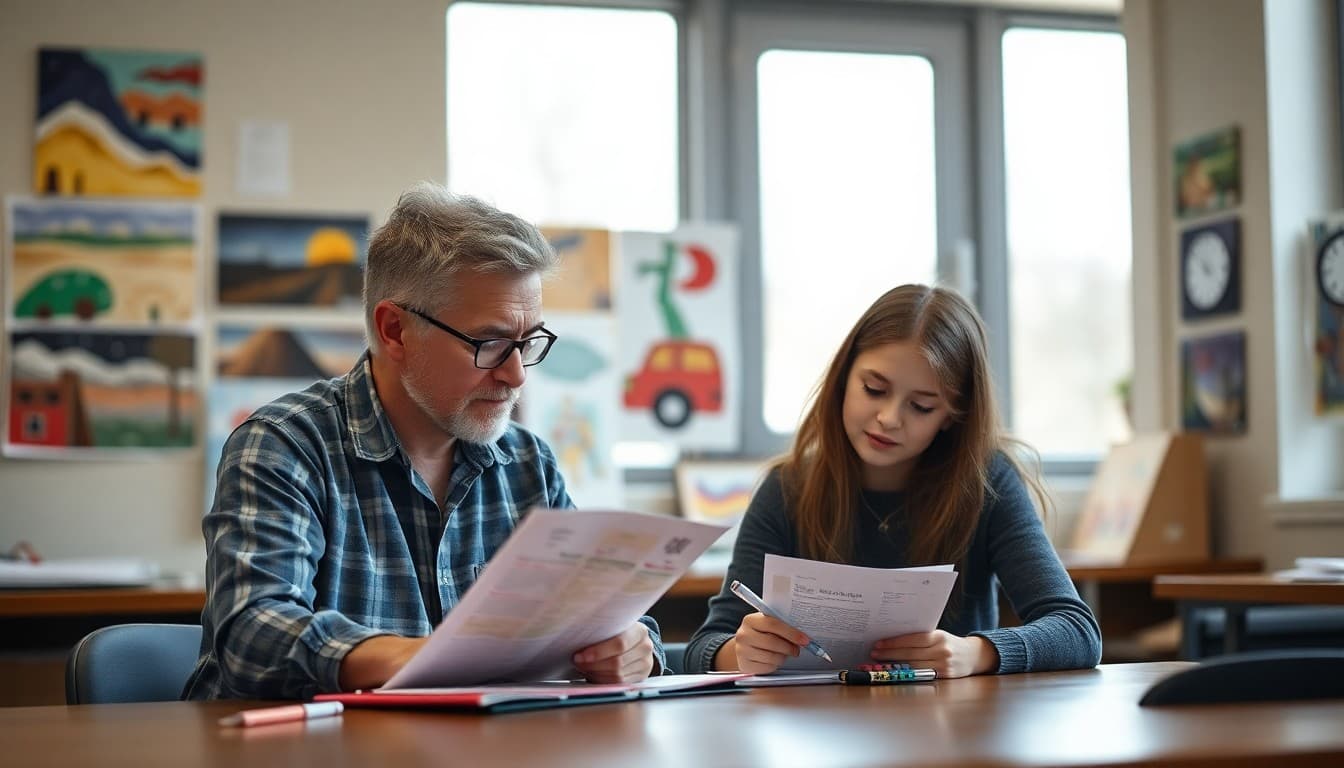
Art Teacher Monthly Newsletter Template: Communication Guide
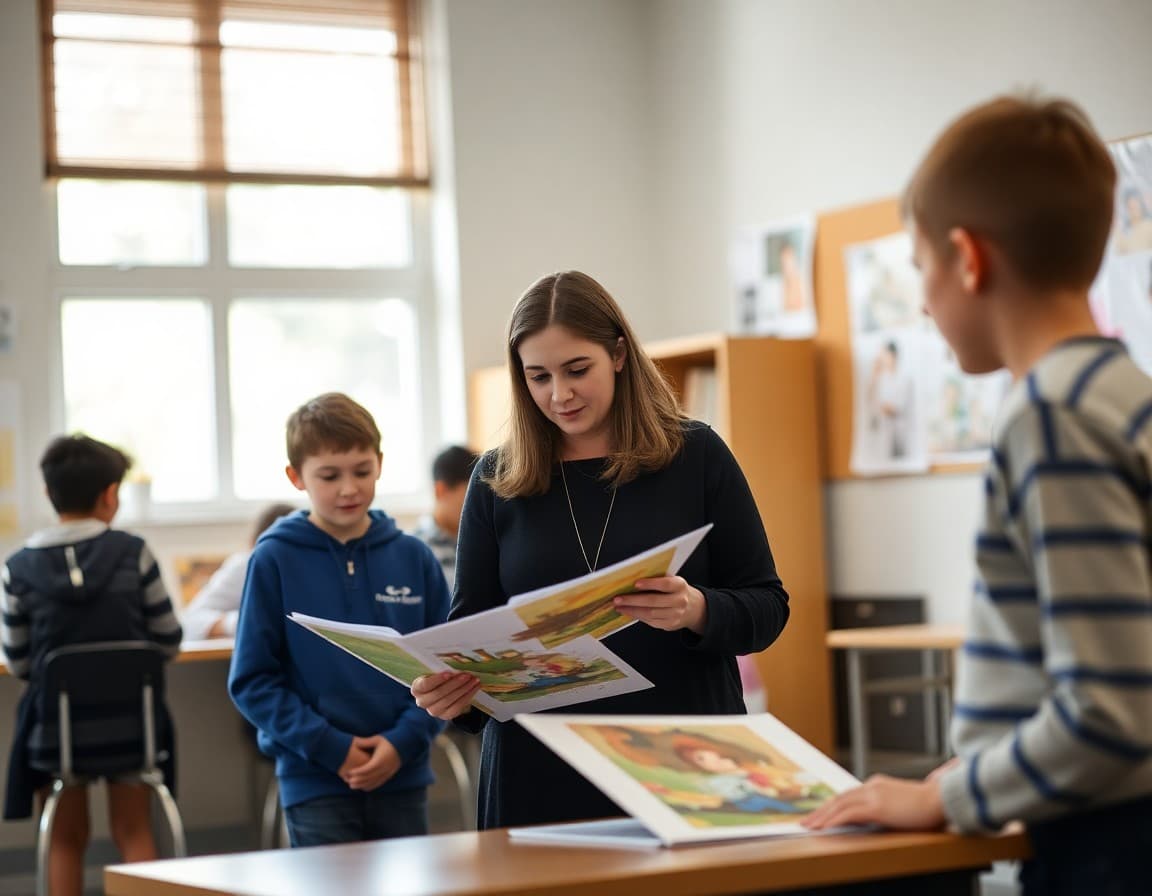
Monthly art newsletters work because they are consistent, not because each one is remarkable. The cadence itself is the value. Families who receive a reliable monthly update from the art room develop the expectation of staying connected to the curriculum, and that expectation changes how they engage with what their child brings home and how they talk about art class at dinner.
Section one: current unit description
Name the unit and describe what it involves in enough detail that a non-artist parent can follow. Not just "we are working on printmaking" but "this month's printmaking unit focuses on reduction printing, where students carve away material progressively to create a multi-color print from a single surface. The challenge is planning in reverse: every carving decision affects what comes next."
That description gives families vocabulary for the work and a genuine sense of the cognitive challenge involved.
Section two: what work is available to see
Tell families where to find student work this month. Is it displayed in the school? Coming home at the end of the unit? Available in an online portfolio? Shared in a gallery link? Families who know where to look for student work engage with it. Families who do not know it exists miss the connection.
Section three: upcoming events and deadlines
Name any upcoming art exhibitions, portfolio reviews, supply deadlines, or special events in the next four to six weeks. Include dates, times, and any action required from families. Complete logistics in this section prevent the follow-up emails that arrive when details are missing.
Section four: home engagement suggestion
Give families one specific thing they can do or discuss at home that connects to what students are working on in class. Not a homework assignment, but a conversation prompt or activity suggestion. "Ask your child to explain what a positive and negative space is, then look at the room you are sitting in and identify examples of each."
This section is what separates an art newsletter from a program announcement. It creates a direct connection between the classroom and the home.
Sample monthly template excerpt
Dear Art Families,
This month: we are in the printmaking unit, focused on foam plate relief prints. Students are working on inking technique and registration. Work from October's color mixing unit is on display outside the art room through November 15th.
At home: ask your child to show you their sketch for the print they are working on. Ask them what the finished print will look like and why they chose that design.
Section five: personal note from the teacher
End every newsletter with one genuine observation from the classroom this month. A student question that changed the direction of a lesson. A moment when the whole class got absorbed in a problem. A piece of work that came out differently than planned but better for it.
This section is the one that families quote back to you at conferences. It is also the section that takes the least time to write and does the most relational work.
Keep the total length under 500 words
An art newsletter that families can read in three minutes will be read completely. One that requires ten minutes will be skimmed or ignored. Five focused sections of under 100 words each is the right structure. Write less and say more. Every sentence should earn its place.
Get one newsletter idea every week.
Free. For teachers. No spam.
Frequently asked questions
What sections should an art teacher monthly newsletter always include?
A reliable art teacher monthly newsletter should include a current unit description with the specific skill focus, a note about what completed or in-progress work looks like and where families can see it, any upcoming events or exhibitions, a home engagement suggestion, and a brief personal note. These five sections give families everything they need to stay connected to the art room without requiring the teacher to redesign the newsletter every month.
How detailed should the current unit section be in a monthly art newsletter?
The unit description should go beyond naming the medium. Tell families what specific skill the unit develops, what decisions students are making in the work, what challenges they are encountering, and what the finished pieces will look like. A family who knows that the ceramics unit focuses on the relationship between form and function understands what their child is making and why in a way that 'we are doing clay' does not produce.
How do you make monthly art newsletters feel fresh rather than formulaic?
Consistent structure with fresh content is the goal. The sections stay the same but the content is genuinely new each month. The current unit is always different. The student observation is always specific to this month. The home engagement suggestion always connects to what is happening in class right now. A newsletter written from the actual classroom this month never feels formulaic even if the structure is familiar.
How often should art teachers send newsletters?
Monthly newsletters are the standard for most visual arts programs. For teachers who see students once or twice a week across many classes, monthly is also the most sustainable cadence. In months with art shows, exhibitions, or portfolio reviews, a second mid-month update is worth adding. Never let more than six weeks pass without communication, as the relationship weakens with silence.
How does Daystage support the monthly art newsletter rhythm?
Daystage gives art teachers a consistent platform that makes monthly newsletters fast to build and professional in appearance. When families receive a Daystage art newsletter every month with photos of current work and a clear curriculum update, the art program becomes a reliable part of their family's school communication rather than an occasional surprise.

Adi Ackerman
Author
Adi Ackerman is a former classroom teacher and curriculum writer with 8 years in K-8 schools. She writes about school communication, parent engagement, and what actually works in real classrooms.
More for Arts & Music
Ready to send your first newsletter?
3 newsletters free. No credit card. First one ready in under 5 minutes.
Get started free